



2022-23 Liberty A-League fixtures to promote more fan engagement

A-League

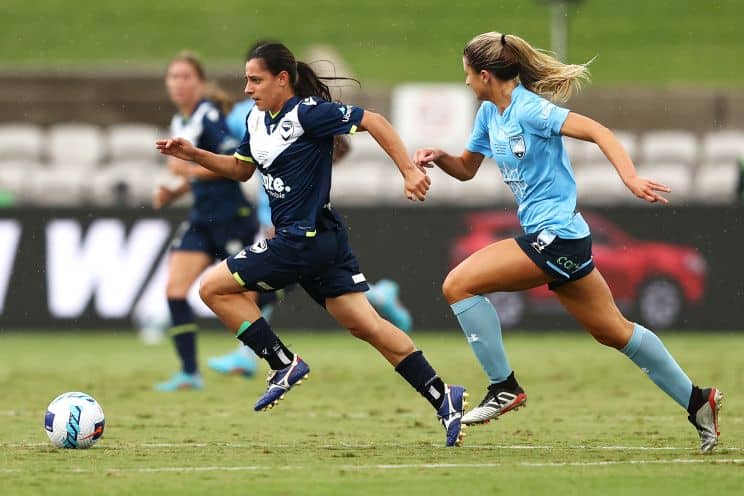
The Liberty A-League Women 2022-23 season have been released alongside a new show, free tickets for juniors and kick-off times.

A heap of measures to drive engagement with an expanded Liberty A-League Women’s competition have been unveiled by the Australian Professional Leagues (APL), building on feedback from fans and players in the lead-up to the 2023 Women’s World Cup.

The fixture schedule has the majority of games at family-friendly kick off times and many based at boutique venues in a deliberate effort to build atmosphere.

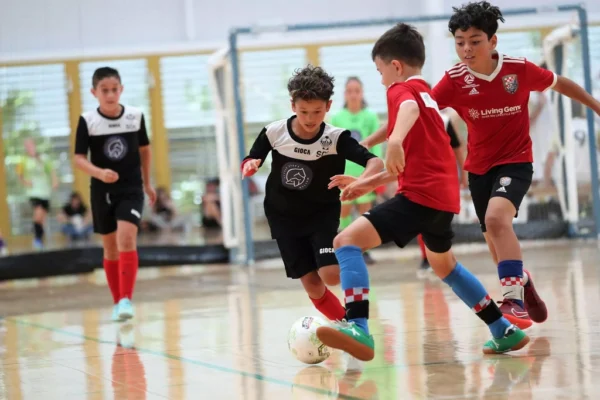
This season, for the first time ever, all registered junior players across the country, boys and girls, will be welcome for free at Liberty A-League games – offering young fans the chance to see current and future Matildas every week as excitement grows ahead of the World Cup.

After consulting with fans and players in the off-season, APL has moved to consolidate kick-off times to make games as accessible to families as possible.

The APL is also announcing its investment in an innovative broadcast format designed to give fans a compelling live experience every week.

As well as showing every game of the Liberty A-League live and free on 10 Play and live on Paramount+, the Saturday afternoon games will feature in a new ‘goal rush’-style show, switching from game to game as the action unfolds and with the host and experts having a two-way live conversation with the audience during the simultaneous games.

Australian Professional Leagues’ Chief Executive Officer, Danny Townsend said in a statement:

“87,000 fans watched the UEFA Women’s Final in July and the English FA Women’s Super League Clubs immediately reported memberships going through the roof. In the year that the FIFA 2023 Women’s World Cup is being co-hosted by Australia and New Zealand, we are orienting our business to Licapitalise upon that opportunity and ensure a lasting legacy for women’s football.

“This year, we have every single Liberty A-League Women game available live and free for the first time ever, and free access for every participant under season to watch the games in person. We know how our fans are consuming sport and we are better serving that growing audience of young, digitally connected fans.”

Commenting on the Liberty Pass, Liberty’s Chief Executive Officer James Boyle, said via Australian Professional Leagues:

“We’re looking forward to another electric season of Liberty A-League and are delighted to be introducing the Liberty Pass to young football fans, keen to experience the passion and quality of women’s professional football. The Liberty Pass will make football even more accessible, allowing freethinking families to enjoy an exciting live sporting experience at games throughout the season.”

The drive to reimagine the experience for both fans at the games and viewers comes as Western United joins as the competition’s 11th team, adding more games for fans and more match minutes for players.

APL has previously announced that Central Coast Mariners will join the competition next season, taking it to 12 teams with a full home and away fixture list – providing players with the same match minutes as the benchmark women’s leagues in Europe.

The players will also enter the second season of a five-year collective bargaining agreement (CBA) which mandates the same standards for men and women across areas such as hotels, sports science and training facilities, as part of APL’s sustained and extensive investment in growing women’s football.


Previous ArticleNext Article

Football South Australia renews partnership with Datacord as Community Football Commitment Deepens

Football South Australia has announced the renewal of its partnership with Datacord, continuing a relationship that has grown steadily since the South Australian print and document solutions provider first entered the football community as naming rights sponsor of the Collegiate Soccer League Division 1.

That initial agreement, which saw Datacord align with one of Adelaide’s most historic amateur competitions, marked the beginning of what has since developed into a broader commitment to South Australian football at every level. The renewed partnership extends Datacord’s involvement beyond the CSL and into the wider Football SA ecosystem, with clubs across the state now able to access exclusive offers and preferred pricing on photocopying, managed print services and tailored business solutions.

The practical value of that access should not be understated. Community football clubs operate on tight margins, relying heavily on volunteer administrators managing everything from registration paperwork to grant applications. Cost-effective print and document solutions reduce the operational burden on those volunteers, a small but meaningful contribution to the sustainability of clubs that form the backbone of the game in South Australia.

“George is a great supporter of sport in South Australia and we are delighted to have Datacord as a supporter of football,” said Football SA CEO Michael Carter. “Service is second to none and we highly recommend their services to the business community within the Football Family.”

For Datacord Managing Director George Koutsoubis, the renewal reflects a genuine investment in the community rather than a transactional commercial arrangement. “It is important to support the local community, and Football South Australia is the perfect place to start spreading the word about Datacord and what we do for the South Australian community,” he said. “We are locally owned and operated, and I think it is a great partnership to be part of.”

Beyond the Pitch: Miyuki Kobayashi on the Real Challenges Facing Japan’s Women’s Game

Last week, Soccerscene spoke to pioneer of women’s football in Japan, Miyuki Kobayashi, about the game’s development in Japan and the intersection between sporting and social change in the country.


Talent, quality and recent silverware

After Japan’s recent AFC Women’s Asian Cup victory in the final against Australia, the women’s national team solidified its standing as the No.1 team in Asia.

Throughout the last 15 years, Japan’s women’s national team has grown into a formidable opponent, boasting a World Cup trophy, an Olympic silver medal, as well as three AFC Women’s Asian Cups.

The talent is undeniable. The quality is unwavering. And the team shows no signs of slowing down.

But these victories and trophies on the world stage wouldn’t be possible without the leaders behind the scenes – none more so than Miyuki Kobayashi, former WE League Board Member and current JEF United Ladies Scout and Academy Chief.


Laying the foundations

Kobayashi has led the charge for women’s football in Japan, promoting not only a sport which values success, but one which empowers female footballers across the nation.

“At university, not many girls were playing and we didn’t have an official team. I went to the US and the environment was so different,” Kobayashi explained.

“That opened my eyes – women can play. That’s how I started the women’s soccer league when I came back: to make an environment for girls to play.”

Thus, accessibility and opportunity became driving factors behind Kobayashi’s work, not only for those on the pitch, but for those in the dugout.

“I got involved at the JFA (Japanese Football Association) to promote women’s football. We wanted to create the opportunity for women to be coaches.”

“They are coached by men all the time, so even when the top players leave the football world, they never think to be involved.”

Furthermore, as a former coach of JEF United Ladies Youth and General Manager, Kobayashi was intent on employing as many female coaches as possible. It was not merely a personel change, but a challenge to widespread social attitudes.

“When I started to employ female coaches, the girls’ parents asked why the coach wasn’t a man. But gradually, we started to make it equal – they didn’t talk about the gender, but about the quality of the coach.”


The mission to empower

In 2011, the same year Japan’s women won the World Cup, the domestic league was yet to become professional. Known as the Nadeshiko League, players would work during the day and train in the evenings.

The transition from an amateur to the current professional league required time, resilience and a change in perspective.

“The sports world in Japan is more traditional – it is dominated by men,” said Kobayashi.

“If you want to make the environment even, or (want) more women to come into the (football) world, you can change the mind of the players.”

Since 2021, the WE League has embodied a sense of growth and positive change for the women’s game. In name and nature, it looks to empower players, coaches and all involved in the industry.

“I was in charge of mission achievement for women’s empowerment. We wanted to educate the players, to inspire girls and women who watch the game.”

However, the drive to empower women in football was not without backlash and challenges.

“Some people don’t like that word: ’empowerment’. It’s too strong for them. Some women really appreciate it, but it’s not easy to change the mind of society through football,” Kobayashi admitted.


Growing and attracting talent

Although WE League clubs are accelerating youth development and expanding pathways across U15, U18 and first team football, Kobayashi acknowledged that the overall product must improve to bring foreign players to Japan and entice homegrown talent to stay.

“Most of the national team players go to Europe or North America. I don’t say it’s a problem, but from a young age, girls who can play in the WE League want to go abroad,” Kobayashi outlined.

Indeed, when looking at the starting XI in last month’s AFC Women’s Asian Cup final, only one player – Hana Takahashi – plays in the WE League.

But the key to attracting domestic and international players to the WE League, is aligning financial investment and industry attitudes.

“The reason why women’s football has developed in European countries is the social thinking – you have to be equal and have the same opportunities as men in football. The Japanese way of thinking, especially in the football world, is not that at all,” Kobayashi continued.

“When I speak to people at Spanish clubs, women’s football is not a charity, but an investment.”

“We have assets. We have good, young players, but we’re exporting them, so we need to import too.”

Indeed, Spain is a perfect example of what can happen when investment becomes intentional, not optional. Back-to-back UEFA Women’s Nations League titles, 90% television viewership increase since 2016, and record-breaking crowd numbers reflect what can happen when the industry aligns in vision and commitment.

Japan has the players to compete against any nation in the world. Purposeful investment, combined with its overall quality of players and style, could transform the WE League into a true, global powerhouse.


The vision for the future

Moving forward, Kobayashi hopes that girls progressing through JEF United’s academies develop confidence and resilience, whether as players or people.

“We want to make the girls – even if they aren’t in JEF United – continue playing football and continue to be leaders,” Kobayashi said.

“Some of them have a dream to be a coach or a leader off the field too, so that’s one of the attributes we want to develop.”

This resilience, reflected by the club’s ‘never give up’ philosophy, is testament to the vision of empowerment championed by Kobayashi across the women’s game.

Even in the face of social obstacles and a lack of financial investment, perseverance and hard work is at the bedrock of women’s football in Japan. It is not just that these values exist, but that they are consistently manifested on and off the pitch, which can show future generations that football is a sport for all – men and women alike.


Final thoughts

There is no limit to what the WE League and the national team can achieve if given the resources it deserves. All the ingredients are there: individual quality, a distinct playing style, football philosophy and ambitions to grow.

By following the example of industry leaders like Kobayashi, women’s football in Japan can hopefully continue to make waves of impact – in the sporting landscape and society as a whole.

Most Popular Topics

Editor Picks

Send this to a friend