
A-Leagues Independent Chairman Stephen Conroy on how the APL will evolve post-World Cup

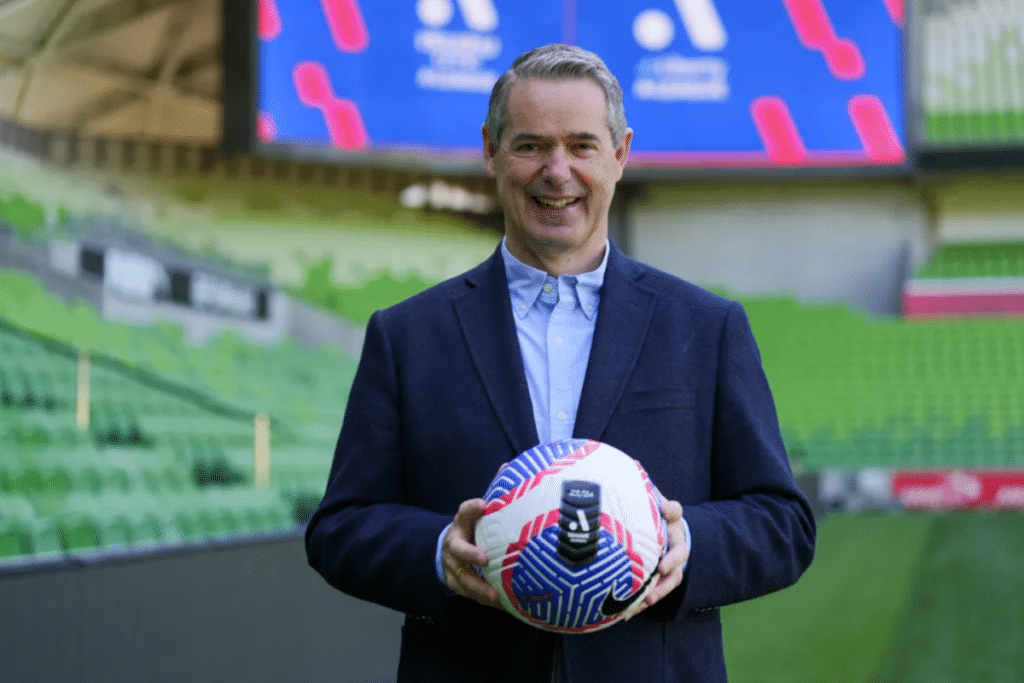
Stephen Conroy - A-Leagues Chairman

For Stephen Conroy and the Australian Professional Leagues (APL), it has been a time of significant change.

In his new role as Independent Chair, Conroy has recently seen the departure of former Chief Executive Officer Danny Townsend, leaving A-Leagues Commissioner Nick Garcia and KEEPUP Managing Director James Rushton to lead the APL.

Ahead of launching the 2023/24 A-Leagues season, it has proved to be a very busy period for the APL in amongst the CEO change – with the reversal of the Grand Final decision, announcing the brand-new U-Nite Round to take place in Sydney, confirming the sale of Perth Glory and identifying the preferred bidder for the Auckland licence.

After bidding farewell to the APL’s inaugural CEO, the focus has shifted to restoring faith in the A-Leagues fanbase – as the men’s and women’s World Cups need to be the kick-starter for football in Australia.

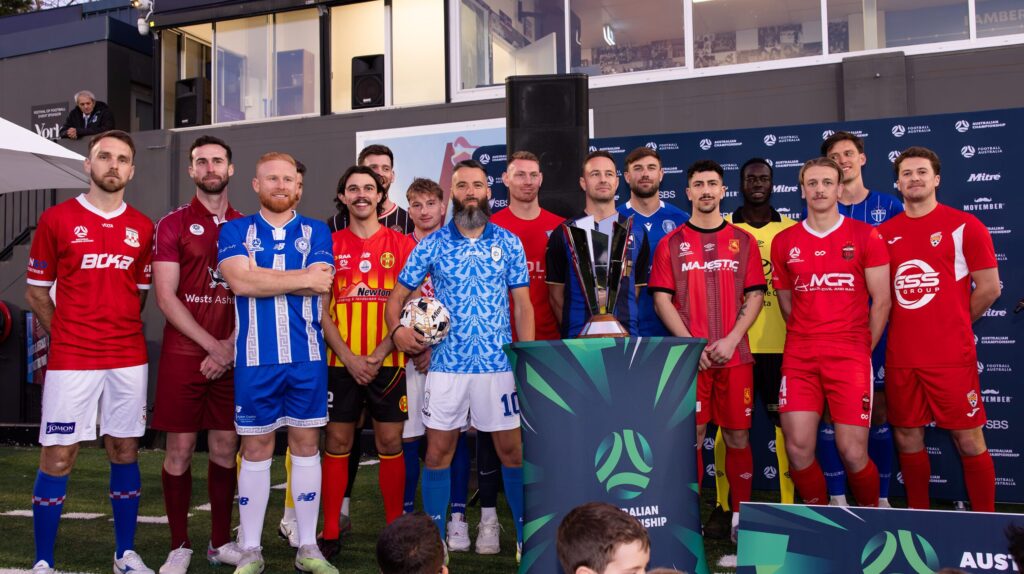
Speaking at Melbourne Victory’s Chairman function at AAMI Park before the Round 2 match against Newcastle Jets, Conroy reflected on a whirlwind period for the APL and football as a whole.

“It’s an exciting time coming off the back of the exceptional performance of the Matildas,” Conroy said.

“The standalone women’s round for the Liberty A-League was hugely positive with the record crowd and atmosphere we saw at the Sydney Derby.

“You’re seeing the enthusiasm with 1.6 million Australians and two million New Zealanders watching the two respective nations play.

“In funny because people almost forget the Socceroos and how well they did at Qatar – we talk about 2006 and the Golden Generation, but genuinely the performance in this tournament was absolutely stunning.”

The record attendances and memberships have been a huge plus for Conroy and the APL, particularly for women’s teams with numbers reaching unprecedented levels.

“As an example we’ve already seen Melbourne Victory go past 20,000 for memberships, so that’s a huge tick,” he said.

“With record turnouts and memberships, we are getting the sense that it is really happening now for people around the country in football.

“There’s so much in front of us at the moment.”

An integral part of the APL has been KEEPUP, which has recently undergone a revamp to split A-Leagues content into its own site.

Conroy outlined the digital strategies behind KEEPUP which has been a major inclusion since the APL’s inception.

“KEEPUP was launched when we unbundled from Football Australia – recently people might have been wondering why the app has morphed back into A-Leagues,” he said.

“In the rush to unbundle, we didn’t own the rights to call it the A-League app, but now we’ve got that sorted.

“What we will now start to see is a more rich product and this turns eyeballs into bums on seats or viewing on TV.

“KEEPUP’s mission is to drive people to watch the game at the ground, through free to air or streaming.”

Conroy also linked back to the numbers we saw from the Women’s World Cup, and how that will be a motivator for future growth of the A-Leagues.

“For all of us that went to any of the World Cup matches, part of it was needing to download the FIFA app,” he said.

“As we saw earlier, there’s 1.6 million Australians who want to watch a game of football – so we’ll be sitting down with Football Australia to work out how to succeed together.

“What we want to see is which team people want to support, get them to more games in-person and turn more casual fans into fully-fledged members.”

Previous ArticleNext Article

Football NSW announces 2026 First Nations Scholarships as pathway access program enters new phase

Football NSW has announced the recipients of its 2026 First Nations Scholarships, with ten emerging Aboriginal and Torres Strait Islander players from metropolitan and regional NSW receiving support designed to reduce the financial and structural barriers that have historically limited First Nations participation across the football pathway.

The scholarship program, developed and assessed in collaboration with the Football NSW Indigenous Advisory Group, targets players across both elite and development environments – recognising that talent identification alone is insufficient without the resources to support progression once players are identified.

Co-Chair of the Indigenous Advisory Group Bianca Dufty said the calibre of this year’s recipients reflected the depth of First Nations football talent across the state, and the importance of structured support in converting that talent into long-term participation.

“Their dedication to football and the desire to be role models for younger Aboriginal footballers in their communities is to be celebrated,” Dufty said. “I’m confident we will see some of these talented footballers in the A-League and national teams in the future.”


Beyond the pitch and into the pipeline

The 2026 cohort spans both metropolitan clubs and regional associations, an intentional distribution that acknowledges the particular barriers facing First Nations players outside major population centres, where access to development programs, qualified coaching and pathway competitions is more limited and the cost of participation more prohibitive.

The next phase of the program will introduce First Nations coaching scholarships, extending the initiative’s reach beyond playing pathways and into the coaching and administration pipeline – areas where Indigenous representation remains among the lowest in the game.

The structural logic is clear. Scholarships that reduce financial barriers at the entry point of elite pathways matter most when they are part of a sustained ecosystem of support rather than isolated gestures. Football NSW’s collaboration with the Indigenous Advisory Group provides that continuity, ensuring the program is shaped by the communities it is designed to serve.

Football NSW Targets Female Coaching Gap with Twin Programs

Football NSW has announced two new initiatives targeting the development of female coaches and coach education tutors, backed by federal and state government funding, as the governing body moves to address the longstanding structural absence of women across all levels of coaching in the sport.

The Future Female Coaches Mentoring Program, funded through the NSW Office of Sport’s Empower Her program, will select six female coaches holding a minimum AFC B Diploma for a structured mentoring program beginning mid-year. Participants will be paired with experienced mentors and receive three in-person visits including real-time observation and feedback, alongside regular online development sessions throughout the season.

Separately, Football NSW has opened expressions of interest for its 2026/27 Female Coach Education Tutor (CET) Program, supported by the Australian Federal Government’s Play Our Way investment, targeting C Diploma holders who want to move into coach education delivery.

Together, the programs address two distinct but connected gaps in the women’s football coaching pipeline- the progression from active coach to elite-level practitioner, and the transition from practitioner to the tutors who shape how coaching is taught.

The Pipeline Problem

The structural underrepresentation of women in football coaching isn’t a new observation. It is a documented and persistent feature of the game at every level, from community clubs to national team environments. Female coaches remain a minority in pathway competitions, and female coach education tutors are even more so.

One current tutor in the program described the environment she encountered when she came through the system. “My experience coming through as a coach, there was no females on the courses as participants and there was no females running the courses either,” she said. “That kind of inspires me to be someone that can hopefully make other females feel comfortable and confident to want to become coaches.”

“It is really important to have female role models because it shows that there is an opportunity or pathway for females,” said one program participant. “Traditionally it has been a male-dominated area and to know that yes, you can do it as a passion or a side thing, or you can actually make a career of it if you want.”

Removing barriers at the point of entry

The mentoring program’s design reflects an understanding that formal accreditation alone is insufficient to retain and develop female coaches in high-performance environments. Access to experienced mentors, observation in live coaching contexts and ongoing reflective practice address the informal development gaps that credentials cannot fill.

“Learning happens through coaching in real environments, and we recognise our role in providing both stretch and support to high-potential coaches,” said Edward Ferguson, Football NSW Head of Football Development. “This program offers tailored mentoring that complements formal coach education and enhances effectiveness in practice.”

Hayley Todd, Football NSW Head of Womens and Schools Football, framed the initiative in terms of long-term system building rather than individual development. “Creating sustainable pathways for female coaches is a key priority,” she said. “This program supports their development while also providing valuable insight into what is required to progress from state competitions into national and international environments.”

The barriers the programs are designed to remove are clear. The cost of accreditation, lack of access to mentoring networks, the absence of welcoming environments in coaching courses and the scarcity of female role models at senior levels all compound one another in ways that make progression difficult regardless of ability or commitment.

“You want to try and remove as many barriers as possible,” said one tutor involved in the program. “If you can start to remove those barriers, you actually get to engage with the females more consistently and build their confidence and competence in that space.”

A system investing in itself

The timing of both announcements sits within a broader national moment for women’s football. The AFC Women’s Asian Cup, currently underway in Australia, has delivered record crowds and sustained visibility for the female game at the elite level. The programs announced this week operate at the other end of the pipeline – building the coaching infrastructure that will determine whether the players inspired by that visibility have qualified, experienced and representative coaches to develop them.

Most Popular Topics

Editor Picks

Send this to a friend