AFC World Cup Qualifiers smash landmark digital engagement records

The AFC Asian Qualifiers – Road to Qatar Final Round was the most engaging in history, surpassing all previous editions of Asia’s FIFA World Cup qualifying tournaments with more than 788 million impressions observed on the Asian Football Confederation (AFC)’s digital channels.

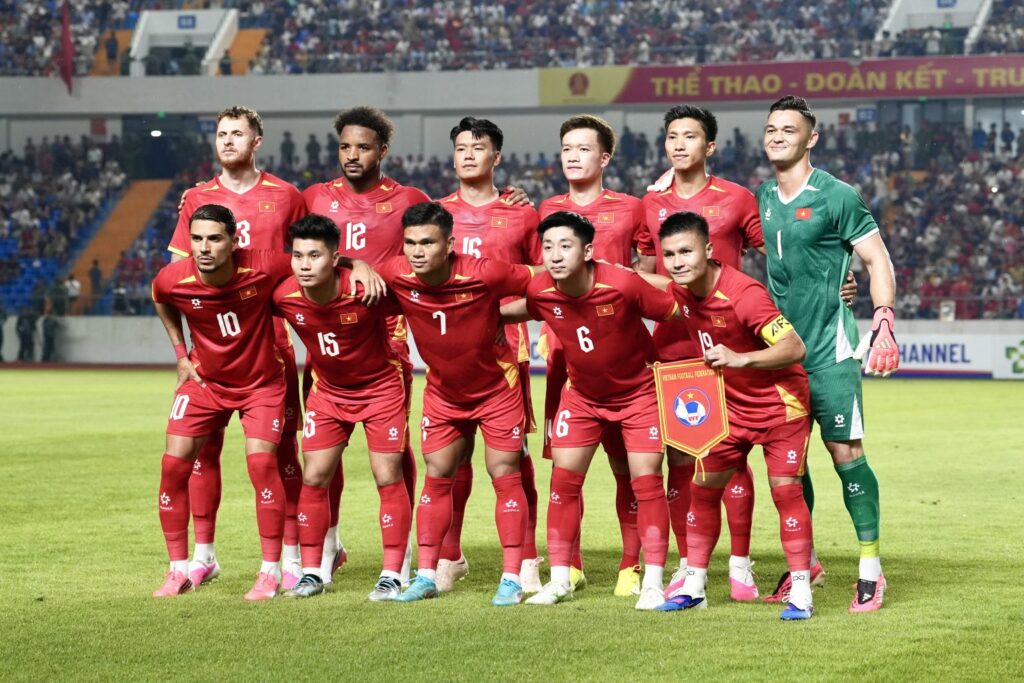
Held across 10 Match Days from September 2, 2021, to March 29, 2022, as well as last week’s AFC Asian Qualifiers – Road to Qatar Playoff between eventual winners Australia and the United Arab Emirates, Asia’s top 12 sides battled across 61 matches with the Islamic Republic of Iran, Japan, Korea Republic and Saudi Arabia eventually clinching the Continent’s four automatic places, before the Socceroos claimed a record sixth AFC spot to join hosts Qatar.

The COVID-19 pandemic forced the lead up to the qualifiers to be postponed on several occasions, but the necessary interruptions did little to dampen the appetite for and consumption of Asian football as passionate fans from across the globe continued to engage in record numbers.

Further underlining the fervour for the Asian game, the 788 million impressions was an astonishing 2,108% increase from the 2016-2017 campaign. At the same time, engagements on the AFC’s social media channels rose immensely across the two editions surging by 2,350% from 2.8 million to 70 million.

The AFC’s YouTube and Instagram platforms led the way in galvanising football fans from all corners of the globe, with 290.9 million and 212.3 million impressions, while Twitter received impressions of 46.3 million and Facebook gathered 142 million.

There was also a stunning 12,530% increase in video views on YouTube, as viewership rose from 1 million in 2016-2017 to 134.6 million in the recently concluded campaign, where nearly 2 million hours of watch time was recorded.

The introduction of several language platforms also contributed to the staggering increase with the newly introduced Mandarin-based channels attaining close to 100 million impressions as the AFC’s Weibo, Toutiao, and Douyin channels garnered 42.6 million, 18.2 million and 35.4 million impressions respectively.

Meanwhile, the world’s most reliable information and coverage hub of Asian football – the-AFC.com – witnessed a notable 155% increase in page views and a 136% increase in users.

Previous ArticleNext Article

Heidelberg United denied qualification to AFC UCL 2

In an announcement made yesterday, Football Australia revealed that, in place of Heidelberg United, Melbourne Victory will now take the AFC UCL 2 spot.

A premature ending

In what is sure to be a disappointing verdict for Heidelberg’s fans, staff and supporters, the NPL VIC side will no longer compete in next season’s AFC CL 2.

The decision comes despite Heidelberg meeting the necessary criteria outlined in Football Australia’s National Club Licensing Regulations.

“We understand that this will be a disappointing outcome for everyone connected to Heidelberg United FC,” said FA Executive Director of Football, Heather Garriock, via press release.

“The club earned enormous respect through its performances this season and should be proud of what it achieved both on and off the pitch.”

Indeed, through defeating several A-League outfits en-route to the Australia Cup Final against Newcastle Jets, Heidelberg did earn widespread respect and admiration across the landscape. Football Australia also strongly advocated for the side’s place in the AFC CL 2 following Newcastle’s qualification to the AFC CL Elite.

But despite the determined efforts of the club’s board to meet all necessary criteria, the Asian Football Confederation (AFC) ruled the side ineligible to compete.


Victory emerge as replacements

Filling the now-vacant position in next season’s competition is Melbourne Victory, who finished 4th in the A-League this year.

As 3rd-place Auckland FC are based in New Zealand, thus falling under the Oceania Football Confederation (OFC), they are also ineligible to compete.

So while the AFC CL 2 will still be arriving in Melbourne next season, fixtures will no longer be built on the underdog success story of Heidelberg’s immense rise from NPL to AFC CL matchdays.

The club, however, will appeal the decision, and has written to Football Australia for further clarity on the Appeals Process.

It remains uncertain whether the appeal will be successful or not, but Heidelberg will undoubtedly enjoy the backing not just of its own staff and supporters, but of the entire Australian grassroots community.

Beyond the Pitch: Miyuki Kobayashi on the Real Challenges Facing Japan’s Women’s Game

Last week, Soccerscene spoke to pioneer of women’s football in Japan, Miyuki Kobayashi, about the game’s development in Japan and the intersection between sporting and social change in the country.


Talent, quality and recent silverware

After Japan’s recent AFC Women’s Asian Cup victory in the final against Australia, the women’s national team solidified its standing as the No.1 team in Asia.

Throughout the last 15 years, Japan’s women’s national team has grown into a formidable opponent, boasting a World Cup trophy, an Olympic silver medal, as well as three AFC Women’s Asian Cups.

The talent is undeniable. The quality is unwavering. And the team shows no signs of slowing down.

But these victories and trophies on the world stage wouldn’t be possible without the leaders behind the scenes – none more so than Miyuki Kobayashi, former WE League Board Member and current JEF United Ladies Scout and Academy Chief.


Laying the foundations

Kobayashi has led the charge for women’s football in Japan, promoting not only a sport which values success, but one which empowers female footballers across the nation.

“At university, not many girls were playing and we didn’t have an official team. I went to the US and the environment was so different,” Kobayashi explained.

“That opened my eyes – women can play. That’s how I started the women’s soccer league when I came back: to make an environment for girls to play.”

Thus, accessibility and opportunity became driving factors behind Kobayashi’s work, not only for those on the pitch, but for those in the dugout.

“I got involved at the JFA (Japanese Football Association) to promote women’s football. We wanted to create the opportunity for women to be coaches.”

“They are coached by men all the time, so even when the top players leave the football world, they never think to be involved.”

Furthermore, as a former coach of JEF United Ladies Youth and General Manager, Kobayashi was intent on employing as many female coaches as possible. It was not merely a personnel change, but a challenge to widespread social attitudes.

“When I started to employ female coaches, the girls’ parents asked why the coach wasn’t a man. But gradually, we started to make it equal – they didn’t talk about the gender, but about the quality of the coach.”


The mission to empower

In 2011, the same year Japan’s women won the World Cup, the domestic league was yet to become professional. Known as the Nadeshiko League, players would work during the day and train in the evenings.

The transition from an amateur to the current professional league required time, resilience and a change in perspective.

“The sports world in Japan is more traditional – it is dominated by men,” said Kobayashi.

“If you want to make the environment even, or (want) more women to come into the (football) world, you can change the mind of the players.”

Since 2021, the WE League has embodied a sense of growth and positive change for the women’s game. In name and nature, it looks to empower players, coaches and all involved in the industry.

“I was in charge of mission achievement for women’s empowerment. We wanted to educate the players, to inspire girls and women who watch the game.”

However, the drive to empower women in football was not without backlash and challenges.

“Some people don’t like that word: ’empowerment’. It’s too strong for them. Some women really appreciate it, but it’s not easy to change the mind of society through football,” Kobayashi admitted.


Growing and attracting talent

Although WE League clubs are accelerating youth development and expanding pathways across U15, U18 and first team football, Kobayashi acknowledged that the overall product must improve to bring foreign players to Japan and entice homegrown talent to stay.

“Most of the national team players go to Europe or North America. I don’t say it’s a problem, but from a young age, girls who can play in the WE League want to go abroad,” Kobayashi outlined.

Indeed, when looking at the starting XI in last month’s AFC Women’s Asian Cup final, only one player – Hana Takahashi – plays in the WE League.

But the key to attracting domestic and international players to the WE League, is aligning financial investment and industry attitudes.

“The reason why women’s football has developed in European countries is the social thinking – you have to be equal and have the same opportunities as men in football. The Japanese way of thinking, especially in the football world, is not that at all,” Kobayashi continued.

“When I speak to people at Spanish clubs, women’s football is not a charity, but an investment.”

“We have assets. We have good, young players, but we’re exporting them, so we need to import too.”

Indeed, Spain is a perfect example of what can happen when investment becomes intentional, not optional. Back-to-back UEFA Women’s Nations League titles, 90% television viewership increase since 2016, and record-breaking crowd numbers reflect what can happen when the industry aligns in vision and commitment.

Japan has the players to compete against any nation in the world. Purposeful investment, combined with its overall quality of players and style, could transform the WE League into a true, global powerhouse.


The vision for the future

Moving forward, Kobayashi hopes that girls progressing through JEF United’s academies develop confidence and resilience, whether as players or people.

“We want to make the girls – even if they aren’t in JEF United – continue playing football and continue to be leaders,” Kobayashi said.

“Some of them have a dream to be a coach or a leader off the field too, so that’s one of the attributes we want to develop.”

This resilience, reflected by the club’s ‘never give up’ philosophy, is testament to the vision of empowerment championed by Kobayashi across the women’s game.

Even in the face of social obstacles and a lack of financial investment, perseverance and hard work is at the bedrock of women’s football in Japan. It is not just that these values exist, but that they are consistently manifested on and off the pitch, which can show future generations that football is a sport for all – men and women alike.


Final thoughts

There is no limit to what the WE League and the national team can achieve if given the resources it deserves. All the ingredients are there: individual quality, a distinct playing style, football philosophy and ambitions to grow.

By following the example of industry leaders like Kobayashi, women’s football in Japan can hopefully continue to make waves of impact – in the sporting landscape and society as a whole.

Most Popular Topics

Editor Picks

Send this to a friend