



Andre Caro: Meet ‘The Doctor’ of Futsal in Australia

Andre Caro, or ‘The Doctor’ as he’s known across his social media channels, has accumulated over a hundred thousand followers on Facebook and Instagram – a popularity that is matched by his passion for futsal.

Growing up in Brazil, the 31-year-old fell in love with the small-sided version of the game – beginning to play the sport when he was just five years old.

After years of playing at a good level in Brazil, for renowned futsal clubs such as Pulo Futsal Campinas, he moved to Melbourne at the age of 20 to initially study English for six months.

“The week I arrived in Australia I got my first job at Futsal Oz and that was my only job for the next 10 years,” Caro told Soccerscene.

“I was a junior coach, I ran futsal competitions, I still played in a top team and I helped organise major tournaments like the junior Futsal Oz nationals, which had over 140 teams in it.”

Alongside this role, Caro continued to build up his social media profile to help promote and spread awareness of the sport of futsal in Australia. Across his channels, he regularly posts skills videos, coaching drills and a wide range of other content including podcasts with key futsal figures.

“The whole idea of growing my social media was that futsal was not talked about in Australia for a long time,” he said.

“When I came here 11 years ago, no one knew about futsal. The only way to get the word across was through growing my social media.”

His strong knowledge of the game would also catch on substantially with an international audience, which led to a recent opportunity he couldn’t pass up.

“I got an opportunity through my social media content last year. The senior head coach at Al Nasr Futsal Club in UAE, Rafael Fogageiro, asked me to become his assistant coach and also to become the head coach of the U20’s for a season.”

Overall, it would be a successful experience for Caro.

Al Nasr would end up finishing second in the UAE Futsal League, with the club winning the Etihad and Presidents Cup in the same season. The U20 team also finished second in the UAE League and won the Presidents Cup.

The 31-year-old explained that he learnt a lot in his time in Dubai, enjoying the challenge.

“It was just about working for a professional club again,” he said.

“Everything that comes with working in that professional environment, the pressure to perform and win. If you lose a couple of games, you could lose your job. We were lucky we had a very successful season and won a lot of trophies.”

Caro winning silverware in UAE.

Eager to return to Australia after the overseas coaching stint, he decided to begin his own futsal academy ‘Caro Futsal’ and get back to coaching kids, which is his main passion.

“Basically, I wanted to go back and start coaching kids and give back to the community,” he said.

“So, I got back in June this year and started my own academy. It’s been a good start even though we’re during covid – it’s just growing every day.”

Coaching thousands of players throughout his time in Australia, Caro finds joy in watching these individuals grow, but claims more must be done by administrators for the sport to flourish.

“We currently don’t have a national futsal team, FA cut the funds in 2019,” he said.

“There is currently no official national futsal league in Australia.

“The number of people playing futsal is always increasing, but the main issue is there is no real pathway to the national team or to an official national league.”

When it comes to a national league in Australia, Caro believes a conference type model should be an initial starting point before progressing further in the future.

“I think because Australia is a big country it will be hard to have a national league,” he said.

“We should be concentrating on starting a conference type league, where we have a strong state league in each state and the winners get together once a year or a period of four weeks for example.

“Because it will be hard overall as there’s not enough money for teams to travel around.

“I believe a conference system in Australia will be the best way to start and later on we could be looking at a fully national league.”

For now, however, ‘The Doctor’ is just looking forward to getting back onto the futsal court as Melbourne emerges from its sixth lockdown today.

“I can’t wait to get back out there and play,” he said.
Previous ArticleNext Article

Futsal receives major boost in NSW through new partnership

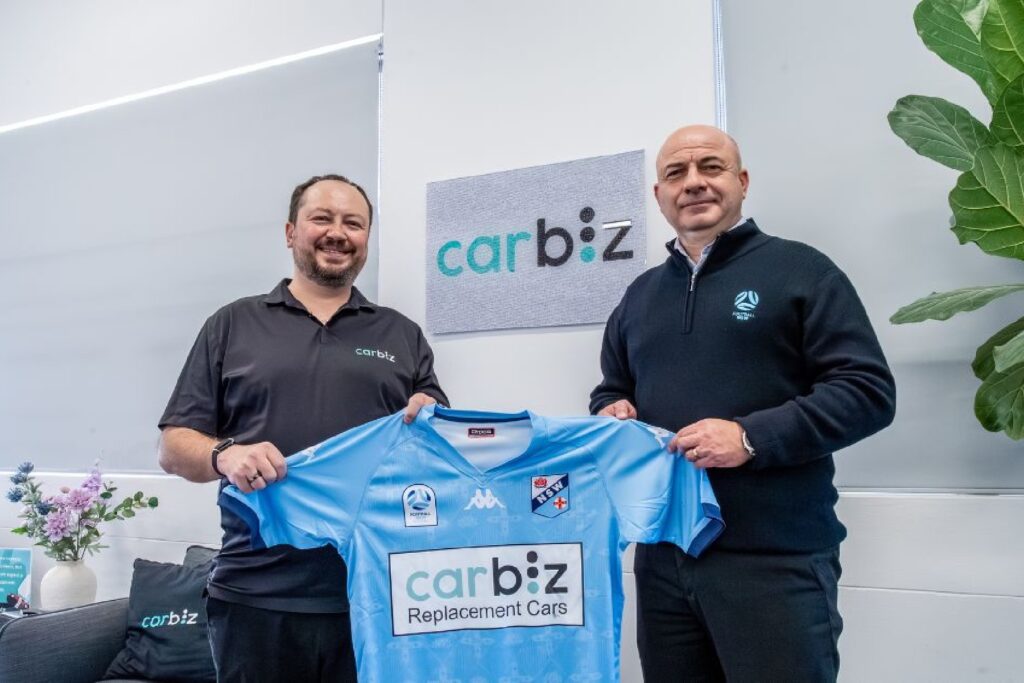
Carbiz will become the new Naming Rights Partner of Football NSW‘s premier futsal competitions in a deal set to run for two years.


Committed to growth

From its beginnings as a second-hand car dealership in 2016, Carbiz has seen incredible growth over the past decade. It now operates as Australia’s leading replacement car provider with over 12 branches, 200 staff and 500 partnerships.

No strangers to progress, hard work and community support, the Carbiz family is now aligning itself with one of Australia’s fastest-growing sports. Through this partnership, Carbiz will support the continued rise of futsal across New South Wales and the broader Australian football landscape.

“This is a fantastic partnership for Football NSW and for futsal in our state,” said Football NSW CEO, John Tsatsimas, via press release.

“Carbiz is a brand built on service, resilience and community values, which strongly aligns with our own vision for football and fustal in New South Wales.”

In 2022, futsal participants across Australia reached 58,453 – an 8% increase on the previous year. In 2025, however, this number rose to 63,425. Numbers in NSW also saw growth in this period, increasing from 4,682 to 5,230.

So with the highly-regarded and community-driven Carbiz backing the game’s development in NSW, futsal will launch into an exciting future.


Community connection

Competition and the desire to win are key aspects of any game – especially football.

But at the heart of the grassroots game is a fundamental wish to unite the local community. Thus, finding partners who understand this commitment – and are eager to match it – is so essential.

Furthermore, Carbiz CEO, Alex Rodov, outlined why the company aligns so well with Football NSW’s futsal future.

“At Carbiz, we’ve always believed that strong communities are built through connection, opportunity and teamwork.”

“Sport plays a vital role in bringing people together, and futsal is one of the fastest growing and most exciting forms of the game.”

“As a proudly Australian owned business, we’re excited to support a competition that creates opportunities for young athletes, strengthens local communities and inspires the next generation.”

The agreements will see the newly-named Carbiz Futsal Premier League and Carbiz Futsal Premier League 2 become key environments which support talent development, local participation and engagement with futsal as a whole.

Grassroots Clubs Want to Grow – But They Need the Tools to Do It

Across Australia, grassroots football clubs are doing extraordinary work to keep the game alive in their communities. Volunteers line fields, coordinate registrations, organise sponsorships and manage finances – often all at once. But new survey insights suggest something deeper: clubs want to grow commercially, yet many lack the knowledge and systems required to do so.

The results point to a clear reality. Community football’s commercial potential exists, but it remains largely untapped.

When asked about their club’s commercial strategy, confidence was strikingly low. Half of respondents (50%) said their club has only a limited commercial strategy, while 25% admitted there is no clear strategy at all. Only 25% described their approach as somewhat confident, and notably no respondents felt “very confident” about their club’s commercial direction.


Image Credit: One Nil

For a sport that prides itself on being the most participated in Australia, that figure should give administrators pause.

Community clubs are often expected to behave like small businesses – raising revenue, managing stakeholders and investing in infrastructure. Yet the data suggests many are navigating these expectations without a clear roadmap.

The question then becomes: where are clubs currently generating revenue?

The survey shows that sponsorship and memberships dominate equally, each accounting for 50% of the primary revenue sources identified by respondents. Events, often seen as a key opportunity for community engagement and fundraising, accounted for 0% of responses as the main income generator.


Image Credit: One Nil

This reliance on two core streams highlights a structural vulnerability. Sponsorship and memberships are important pillars, but they are also susceptible to economic pressures and local community fluctuations. Without diversified revenue, such as events, partnerships, digital engagement, or merchandising, clubs risk stagnating financially.

However, perhaps the most revealing insight from the survey relates to the barriers clubs face in expanding their commercial capabilities.

A significant 75% of respondents identified a lack of commercial knowledge as the biggest barrier to growth. The remaining 25% pointed to volunteer capacity.


Image Credit: One Nil

This distinction is crucial. It suggests the issue is not simply about manpower, but also expertise.

Volunteers remain the lifeblood of grassroots football, but expecting them to also function as marketing managers, sponsorship strategists and commercial analysts may be unrealistic without proper support. In many cases, passionate community members are asked to perform professional-level commercial tasks with limited guidance.

That challenge becomes even clearer when examining how clubs track their commercial performance.

Only 25% of respondents said their club tracks return on investment consistently, while 75% said they do so only sometimes.

Image Credit: One Nil

Without consistent measurement, it becomes difficult for clubs to demonstrate value to sponsors, justify investments, or refine strategies. In modern sport, data-driven decision making is not a luxury; it is essential.

For community clubs competing for attention and funding in crowded local markets, the ability to measure impact could be the difference between securing long-term partnerships and losing potential sponsors.

Encouragingly, the survey also highlights where clubs believe solutions may lie.

When asked what support they need most to grow revenue, 50% of respondents identified commercial education as the priority. Meanwhile 25% called for better commercial tools, and another 25% highlighted the need for stronger media and content capabilities.

Image Credit: One-Nil Media

Taken together, these responses paint a consistent picture: grassroots clubs are not asking for handouts, they are asking for knowledge, systems, and support.

This presents a major opportunity for football’s governing bodies, commercial partners and industry stakeholders.

If the sport is serious about strengthening the foundations of the game, investing in commercial capability at the community level must become part of the strategy. That could mean workshops for volunteers, accessible sponsorship toolkits, digital platforms that simplify partnership management or better storytelling frameworks that help clubs showcase their value to local businesses.

The demand clearly exists.

Community football already delivers enormous social return by bringing people together, supporting youth development and strengthening local identity. The challenge now is ensuring clubs have the commercial frameworks required to sustain that impact.

Because the truth is simple: grassroots clubs are willing to do the work.

They just need the tools.

And if Australian football wants to unlock the full potential of its largest participation base, empowering community clubs commercially may be one of the most important investments the game can make.

Most Popular Topics

Editor Picks

Send this to a friend