
Ange Postecoglou’s journey has laid a path for future Australian coaches to succeed in Europe

At Football Victoria’s Community in Business Full Time Luncheon event, special guests discussed Ange Postecoglou’s brilliant start at Tottenham Hotspur and explained his journey through the coaching ranks.

Postecoglou’s incredible 27-year coaching resume started at South Melbourne FC, the team he played 10 years with in the old NSL. Ange’s stint at the Roar was memorable, most notably his record-breaking 36-game unbeaten run which saw them win multiple titles during his reign.

After spending time managing the national team and Japanese club Yokohama F. Marinos, it wasn’t until his Celtic managerial move that contributed to the positive reputation spike of Australian managers in the world game.

The Celtic appointment was faced with lots of criticism from the Scottish media and Celtic supporters, but his success made sure that simmered down quickly. It was a huge milestone in Australian football as it was the first time an Aussie manager not only managed a major team in Europe but also won a league title in Europe.

Former South Melbourne FC player Paul Trimboli and Melbourne Victory legend Archie Thompson were on the panel that told their personal anecdotes about how he was on and off the field. This has opened up a wider discussion about Australian coaches in general and how there is quite a lack of success in that area.

Archie Thompson, who played under Postecoglou for his short stint at Melbourne Victory, spoke about his coaching style at the Community in Business event recently.

“He is a little bit difficult to read at first for sure but what I admire is how he was able to evolve. He came into Victory and changed the way he played the game from his Roar days, and it worked. We scored heaps of goals and had success,” Thompson said.

“Ange was solely focused on the team first over any individuals. It was never Thompson 1 or 2-0; it was Victory 2-0 and that’s why he has been so great. He has a knack of appreciating individuals but always keeping the team-first mentality.”

Ange’s incredible journey does paint a picture however of the struggles that Australian coaches have breaking into European football, which is increasingly becoming an issue as more Aussie coaches succeed in both the men’s and women’s game domestically and in Asia.

Gary Cole, President of Football Coaches Australia (FCA) has previously discussed in length about the significant hurdle that these coaches face, which is acquiring the UEFA pro license.

Despite Postecoglou’s deep football coaching resume, his move to Celtic could have been derailed because of the system and rules set in place in order to attain the license, which review the coach’s ability to manage a professional football team.

However, there is no doubt that Ange’s incredible journey and early Manager of the Month success at Tottenham Hotspur will open doors for fellow Aussie managers to be firstly given a chance but to also succeed in Europe.

Kevin Muscat had a small stint at Belgian club Sint-Truiden in 2020, whilst Patrick Kisnorbo managed ESTAC Troyes and became the first ever Australian manager of a team in a ‘top five’ European men’s league. Kisnorbo’s move to fellow City group club  Troyes, thanks to his success at Melbourne City, also presents as a future opportunity for A-League managers who impress.

Whilst the results from both weren’t or haven’t been fantastic, the opportunity was granted to them due to recent success and the foundation potentially laid for the future of Australian coaches in Europe. These moves only increase the validity of the A-League and Australian coaches, especially because of the long journey a lot of these managers go through just to reach that sort of level.

The future is brighter for the reputation and validity of Australian football, a country that is quickly latching on to the sport especially after Men’s and Women’s World cup successes.

Ange Postecoglou continues to shine in the Premier League and his impressive story has no doubt created its own pathway for more Australian coaches to follow with hopefully less obstacles and difficulties.

Previous ArticleNext Article

The A-Leagues Final Series important status also a secret hinderance

The Isuzu A-League finals series is a huge event in the footballing calendar, though its contribution to stagnant attendance numbers in the league is something to be said.

If the 2025/26 finals series follows similar patterns to those before it, it will gather huge traction and strong ticket sales.

It is the largest event for the domestic league, bringing in massive amounts of viewership through media and gate receipts.

Finals series from years past have shown this, with the 2024/25 final, a Melbourne derby, being sold out within 48 hours and gathering significant viewership online.

The idea of a finals series lies within the Australian sporting ethos; the other sporting codes have had this tradition for most of their existence, especially in recent history.

Football, though, is different from the rest of the sporting codes in Australia, unique even. This has historically contributed to its inability to integrate into the same supported status as other codes.

Many in the Australian footballing community, supporter groups, players, coaches, and even the new Director of Football Australia, have voiced concerns over fan numbers in the league competition.

It wouldn’t be absurd to say that maybe, though profitable now, the finals series is actually taking away from the league itself.

Consider the media image: the league winner is called the “minor premiership,” and ticket sales and viewership figures reveal a huge disparity between the two parts of the A-League.

It must be said that an alternative that could work in unison with the league and possibly increase viewership of the league itself would be a great advantage.

It would allow the league to gain more jeopardy and drama, which could build greater interest in attending league games.

One alternative is already here.

No other sporting code in Australia has both a league competition and a cup competition. Football in Australia does.

The Hahn’s Australia Cup is our equivalent to the FA Cup in England or the Copa del Rey in Spain.

These are competitions that offer a finals option in a different competition entirely. They generate huge traction while never diminishing the importance of the league and, therefore, its popularity.

These cup competitions cannot be discussed without acknowledging some obvious differences.

They don’t face the same popularity issues that football does in Australia. It’s obvious the Hahn’s Australia Cup doesn’t yet gain the traction that the finals series does.

However, for a healthy footballing environment with increasing fan numbers, it should.

The idea of elevating the Hahn’s Australia Cup and scaling back the finals series is a complex question, one that is treated like a “no-go zone” by many in the Australian footballing community, and that is understandable.

Though big changes like this might, in the end, be credible options for the future of the sport in this country.

Larger plans must be set in motion, strategies that can be worked towards and refined along the way. It is the process by which all large organisations, business models and even national governments build their strategies.

Such a shift will be scrutinised and pushed back against.

Though with further fine-tuning and smart investment in development, not to mention the introduction of promotion and relegation and the possibility of changing the footballing calendar.

It could replicate the success that these two-competition models already enjoy in other leagues.

The added importance that the premiership would gain, the reality that every game matters, could alongside other strategies entice fans to more games, increase viewership and ticket sales, and create more dedicated fan bases. It works in other nations, very well in fact.

The possibility of two teams lifting a trophy, rather than one single event defining it all, sounds like a strategy that could deliver more engagement over longer periods of time.

Maybe Australian football doesn’t need to answer this question just yet. It is complex, difficult and it would require a great deal of work, including significant investment into the game, which is another issue entirely.

Yet as low attendance numbers persist in the A-League, even alongside increased media viewership, something needs to change for football in Australia.

The rise in popularity of this game and its dedicated community deserves bold ideas and forward thinking.

Ideas like this could eventually begin to change the landscape of the beautiful game in Australia for the better.

How Husqvarna Is Helping Stadiums Cut Costs Without Cutting Quality

At a time when operational costs are rising across global sport, stadiums and football clubs are being forced to rethink one of their most overlooked expenses: turf maintenance.

From diesel consumption to labour hours, maintaining elite playing surfaces has traditionally been both resource-intensive and environmentally taxing. But new data emerging from venues like CBUS Super Stadium suggests a smarter, more sustainable model is already taking hold.

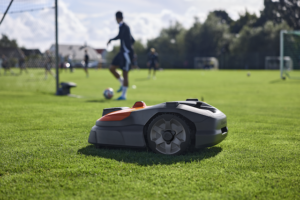
Leading that shift is Husqvarna, whose autonomous turf technology is quietly reshaping how professional venues manage their playing surfaces. Their product delivers measurable cost savings without compromising quality.

Cutting fuel consumption costs

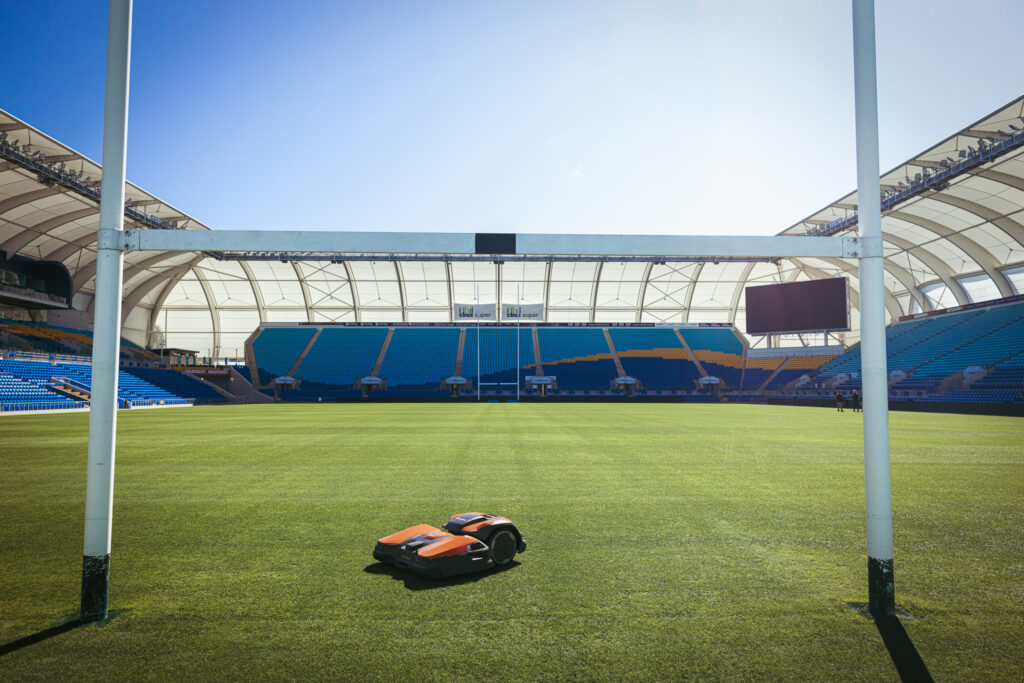
At CBUS Super Stadium, the introduction of Husqvarna’s CEORA™ robotic mowing system has reduced diesel usage by approximately 20–30 litres per week. Over the course of a season, those savings compound into a significant reduction in both fuel spend and carbon emissions. This is particularly efficient for stadiums hosting regular fixtures and large-scale events.

CBUS Super Stadium General Manager Kristian Blundell said the robotic mower was a game-changer for the venue:

“This technology is not replacing staff but rather giving our grounds team the ability to do what they do best by helping to improve turf management processes, better manage fatigue and decrease our environmental footprint”

But the impact goes beyond fuel.


Time efficiency

By automating routine mowing, Husqvarna’s technology enables grounds teams to focus on higher-value maintenance tasks, from pitch recovery to detailed surface management. The result is not only greater operational efficiency but also improved turf consistency, which is an increasingly critical factor in elite football performance.

The benefits are being mirrored beyond stadium environments. At Oatlands Golf Club, Husqvarna’s autonomous mowing has delivered savings of up to 60 litres of fuel per week while freeing up staff for precision work. Quiet, round-the-clock operation also ensures surfaces are maintained without disrupting play—an advantage that translates directly to multi-use stadium settings.

Image Credit: Husqvarna

Importantly, Husqvarna’s lightweight robotic systems reduce the wear and tear typically caused by traditional heavy machinery. This not only protects the integrity of the playing surface but also reduces the need for costly repairs over time.

Football clubs navigating tight budgets at grassroots and semi-professional levels could benefit from such cost savings.

With rising energy prices, increasing sustainability expectations, and limited staffing resources, the ability to cut costs while improving performance is no longer optional. Solutions like Husqvarna’s CEORA™ are positioning clubs to operate more efficiently today, while preparing for a more environmentally accountable future.

As the sports industry continues to evolve, one thing is becoming clear: the next competitive edge may not just come from what happens on the pitch—but how it’s maintained.

Most Popular Topics

Editor Picks

Send this to a friend