

APL announce extended Liberty A-League season and 12th team for 2023/24

The Australian Professional Leagues (APL) have today announced that the Liberty A-League Women’s competition will become a 12-team competition, with a full home and away schedule of 22 rounds by the 2023-24 season.

This investment brings the professional game in Australia in line with global standards for match minutes, and is part of a broader strategy to ensure a lasting legacy for the game following the FIFA Women’s World Cup Australia and New Zealand 2023TM.

Western United will officially join in season 2022-23 for a 20-round competition, and Central Coast Mariners have been given a provisional licence by APL and, subject to FA Board approval, will become the 12th team for 2023-24, taking the league to 22 rounds and a total of 132 matches.

A-Leagues CEO Danny Townsend said via press release:

“In the 18-months since we have been running the professional game in Australia, we will increase the number of regular season matches from 70 to 132, finally bringing Australia in line with global benchmarks and ensuring more opportunities for women to play at the highest level and for girls to benefit from the role models and expanded professional pathways this investment creates.”

“We are just 12-months out from the 2023 FIFA Women’s World Cup, and we want to make sure that every girl and woman in Australia has the opportunity to build and grow a lasting relationship with football, the country’s most participated in sport.”

The changes to the Liberty A-League follow close consultation with players and Professional Footballers Australia (PFA) and will lead to the minimum salary in the competition increasing by more than 50% over the next two years.

Kate Gill, Co-Chief Executive of PFA, said via press release:

“Today represents a significant step forward for women’s football in Australia that not only brings to life the players’ vision for a full home and away competition, but indicates the APL’s intent and belief in growing the women’s game.”

“Thanks to the genuine partnership with the APL, the players have played a central role in helping to design a competition that delivers meaningful employment, a professional career path and a strong and sustainable league that will develop the next generation of Australian talent.”

Liberty Chief Executive Officer James Boyle added the expansion of the Liberty A-League competition was welcome news that Liberty was proud to celebrate as naming rights sponsor.

“We’re passionate about championing women in sport and the growth of the Liberty A-League helps to elevate the profile of women’s football. The more women role models in the professional sporting arena, such as the A-Leagues, the richer the opportunities for future generations. APL shares our pioneering spirit and culture of diversity as it continues to take strides towards creating a more inclusive sport. We are proud to share with the A-Leagues our passion – and action – for fostering gender equality on and off the field.”

Chief Operating Officer of the 2023 FIFA Women’s World Cup Jane Fernandez said via press release:

“Huge congratulations to APL for this growth, and it really does follow the growth trajectory of women’s football right around the world.

“This is a once in a generation opportunity. We are heading towards Qatar, where the Socceroos have just qualified to play. Then we move towards the expanded Liberty A-League, with the Grand Final to be held right on the eve of the expanded FIFA Women’s World Cup with, for the first time, 32 teams playing in the competition.

“The benefits and the opportunities are huge, and it’s not just for the players, there are benefits also for those who want to volunteer, to coach and to be leaders in our game.”

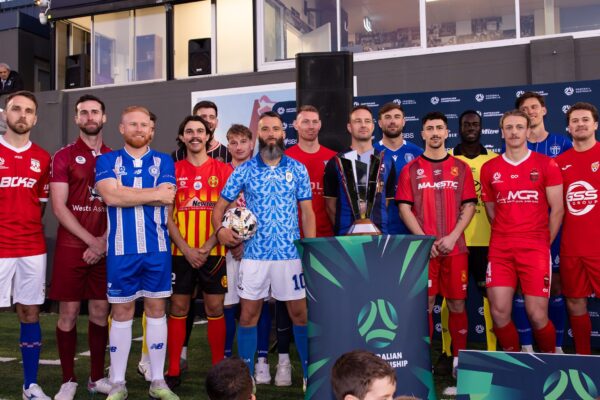
This is the second expansion announcement in twelve months, following the addition of Wellington Phoenix’s women’s team in 2021. APL also signed an historic 5-year CBA last year, and launched the Club Championship trophy, designed to encourage better fan engagement with women’s football.

The expanded and extended 2022/23 Liberty A-League season kicks off on 18th November 2022 and all matches will be broadcast live on Network 10 and Paramount+, the Australian home of football.

Previous ArticleNext Article

The Participation Boom Councils Didn’t Plan For Is Hitting Football Hard

Football in Australia isn’t being held back by passion, participation, or community support. It’s being held back by local government failure. From a CEO perspective, the warning signs are no longer subtle — they’re screaming. Confidence towards councils is collapsing, clubs are done believing the rhetoric, and the people carrying the game every weekend are telling us the same thing: councils don’t understand football, don’t consult properly, and don’t plan for growth. This isn’t opinion anymore. It’s measurable. And it should embarrass every policymaker in the country.

Football in Australia isn’t struggling because of a lack of passion. It isn’t struggling because communities don’t care. And it certainly isn’t struggling because participation is declining.

Football is struggling because, at the local government level, confidence is collapsing. What is more, the people closest to the game can feel it.

Soccerscene’s latest survey on council readiness and football planning shows something deeply confronting: trust in councils is at its lowest point, and clubs no longer believe the rhetoric. Councils frequently speak about “supporting the world game” and “investing in community sport,” but the data tells a different story.

The people building the game every weekend, people such as presidents, coaches, volunteers and administrators, are telling us councils do not understand football demand, do not consult effectively, and do not plan for long-term growth. And that’s not an emotional opinion. It’s now measurable.

In our survey, over 61% of respondents said their council has limited or no understanding of football participation demand. Consultation outcomes were even worse: 74% said council consultation is inconsistent or ineffective. And when asked if facilities are being planned with long-term growth in mind, the answer should stop every policymaker in their tracks: more than 71% said planning is short-term or non-existent.

Results graphic from Soccerscene’s January industry survey:

This is not a small problem. This is a national warning sign.

Football is not a niche sport. It’s the world’s sport

Councils across Australia are making decisions as if football is still an emerging code, competing for scraps. That thinking is decades out of date.

Football is not only Australia’s largest participation sport in many communities – it is also part of the global economy of sport, the largest sport market on earth, and a cultural engine that connects Australia to Asia, Europe, Africa and the Americas.

When councils underinvest in football infrastructure, they’re not just failing local clubs. They’re failing an entire economic pipeline: participation growth, player development, coaching pathways, community engagement, multicultural integration, women’s sport, health outcomes, events, tourism, and commercial opportunity.

And yet, football is still treated as the code that should “make do”.

The Glenferrie Oval case: a perfect example of the imbalance.

Take the redevelopment of Glenferrie Oval and the historic Michael Tuck Stand in Hawthorn.

This is a major project with a total estimated investment of approximately $30 million, with the City of Boroondara allocating $29.47 million over four years to transform the site into a premier hub for women’s and junior AFL.

Let’s be clear: there is nothing wrong with investing in women’s sport. In fact, it’s essential.

But this investment is also a symbol of something football people have been saying quietly for years: councils understand AFL. Councils prioritise AFL. Councils know how to justify AFL.

They don’t do the same for football, despite its participation scale, multicultural reach, and global relevance.

Across the country, football clubs are being told there is “no funding,” that “planning takes time,” or that facilities “can’t be upgraded yet.” Meanwhile, we see multi-million-dollar grandstands, boutique ovals, and legacy infrastructure funded and delivered for other codes.

Football isn’t asking for special treatment.

Football is asking for fair treatment based on reality.

Councils are stuck in a domestic mindset – while football is global.

Here is the core issue: local councils are making decisions through a domestic sporting lens, while football operates in a global one.

Football isn’t just a Saturday sport. It’s a worldwide industry with elite pathways, commercial frameworks, international investment, and an ecosystem that Australia must compete within.

If councils don’t understand this, they will keep making decisions that shrink our competitiveness.

And this is where the stakes become real.

Australia is not only competing against itself. We are competing against countries like Japan and South Korea, who treat football as a national asset. They don’t leave football infrastructure to fragmented local decision-making without a clear national framework. They invest strategically, align education with delivery, and build systems that create long-term advantage.

We cannot keep pretending we are in the same conversation globally while our local facilities remain stuck in the past.

Clubs are carrying the burden – and it’s breaking the system.

The survey results point to a harsh reality: football clubs feel like they are carrying the weight of growth alone.

When asked what the biggest council-related challenge is, nearly 49% said funding is not prioritised, while others pointed to poor facility design, limited engagement, and slow planning processes.

This isn’t just an inconvenience.

It is creating volunteer burnout, club debt, stagnation in women’s participation, and barriers to junior growth. It is forcing clubs into survival mode – patching up grounds, sharing overcrowded facilities, and trying to grow in spaces that were never designed for modern football demand.

And when planning is short-term, the problem compounds. Councils aren’t just falling behind- they’re building the wrong solutions.

So what do we do? We stop reacting and start leading.

Football cannot keep waiting for councils to “get it” organically. That approach has failed.

What we need now is a national strategic response that is structured, intelligent, and relentless.

This is where football must learn from high-performing football nations  not just on the pitch, but in governance, philosophy, and decision-making.

A powerful example is Korea’s “Made in Korea” project, which was built to identify structural gaps, align stakeholders, and create a unified development philosophy. It wasn’t just a technical framework, it was a national alignment strategy.

Australia needs the off-field equivalent.

A National Football Facilities & Readiness Taskforce.

I believe the time has come to establish a National Football Facilities & Readiness Taskforce, made up of the most capable minds across the game and beyond it.

Not another committee. Not another meeting group.

A taskforce.

It should include leaders from football, infrastructure, urban planning, commercial strategy, government relations, and corporate Australia. We should be selecting the most intelligent and effective people in the country, not based on titles, but based on outcomes.

This taskforce should have one clear mission:

Educate, influence, and reshape how councils plan, consult, and invest in football infrastructure.

Alongside a taskforce, we need long-term strategic working groups embedded across the states, designed to:

educate councils on football participation demand and growth forecasting

standardise best-practice facility design and future-proofing

create consistent consultation frameworks

align football investment with economic, health and multicultural outcomes

build a national narrative that football is an asset rather than a cost

Because right now, the survey shows councils aren’t prioritising football for economic reasons. In fact, only 2.56% of respondents said councils should prioritise football due to economic benefits. This is not because it isn’t true, but because councils haven’t been educated to see football that way.

That is a failure of strategy, not a failure of the game.

This is bigger than facilities – it’s about Australia’s place in the world game.

If we want to be taken seriously as a football nation, we must build a country that treats football seriously.

Not just at elite level.

At local level – where the entire pyramid begins.

The message from the survey is blunt: football’s confidence in councils is collapsing. But within that truth is also an opportunity.

Because when trust hits its lowest point, change becomes possible.

The next step is ours.

We either continue accepting a system that doesn’t understand the world game – or we build one that does.

Building the future: The Socceroo who has came home

In the modern football economy, the transition from elite athlete to administrator is rarely seamless. For two decades, David Williams’ existence was governed by the binary metrics of the professional game: goals scored, contracts signed, and minutes played. From the freezing training pitches of Brøndby to the humid pressure cookers of the Indian Super League, his career was defined by the relentless demand for performance.

Now, following his retirement in November 2025 due to a career-ending ACL injury, the former Socceroo is swapping the stadium penalty box for the grassroots pitch. As the newly appointed Program Development Lead at Football West (FW), Williams is tasked with reshaping the foundational layer of West Australian talent.

A Strategic Coup for the State

For the state governing body, securing Williams is a significant coup. The “ex-pro” circuit is often littered with tokenistic ambassadorial roles, but Williams offers tangible intellectual property. His journey began as a teenage prodigy at the Queensland Academy of Sport, carrying the heavy burden of being labelled the “best Australian prospect since Harry Kewell” by Miron Bleiberg.

He has lived the entire spectrum of the industry: the hype of a European transfer at 18, the volatility of the A-League loan system, and the cultural adaptability required to win titles in India. He understands the mechanics of the “football business” better than most.

“I’m very excited to have this opportunity to stay in football and work with young people,” Williams said. “I’m passionate about youth development and helping them grow, whether that’s as a coach, a mentor or just as a role model.”

The “Role Model” Mandate

In his new capacity, Williams will oversee the Coles MiniRoos, Football School holiday camps, and school clinics. On paper, these are participation programs. In practice, they are the first point of contact in the talent pipeline.

For FW, leveraging Williams’ heritage is a strategic necessity. As a member of the Indigenous Football Australia Council, Williams understands the structural barriers facing indigenous players. His presence provides a tangible pathway for kids who often feel disconnected from the metropolitan elite.

“Being indigenous, I would love to do some work in the regions and work with young indigenous children through football,” Williams noted. “It would be great to support the regional CPOs (community participation officers) and deliver sessions with these kids. That’s something I’m extremely passionate about.”

This is not a post-retirement affectation. Throughout 2025, while still nominally a Perth Glory player, Williams was already building his coaching resume as head coach of the Charles Perkins XI: Football Australia’s First Nations youth program. He isn’t just a figurehead; he is an operator actively closing the gap between regional talent and elite opportunity.

Proving the Concept: Success in the Dugout

Williams’ administrative portfolio is backed by growing tactical acumen. In December 2025, he coached the WA Paras State Team to their inaugural national title. For a squad that had frequently been the “nearly men” of the competition, Williams’ high-performance mindset was the catalyst for a historic breakthrough.

“That was an unbelievable experience, especially for the people who have been in the Paras program for a long time and seen them go close so often,” he reflected.

Crucially, this role sits alongside his appointment as Technical Director for NPL WA powerhouse Stirling Macedonia. Williams sits at the intersection of the state’s entire ecosystem as he drives grassroots participation for the federation by day and steers elite NPL structures for a club by night. It signals an ambition to master the technical direction of the game, not just the commercial side.

A Global Perspective, Locally Applied

Williams’ value to the WA system lies in his resilience. He was the first Indigenous player to represent Melbourne City. Williams scored in the UEFA Cup against Eintracht Frankfurt. He won the Indian Super League with ATK.

David Williams understands the technical demands of European academies and the harsh realities of the transfer market. When he speaks to a 12-year-old at a holiday clinic, he isn’t reciting a coaching manual. He is speaking from the experience of sharing a pitch with Alessandro Del Piero. He knows what “elite” actually looks like.

“After I finished at Perth Glory last year, I had some other great opportunities, but I am more passionate about my role within Football West,” Williams said. “This is different.”

As 2026 approaches, Williams faces a new kind of pressure. He is no longer responsible for scoring the winner at HBF Park. Instead, he is charged with ensuring that the thousands of kids in the MiniRoos programs fall in love with the game, and that the pathways he once navigated are accessible to them. It is a different game, but one David Williams is uniquely qualified to play.

Most Popular Topics

Editor Picks