


APL CEO Danny Townsend on why A-Leagues All Access is giving football an edge

Yengi

In a season built around rejuvenation, the in-house produced A-Leagues All Access has led the way for the Australian Professional Leagues (APL) in 2022-23.

A-Leagues All Access – a key part of the APL’s strategy to start to win back the disenchanted many left alienated by the previous administration – was set to debut as a flagship offering under the APL’s first full season in charge of the A-Leagues (2021-22). However, as has been the case since 2019-20, COVID-19 delivered disruption in spades, and the APL were forced to shelve the project until now.

The series is presented week-to-week in a fly-on-the-wall manner akin to Amazon’s ‘All Or Nothing’ show, except in comparison A-Leagues All Access delves into the experiences of one individual’s actions on matchday and the broader impact of their influence on the team. So far, the series has given fans insight into Central Coast Mariners starlet Garang Kuol, Sydney FC detractor Milos Ninkovic, and Chloe Logarzo’s role at the heart of the debut Liberty A-League campaign for Western United women’s.

Accumulating more than 2.2 million video views and over 4.6 million social media impressions (as of November 23), the success of A-Leagues All Access thus far is reflected in the correlation between the aforementioned video views and social media impressions and transition of interest onto free-to-air (FTA) broadcasts of the A-League Men, with the APL confirming a 33% growth in FTA viewership between episodes 1 and 4 of A-Leagues All Access.

The reception alone is an indicator of eyes and ears being pulled towards the sport, as well as the hearts and minds being won back by the APL.

Speaking with Soccerscene ahead of the restart of the A-League Men’s season, APL CEO Danny Townsend explored why exactly A-Leagues All Access is resonating with fans, the motivations behind the series, and how the series provides football with an edge over the rest of Australia’s competitive sporting landscape.

Luis Nani

Why do you feel that A-Leagues All Access has resonated with Australian football fans?

Danny Townsend: Well, I think at the end of the day football fans want to look under the hood and see what goes on. Watching 90 minutes of football can be compelling but really getting to understand the behind-the-scenes ongoings they’re not accustomed to seeing is something that I’m sure has driven a huge amount of the interest in A-Leagues All Access.

When you’re close to the action as someone who works in the game you take it for granted, but when you’re a fan on the outside and you’re not accustomed to seeing it, it really brings to life that experience of being inside of a dressing room or board room, or at a training ground. But more importantly when you’re watching the game unfold over 90 minutes you can connect those things together and get a full experience.

It feels like A-Leagues All Access is connecting fans to the leagues in a way they’ve always craved for. How significantly did re-engaging disenchanted fans play into the motivations behind A-Leagues All Access?

Danny Townsend: The APL has an overarching strategy that has three key pillars to it – one being how do we re-engage our core fans who’ve drifted particularly with COVID making it so difficult to give them certainty around when matches are played; that really affects your core more than anything else.

Our second pillar is looking at how we grow new audiences and the All Access program serves both. It serves to re-engage our core and gives them another reason to reignite their interest in their clubs or their players, and for new fans who haven’t watched the A-Leagues before, it maybe exposes them to some interesting content that draws them into it.

Finally, our third pillar is to grow the capabilities of our clubs and equally a lot of the content we’re creating through the capturing of All Access is finding its way to club socials, which is driving a lot of engagement there. So, it’s really designed to serve all three pillars of the APL’s strategy.

Obviously, A-Leagues All Access captures the unpredictable nature of football and more broadly, live sport. Why do you feel the series gives an edge to football over the other codes?

Danny Townsend: We’re not a sport that has 60 scoring opportunities in the actual match itself. The euphoria around goals being scored is limited in our game but when they are scored, they’re celebrated, but there is so much more to it. It drives excitement as you see the coach and how they’re engaging with their players, it shows how players are reacting to certain circumstances in the dressing room – those things are all heightening the experience for a fan. And if we can bring fans as close to live as we can that’s only going to bring them closer to our game.

If you look at other fly-on-the-wall documentary series’ like ‘The Test’ for cricket, it was launched over a year after the period it documented. Formula One ‘Drive to Survive’ is a retrospective look at the season that’s already gone and everyone that’s watching knows what’s already happened on the grid. Whereas with what we’re embarking on with A-Leagues All Access it’s live; it’s in the now; it’s basically bringing to life the match on that weekend and driving interest into next weekend’s match.

Western United

How is the series coordinated? Is the whole season mapped out or is it organised on a week-to-week basis?

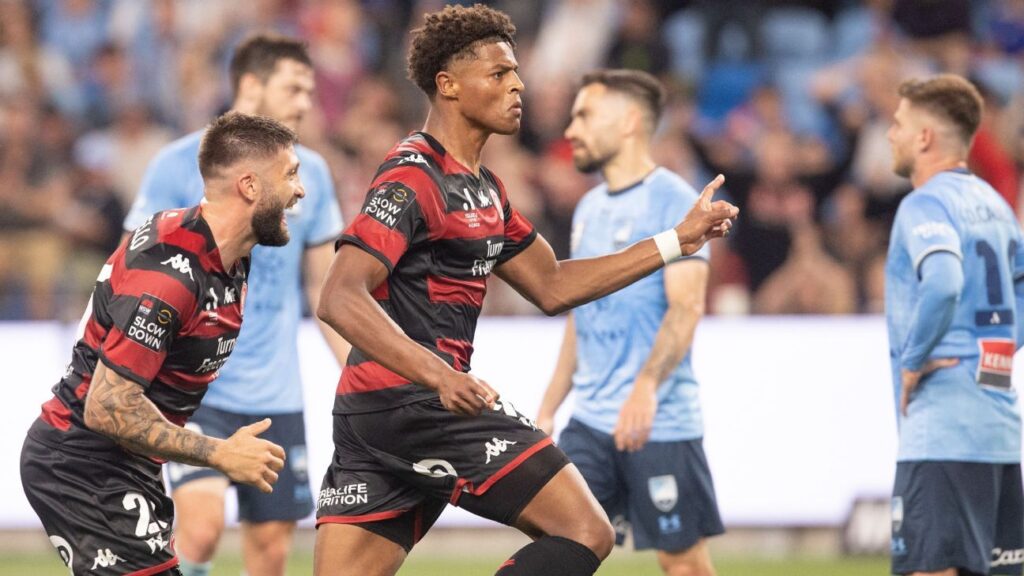
Danny Townsend: We looked at the first six weeks to start with because we had some fairly predictable stories that would surface such as the Ninkovic example which was always going to be one that the fans would want to get in behind. Nani’s first game was an obvious one at the new stadium in Sydney that we wanted to follow. And Chloe Logarzo’s was her first game returning from injury at a new club in pursuit of being a part of the Matildas at next year’s World Cup.

So, there are certain ones we’ve identified throughout the 30 weeks that we’ll be going after and there’s ones we’ve left open. As stories evolve throughout the season based on the ebbs and flows of competitive sport there’ll be stories that unfold that we don’t know of yet that will be part of the 30 episodes.

Will the A-Leagues All Access series be looking to expand beyond players and coaches to potentially highlight fan groups such as the team at RBTV or any of the active support groups?

Danny Townsend: Absolutely! There’s only so many dressing room sprays that you want to put on air before they get boring.

But on a serious note, we’ve got so many colourful stories in our league from the fans to even the administrators and how decisions are made around clubs. There’s just so many different components of the A-Leagues that we want to bring to life. Obviously, you start with players because they’re the stars of the show and coaches are major contributors to the game. But as you move through those stakeholder groups, there’s certainly interesting stories in there and fans are certainly going to be a focus in upcoming episodes.

Has there been an onward effect in terms of viewership of and engagement with TV and Paramount+ viewership since the series started?

Danny Townsend: Absolutely. We’ve looked at it through two lenses: how do we drive full episode viewing on any of the platforms it’s on (KEEPUP, Paramount+, 10Play, YouTube) but also just as important is the social reach that we’re generating from it. The clips and the cut-up short-form content that we’re distributing has been enormous and has so far accumulated over three million views, which for Australia and our game is enormous. That’s building every week as it becomes more appointment viewing for people waiting for Thursday night for the next episode to drop and that’s something we expect to continue.

For mine, A-Leagues All Access is only one part of a broader content strategy for KEEPUP Studios. We’ve launched All Access with KEEPUP Studios but you’ll start to see a lot more content alongside our podcast series’ that have been coming out – I think our current podcast is the number one in football at the moment and that’s going to continue to build. And from a video standpoint you’ll be seeing more original content being developed by the APL and KEEPUP Studios, and as the season rolls out there’ll certainly be more shows to engage A-Leagues fans and football fans in general, so, watch this space!


Mariners

Previous ArticleNext Article

FIFA’s U15 World Cup continue to seek secretive external investment

FIFA’s inaugural U15 World Cup has raised fresh questions about transparency after private investors were reportedly involved in plans to finance and commercialise the tournament. According to reporting from The Athletic, FIFA President Gianni Infantino discussed a potential investment worth more than US$250 million without informing members of the FIFA Council about the external investment talks.

The proposal involved Todd Boehly’s Eldridge Industries. Boehly owns Chelsea in the Premier League. It reportedly targeted a global U15 tournament involving all 211 FIFA member associations. The discussions included broadcast rights and a potential hosting location near Disneyland before being scrapped. The investment discussions add another layer to FIFA’s growing push to bring private capital into football.

Council oversight questioned

The biggest issue is not simply the size of the proposed investment. It’s that this was planned in late 2025 without the FIFA Council being included. Several FIFA Council members reportedly said they were unaware that external investors were being approached. They learned about the discussions after the reporting emerged.

FIFA has disputed the suggestion that the process breached its governance rules. The organisation said its administration was developing funding options for the tournament and that the Council would consider formal proposals when required. However, the distinction matters. A tournament involving children, FIFA’s global brand and long-term commercial rights creates significant governance responsibilities.

A new commercial model

The proposal also shows how FIFA could use new competitions to create commercial properties. The reported investment model explored revenue from broadcasting, sponsorship and licensing. The intention to use a youth sporting tournament for external commercial benefit and to create value with all 211 nations represented adds another layer to FIFA’s questionable actions.

The proposal was reportedly dismissed just before this year’s FIFA World Cup. This could have been due to FIFA’s extensive proposal to introduce the FIFA Forward Enterprises (FIFA), which received major backlash as the governing body attempted to sell stakes in its major tournaments. The agreement with Eldridge Industries could’ve been a conflict with those existing FFE plans.

A different direction

For FIFA, they ultimately went against the proposal ideas. The U15 World Cup will be held in October in Azerbaijan from October 22nd to 31st. But once again, transparency and FIFA become an issue. The lack of consultation around specifically a youth tournament with the wider footballing community raises questions if FIFA is developing the game only for financial gain.

The U15 project may eventually create a valuable global football property. But the way FIFA handles its commercialisation could determine whether that value strengthens the organisation — or creates another governance problem.

Who Coaches the Coaches? Gary Cole on the Gaps in Australian Football’s Development System

Australian football has long placed player development at the centre of discussions about the game’s future. But former Socceroo, coach and football administrator Gary Cole believes another question deserves greater attention: who is developing the coaches responsible for developing those players?

Following Soccerscene’s recent analysis of the challenges facing Australia’s coaching system, Cole spoke about his experience of coach education, the National Football Curriculum, pathways into professional coaching and the growing number of Australian players pursuing opportunities overseas.

His assessment points to a broader issue. Australia does have a formal pathway for aspiring coaches, but qualifications alone do not necessarily create better coaches or provide a pathway into professional employment.

For Cole, the missing link is what happens between completing a coaching course and becoming capable of consistently improving players on the pitch.


From coach education to coaching

Cole’s introduction to coaching stretches back to the early development of formal coach education in Australia during the 1970s.

He recalls being encouraged into coaching by Dr Ron Smith while studying to become a primary school teacher, before later working under influential figures including Eric Worthington.

One experience with Worthington as a young player fundamentally changed Cole’s understanding of what coaching could achieve.

Worthington worked with Cole and his fellow forwards on their movement and ability to create space for one another. Rather than simply organising a training exercise, the coach was deliberately changing individual and collective behaviours that could then influence what happened in a match.

“It was a light bulb moment for me,” Cole said.

“What he was doing was changing my and the team’s behaviours in training, where that could impact the way we played together on the field.”

That distinction remains central to how Cole views coach education today.


Does the current coach education system adequately prepare Australian coaches?

“I think it prepares some of your coaches some of the time, but not all of the coaches all of the time,” Cole said.

His concern is that Australian coach education has, at times, moved too far away from the practical environment in which coaching actually occurs.

“In my opinion, and from the feedback that we’ve gotten at Football Coaches Australia over the journey, coach education lost its way a little bit for a period of time,” he said.

“Some of it became academic. It was more about PowerPoint presentations, more about talking about coaching than it was about coaching.

“The magic of coaching happens between human beings on grass. That’s where the success happens.”

Cole does not dismiss the importance of theory, tactical discussion or other off-field preparation. Instead, his argument is that these elements ultimately need to translate into a coach’s ability to influence player behaviour.

As coaches progress further into performance environments, he believes that ability becomes increasingly important.

“The reality in coaching, as you go up through the performance pathways, is it becomes more and more about helping people to get the right behaviours individually and collectively on the pitch on the weekend,” he said.

“And that requires you to do that on the pitch during the week.”


Is the National Football Curriculum still fit for purpose?

Australia’s National Football Curriculum has played an important role in creating a common framework for player and coach development.

But with the current curriculum dating back more than a decade, Cole believes a review is overdue.

“There was a lot of good stuff in there,” he said.

“There was a bunch of stuff that wasn’t in there. There’s nothing about tackling or heading the ball, which is quite bizarre given these are two parts of the game.

“Does it need reviewing? Yes, absolutely.”

The need for a review is not simply about individual football skills.

The environment surrounding coaching has changed significantly, from data and performance analysis to artificial intelligence and the increasingly diverse backgrounds of players entering Australian football.

“The game does change and evolve,” Cole said.

Perhaps more importantly, Cole cautions against assuming there is only one correct way to coach.

He admits that earlier in his career he was something of a “coaching snob”, believing successful coaches needed to approach the game in a similar way to those he had learned from.

Experience changed that perspective.

“There’s never just one way of doing it,” he said.

“People can be successful doing things differently.”

For Australian coach development, that raises an important question: should a national curriculum prescribe how coaches should think, or give them the foundations from which they can develop their own approach?


Australia has a coaching pathway – but where does it lead?

Cole is clear that there is a formal route available to aspiring Australian coaches.

Coaches can progress through the licence system from the C and B Licences towards the A and ultimately Pro Licence.

But accessing qualifications and building a professional coaching career are two different challenges.

“Having the licence is one thing that gives you access to the road,” Cole said.

“But to become the driver, you need to get on the road, make some mistakes – preferably don’t kill you – and do all those things.

“Go and get yourself a job at whatever level that you can and you’re comfortable at and develop as a coach.”

Experience, he argues, cannot be replaced by certification.

“The best coaches are the ones that have had hundreds and thousands of hours working with football and on the park, because that’s where they develop.”

Cole points to Joe Montemurro as an example of that evolution.

Early in his coaching career, Montemurro told Cole he would observe other coaches and borrow training exercises that looked effective. Over time, however, he developed a clearer understanding of who he was as a coach, how he wanted his teams to play and which exercises actually served that philosophy.

“The best coaches have the capacity to make the complex simple,” Cole said.

The missing bridge into professional coaching

The greater structural problem emerges when coaches attempt to turn that development into a career.

Cole points to Heidelberg United coach John Anastasiadis as an example of the type of progression that should theoretically exist: achieve success in the NPL, earn an opportunity within an A-League environment and potentially progress towards becoming a professional head coach.

In practice, Cole believes that transition remains rare.

“The number of NPL coaches that get spotted and targeted by A-League coaches is almost non-existent,” he said.

“If they’re lucky, they can get a job, and that’s great because it’s the door towards being a professional coach.”

Cole believes Australian coaches with established professional records are highly regarded. However, when clubs look beyond that group, overseas experience can often be prioritised ahead of coaches working within Australia’s NPL competitions.

“We rarely then look down into the NPL competitions in all of the states to find the next batch of elite coaches,” he said.

It creates a difficult contradiction within the Australian pathway.

Coaches are encouraged to obtain qualifications, accumulate experience and prove themselves within the domestic system, yet success at NPL level does not necessarily provide a clear bridge into the professional game.

Are overseas pathways a failure of Australian development?

The same pathway debate applies to players.

The United States college system has become an increasingly visible option for Australian footballers, offering an established sporting and educational environment alongside opportunities to progress into professional competition.

Cole, however, cautions against treating every player who leaves Australia as evidence that the domestic system has failed.

“Development of players is not linear,” he said.

“You like to put things in boxes, but the reality of player development is it can go ahead in leaps and bounds, and then it doesn’t move for a while.”

His advice to parents of talented young players is therefore relatively simple.

“Take them to somewhere where they want your child to be a part of it, you’ve got a good coach and they’re going to play.”

That final point is particularly important.

Australian players have increasingly secured opportunities in Europe and other overseas markets, but Cole argues the prestige of signing abroad matters less if the player is not receiving meaningful playing time.

“We’ve seen a whole bunch of young Australian players in the last 10 years go off into Europe, get a contract in Europe, not play in Europe, get some time in the reserves, and then come back and play more regularly in the A-League,” he said.

“And that’s okay as well.”

For Cole, development should ultimately be judged by whether an environment gives a player the coaching and competitive minutes required to improve.

“Who coaches the coaches?”

It was Cole’s final observation that perhaps best encapsulates the challenge facing Australian football.

When formal coach education was first established, he recalls technical directors carrying responsibility for both player development and coach development.

He believes that role has changed significantly.

At NPL level in particular, technical directors can now spend substantial amounts of time dealing with parents and concerns surrounding selection, playing time and the significant fees families pay for junior football.

“The technical director role is more like a customer service officer because they’re dealing with parents who are paying an awful lot of money for their kids to play,” Cole said.

“If the kids don’t play, they don’t get enough game time or they don’t start enough, they want to know why, and that role falls back on the TD.”

The consequence is potentially significant.

If technical directors become consumed by administration and parent management, responsibility for actively developing coaches can become secondary.

“Within the club system, someone needs to be responsible for player and coach development,” Cole said.

“Because if we’re going to help our players and coaches develop, we need to be thinking about what goes on.

“And who coaches the coaches?

“Coaches can learn without being coached, but coaches benefit from being coached as well.”

That may ultimately be the distinction Australian football needs to address.

Creating more qualified coaches is measurable. Creating environments in which those coaches receive mentorship, accumulate meaningful experience, develop their own football philosophies and can progress towards professional employment is considerably more difficult.

If Australia wants to improve the players emerging from its development system, strengthening the people responsible for developing them may be one of the most important places to start.

Most Popular Topics

Editor Picks

Send this to a friend