

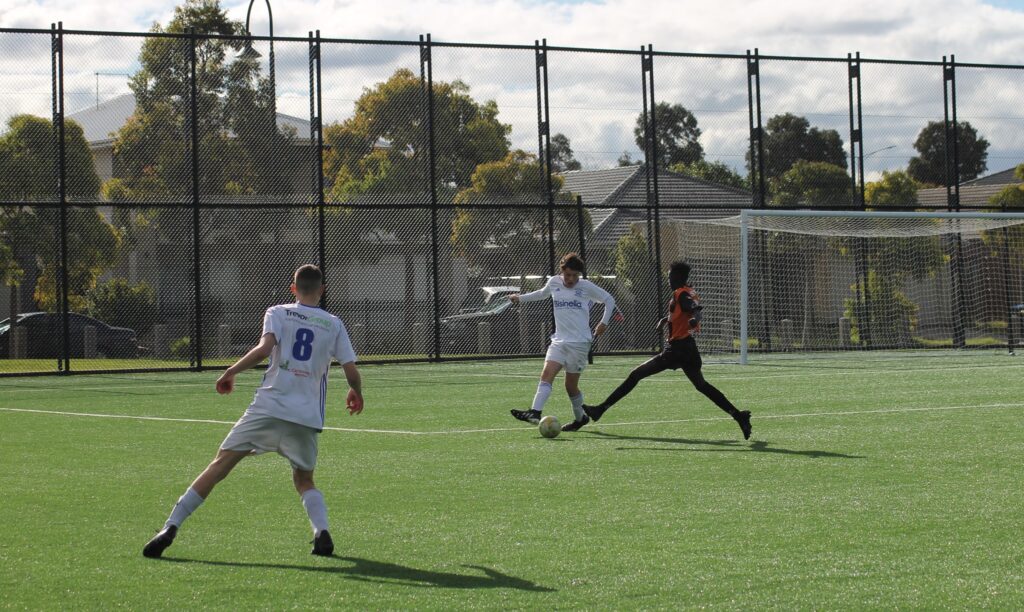
Bell Park Sports Club backed by local council

The City of Greater Geelong Council has made a significant investment towards Bell Park Sports Club, showing its commitment for grassroots.

The City of Greater Geelong Council has made a significant investment towards Bell Park Sports Club, showing its commitment to assist the growth of grassroots sport in the south-west of Victoria.

At the home of Bell Park Sports Club, which is located in Batesford, the agreement involves the purchase of land by the City of Greater Geelong, providing enormous long-term opportunities.

The deal is worth around $2.5 million, which includes a contribution from approximately $820,000 from the state government and roughly $1.7 million from the City of Greater Geelong.

City of Greater Geelong Councillor, Eddy Kontelj:

“This announcement and partnership between the City of Greater Geelong Council and the Bell Park Sports Club, from my information, is unprecedented in Geelong,” he said to Soccerscene.

“The Bell Park Sports Club has a proud history and has been providing soccer facilities for the local community for more than 60 years and continues to cater to hundreds of junior and senior players.

“This agreement is financially sound and will ensure we have sporting facilities to meet the future needs of our growing Geelong population – the entire community will be the beneficiary of this investment in the world game.”

The funding will be used to upgrade facilities and add in female-friendly change rooms in an attempt to encourage more young females to get involved in sports.

A lighting upgrade will also be a special feature of the developments, valued at around $630,000 with funding coming from the Victorian Government.

“If we are serious and sincere in our endeavours to achieve true equality in sport and our society, them it is imperative that all players, regardless of gender, have the same opportunities and quality facilities in order to succeed,” Kontelj said.

“It shows a strong message when we do not compromise on facilities or investment just because of gender. To do so is not ok.”

Cr Kontelj believes that the investment will have a positive effect on the Geelong community in the coming years, and that investing in infrastructure encourages those affiliated with grassroots to get more involved in sports.

“Geelong is a sporting city, however, we can only retain that reputation by delivering and retaining facilities in key growth areas and also continuing to maintain faculties to a very good standard in well-established suburbs and areas in the Geelong region,” he said.

“It is well proven that having people, particularly our youth, participate and engage in well supported team environments and sporting/physical activities has benefits well beyond physical fitness.

“It provides an opportunity to establish lifelong friendships and comradery, it opens up the doors to mentoring and coaching, instils discipline and routine, provides pathways to athletic and sporting success and also helps with maintaining good mental health.

“However, for a community to benefit from all of this, we need to invest in the infrastructure to encourage diverse and welcoming participation. The City of Greater Geelong Council’s investment in the Bell Park Sports Club is an example of just this.

“The entire community will be the beneficiary of this investment in the world game.”
Previous ArticleNext Article

Football Victoria recognised in Pride in Sport Index 2026

The Silver Status shows Football Victoria‘s commitment to providing Victorians with a safe, inclusive landscape for all to enjoy the beautiful game.

Everyone’s game

Earlier this month, the Australian Pride in Sport Awards recognised several organisations and individuals across the nation who continue to champion inclusive spaces in the world of sport.

Among the nominees was Football Victoria, who received the Silver Status. FV Executive Manager Equity, Programs and Government Relations, Karen Pearce, expressed her pride at the achievement.

“Achieving Silver Status in the Pride in Sport Index is an important reflection of the work being done across Football Victoria to ensure LGBTQ+ people feel safe, welcomed and included in our game,” Pearce said via official press release.

“We remain committed to embedding inclusive practices across all levels of football, and continuing to create environments where everyone can belong, participate and thrive.”


Inclusion matters

While recognition is always a positive reflection of successful work behind the scenes, it is important to remember what the work intends to achieve.

Football – and sport in general – is a unique opportunity to bring diverse communities together, and to compete, spectate and enjoy the game on an equal playing field.

Furthermore, as custodians of ‘the world’s game’, governing bodies, fans and players around the world all share the responsibility to empower marginalised groups to feel included.

Two months ago, The Premier League introduced their own initiative – Premier League With Pride – reflecting their own commitment to ensuring football grounds, schools and academies remain welcoming.


Final thoughts

There is no place for hate or abuse in football, whether on a grassroots field or professional stadium.

Football Victoria will continue its journey and commitment to supporting the LGBTQ+ community – at all levels of the game – for many seasons to come.

Football Queensland to celebrate Female Football Week with statewide events, awards and coaching programs

Brighton women's football motion

Football Queensland will mark the 2026 Female Football Week with a program of statewide events, competitions and professional development opportunities running from May 8-17, as the governing body continues to push for broader access and representation across all levels of the women’s game in Queensland.

The nationwide initiative, now a fixture on the Australian football calendar, provides a concentrated period of visibility for female participation across playing, coaching, officiating and administration: areas where structural underrepresentation has historically limited both the growth of the game and the opportunities available to women and girls within it.

“Female Football Week provides us with a valuable opportunity to celebrate the contributions of women and girls across our game while continuing to increase the accessibility of football in Queensland,” said Football Queensland CEO Robert Cavallucci. “We encourage our clubs to host their own Female Football Week events and activations for female participants.”


Elite Competition Meets Community Access

The centrepiece of Football Queensland’s program is the return of the NPL Women’s Magic Round to Nudgee Recreation Reserve on May 8 and 9, featuring five NPL Women’s Round 13 clashes alongside a Girls United Junior Carnival and family-friendly activations. Each Magic Round game will feature an all-female refereeing panel, a deliberate and visible commitment to developing the next generation of female match officials at a moment when referee shortages are among the most pressing structural challenges facing the game nationally.

A Women in Football networking event will be held on the opening night of Magic Round, bringing together coaches, match officials and administrators. The inclusion of that event alongside elite competition is significant because it positions professional development and community building not as supplementary activities but as core components of what Female Football Week is for.

The Central Coast region will host its own Magic Round on May 16, featuring a Youth Girls game and three FQPL Central Coast Women’s matches, while a Darling Downs Junior Girls Day will take place at Captain Cook Park on the same day, extending the reach of the week’s programming beyond the southeast corner of the state into regional Queensland.


Coaching access as a structural priority

Football Queensland will deliver a series of female-only coaching courses around Female Football Week, with clubs also able to express interest in hosting their own. The initiative addresses one of the most persistent barriers to female representation in football administration- its coaching pipeline.

Female coaches remain significantly underrepresented at all levels of the game in Australia, and the barriers to accreditation, including cost, availability and the cultural environment of mixed coaching courses, compound one another in ways that individual ambition alone cannot overcome. Female-only courses create environments where women can develop without those barriers, and their delivery during Female Football Week signals that the commitment extends beyond celebration into structural change.

The Girls United Carnivals, running in both Metro and Far North and Gulf regions alongside the Q-League Schools program at Meakin Park, extend that access to players at the earliest stages of their football journey.

Most Popular Topics

Editor Picks

Send this to a friend