


Benchwarmers: Providing a sportswear solution to improve player performance and safety

Australian company Benchwarmers have developed an innovative solution, through their functional sporting attire, to keep players warm when they are not on the field.

Their product, a body-length garment, is specifically designed to keep the most vulnerable parts of the body warm such as the upper legs, whilst keeping the arms free to allow players to regulate their own body temperature.

The item is ultra-lightweight and includes other features such as insulated inside pockets, a hood, a resistance to water and wind, as well as fully fleeced lining for extra warmth.

Creator of the product, Andrew Lauder, recently developed the Benchwarmer after his previous experiences as a coach on the sidelines.

“I identified that there was a problem years ago, he told Soccerscene.

“I was coaching young kids and was having to take down blankets and stuff to keep them warm on the benches.

“Some kids in football once they get a head knock or something, they go into a little bit of a shock and there was nothing to keep them warm on the bench apart from club hoodies or something along those lines, which was ridiculous.”

“Over the 2020 period I sort of started designing Benchwarmers, working out the features of how best to do it and have continued to go on from there.”

Lauder explained it was extremely necessary for grassroots players to keep their muscles warm on the bench before they came on, to avoid hamstring strains and other common soft tissue injuries.

“The main point is, especially with juniors and amateurs, they are sitting on the bench waiting for their time to come on and they don’t warm up like the professionals do,” he said.

“Professionals may say ‘let’s jump on the bike and get your legs moving’, but the kids and the amateurs they run on without properly warming up their body.”

The design of the Benchwarmers product.

Lauder has built up the product to a local and international audience and has found some success in doing so, despite it being a relatively new product.

“I put it out there to the kids, because that’s where I started it all,” he said.

“But at the moment it’s the amateurs in England who have started grabbing it and some clubs here.

“One thing that I get sometimes with the smaller clubs is they love it but they don’t want to pay for it. With junior clubs they are obviously volunteers and they are more hesitant to make the decision to spend the money. It’s crazy because you ask them every time, what do you have in the kitbag to keep the kids warm? They usually have nothing, just club jackets, which I don’t believe is sufficient.”

Lauder continues to invest his time into avenues which will grow the presence of his item, such as social media work, further marketing of Benchwarmers and listening to customer’s feedback.

“My main thing at this point of time is that I’ve been doing a lot of direct email marketing which I’ve put out,” he said.

“I am also building the Instagram and Facebook pages to target clubs and people to sort of get them onto it and that has started to work in some cases.

“Some feedback I’ve received by one of the clubs, for example, showed me the benefits of how important it is to be a lightweight product. One club wanted ten of them and wanted his manager to be able to put them into the kit bag and carry them from job to job. They don’t take up too much space, their waterproof, their fully lined inside, they’ve been developed with 40cm pockets on the inside which are insulated – all these things help.”

The creator of Benchwarmers hopes the product will continue to have steady growth here in Australia and overseas in the long term.

“In the future I wish that the Benchwarmers brand is in a hell of a lot of clubs and people are wrapped they have them for their kids,” Lauder said.

“Basically, I want them to think to themselves, why didn’t we do this or buy this years ago?”
Previous ArticleNext Article

Soceroos and Matildas sue Football Australia over financial dispute

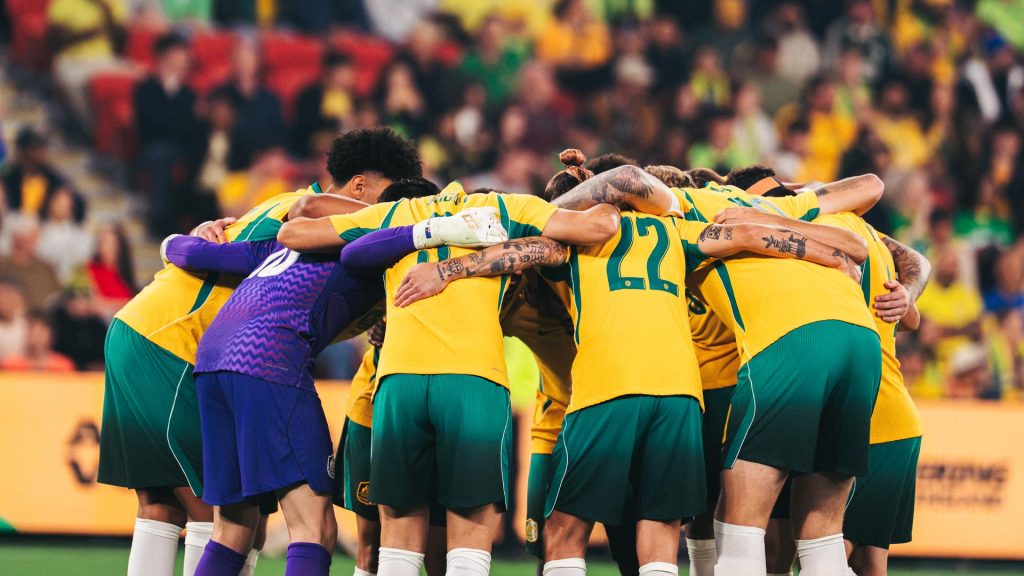
Players of the Socceroos and Matildas have launched legal action against Football Australia over a multi-million dollar dispute relating to their revenue-sharing agreement in the NSW Supreme Court.

According to the Australian Associated Press (AAP), the players’ union, Professional Footballers Australia (PFA), are enacting on behalf of the players and are understood to be pursuing a seven figure claim.

The PFA is expected to argue the revenue-sharing agreement between the governing body and national team players is not being fulfilled properly.

The PFA is yet to comment.

But the FA has acknowledged the legal dispute, claiming it is in relation to, “a third party in connection with a separate matter currently being conducted before the National Dispute Resolution Chamber (NDRC)”.

‘The Supreme Court’s role is limited to the subpoena process, and its involvement ends once that process is complete,’ an FA spokesperson said.

‘As the NDRC matter is ongoing and subject to confidentiality obligations, Football Australia will not comment further,’ they stated.

In 2023, a collective bargaining agreement was signed between the players’ union and FA. It gave the Socceroos and Matildas stars a portion of the national teams revenue which contributes up to half of FA’s overall earnings.

Additionally, the agreement included incentives for players and FA to work together, allowing both sides the chance to reap even larger rewards.

Registration fees or sponsors for programs that fund grassroots football are strictly prohibited in relation to the players’ cut of revenue. 

However, as long as it relates to the national team the players receive an 18-20 per cent portion of all relevant finances. This could include ticketing, kit sales, broadcast or sponsorship contracts. Through the CBA this money makes its way back to the players.

Matildas icon Lisa De Vanna, who played 150 times for the national team from 2004-19 has already made her opinion heard on there lawsuit via X.

“1 of the best-paid teams in the world, w best elite environments: 40 personal staff,business flights,5 star hotels, private chefs N baristas n still not happy,” she said.

“Instead of knocking game when it’s at its lowest, maybe play for pride n not greed.”

The disagreement comes just before the Socceroos head to the Middle East during the November international break.

With the squad set to be announced later this week, the ill-feeling between players and the governing body will hopefully remain separate from the performances on the pitch.

WA announce TV series for Sam Kerr’s children’s novels

A new TV series based on Sam Kerr’s children’s books ‘Kicking Goals’ is set to begin filming in early 2027 in Western Australia.

The show follows a young Kerr before she became captain of the Matildas and a star at Chelsea FC. Set in her home state of WA, the story sees her navigate her way through growing up and chasing her dreams, alongside her family and friends, and the adventures that entailed.

Speaking to Screenwest, Kerr said, ‘It’s pretty surreal knowing that Kicking Goals is being adapted into a TV series. These stories are all about believing in yourself and having a go, so it feels really special that a whole new generation will get to experience them on screen.’

Co-authored by Fiona Harris, the books have been a success since their initial release in 2021, a period which has coincided with Kerr and her Matildas teammates growing from beloved within Australia’s football community, into a team of genuine national appeal and recognition. They are available nation-wide, sold at major retailers such as Big W and Dymocks.

The television adaptation will beproduced by Orange Entertainment for Paramount+.

‘Kicking Goals’ is set to inject AUD 5million into the WA economy and provide over 130 local jobs.

Creative Industries Minister of WA, Simone McGurk, said via WA GOV, ‘The series will showcase all that Western Australia has to offer – including our world-class talent, crew, and diverse locations – while celebrating the story of one of our sporting greats.’

Casting is currently underway, with a search for a young Kerr and her mates ongoing.

The months after the 2023 FIFA Women’s World Cup in Australian and New Zealand saw an 11% increase in women and girl’s participation in football compared to the previous year, showing the direct impact the biggest stage can have on grassroots football.

Kerr has managed to build on that success and begin a new chapter, inspiring kids both on and off the field.

Most Popular Topics

Editor Picks

Send this to a friend