



Construction begins for Melbourne City’s South East Melbourne home

Following a historic inaugural A-League championship and premiership double, Melbourne City have confirmed that construction has begun on the brand-new Etihad City Football Academy Melbourne.

A formal ‘groundbreaking’ ceremony attended by senior executives and community leaders from the City of Casey, the City of Greater Dandenong, Cardinia Shire Council and Melbourne City FC formally kicked off construction at the 84-hectare sporting precinct in South East Melbourne.

The first stage of construction includes the central elite training pitch, with its 115m x 115m hybrid grass surface, due for completion by the end of 2021. The new pitch is adjacent to the site’s existing four full-sized pitches – one grass and three synthetic – which will be primarily used by the Club’s Academy teams and for City in the Community programs, as well as for City of Casey school and club programs.
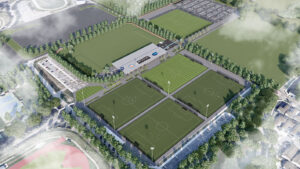
Fields

The next stage of construction will see the development of Melbourne City’s new two-storey administration and high-performance building at Casey Fields, currently in detailed design phase. Construction on that phase of the facility is due to commence in the coming months, with completion estimated for mid-2022.

The Club’s Academy teams started training and playing at Casey Fields in February, while administration staff will begin working from Casey Fields next month. Melbourne City’s championship-winning A-League team and four-time Westfield W-League championship winning side commence 2021-22 pre-season training on site in August and September respectively.

Melbourne City CEO Brad Rowse and City of Casey CEO Glenn Patterson were on hand to put the first spade in the Casey Fields ground.

“This has been a momentous season for Melbourne City FC – starting with the announcement of our move to South East Melbourne and right up until last weekend’s grand final win,” Rowse said.

“Both moments are just the beginning of an exciting future for the Club, the fans, the staff, players and the wider community.

“The welcome we have received in the South East has been extraordinary, and we cannot wait to see the Etihad City Football Academy come to life. This is more than an elite training facility, it’s a home for football in South East Melbourne.”
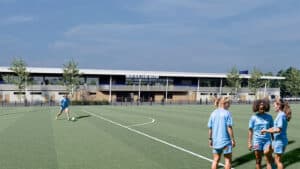
Players training

City of Casey Chair of Administrators Ms. Noelene Duff PSM celebrated Melbourne City’s firm establishment in the South East of Melbourne.

“The commencement of construction on the City Football Academy at Casey Fields is another exciting milestone in this wonderful partnership that is developing between the City of Casey and Melbourne City Football Club,” she said.

“The December announcement of Melbourne City’s move to South East Melbourne was met with great enthusiasm in our community, and to now see signs of life in the development of the next stage of what will be a truly world class facility will only increase that level of excitement.

“The impending move of some of Australia’s best footballers, coaches and sporting administrators will be a wonderful addition to our community, providing positive role models and engagement opportunities on many levels.”

Previous ArticleNext Article

NSW Football Associations Unite Behind AED Mapping Project for Statewide Safety Network

Twelve football associations across New South Wales have joined a statewide effort to map and register Automated External Defibrillators across sporting facilities, in a project that its organisers say will significantly improve emergency response times and save lives at community sport venues.

The Heartbeat of Sport AED Mapping Project, backed by funding from the Minns Labor Government to the Heartbeat of Football Foundation, represents the first comprehensive research into AED placement across NSW sports grounds. The data collected will be provided to NSW Ambulance and its GoodSAM team to enrich the existing AED registry available to ambulance and public first responders, and will feed into NSW Health’s newly released public AED map.

The project has drawn active participation from associations spanning the breadth of the state’s football community, including Eastern Suburbs, Manly Warringah, Granville, Southern Districts, Nepean, Northern Suburbs, Football Canterbury, Bankstown, Hills, Sutherland Shire, North West Sydney Football and Football South Coast.

When seconds matter

The urgency behind the project is not theoretical. At Doyalson Wyee Football Club, a 70-year-old player survived a sudden on-field cardiac arrest because an AED was available on site. The outcome of that incident – and the many others like it that occur across community sport each year – depends entirely on whether a defibrillator is accessible, charged and registered in the systems that emergency responders rely upon.

Sudden cardiac arrest kills without warning. The survival rate drops by approximately ten percent for every minute without defibrillation. In a community sport setting, where professional medical staff are rarely present, a registered and accessible AED is the difference between a player walking off a pitch and one who does not.

The mapping project addresses a gap that has existed largely unexamined. More than 2,400 defibrillators have been deployed across NSW sports and recreation facilities through the Local Sport Defibrillator Grant Program, with grants of up to $3,000 available to eligible organisations. But a device that exists without being registered in emergency response systems provides significantly less value than one that is accurately mapped and immediately locatable by ambulance crews responding to a call.

By encouraging clubs to complete AED registration surveys, the twelve participating associations are ensuring that the equipment already on their grounds is activated within the broader emergency infrastructure – translating a physical asset into a functional one.

Regional communities and the equity of safety

The project’s expansion of the #HeartHealthMatters Program, which brings CPR and AED familiarisation training to sporting organisations with a particular focus on regional areas, addresses a dimension of safety preparedness that often receives less attention than equipment access alone.

Knowing a defibrillator exists on site is insufficient if the people present during an emergency do not know how to use it. Regional clubs, which frequently operate with smaller volunteer bases and less access to formal training programs, face a compounded risk – less equipment, less training, and longer ambulance response times due to geography. The program’s regional focus acknowledges that safety infrastructure, like sporting infrastructure more broadly, is not evenly distributed.

The data gathered through the mapping project will also guide future investment decisions, identifying facilities that still lack AEDs and providing the evidence base for targeted grant funding to address those gaps.

Football associations that have already contributed AED data have demonstrated, in the words of the project’s organisers, strong sector leadership and a shared commitment to safeguarding participants at every level of the game.

For a sport that involves hundreds of thousands of players, officials and volunteers across the state each week, the ambition of the Heartbeat of Sport project is straightforward – that no preventable death occurs on a football ground because the right equipment was not there, or could not be found.

Decision overturned: FIFA World Cup 2026 to return to Federation Square

Following the announcement earlier this week that Federation Square would not return as a live site for this summer’s FIFA World Cup, Football Victoria announced yesterday that the decision has now been overturned.

Widespread support prevails

The football industry moves swiftly. Whether it’s a deadline-day transfer or cut-throat managerial changes, a lot can happen in a short time span.

And this proved true once again in Melbourne this week.

On Wednesday, Melbourne Arts Precinct announced that it will not proceed as a live site during this year’s tournament.

But following widespread backlash to the decision to not use Federation Square as a live site, the initial verdict will no longer go ahead.

“In the past 24 hours, Victorians demonstrated just how important our national teams are to the fabric of our community,” said Football Victoria CEO, Dan Birrell, via press release.

Furthermore, Birrell highlighted that support for a swift overturn also came from those outside the football landscape.

“The response extended far beyond football participants and supporters, reflecting the wider community’s recognition of the signficance of the tournament and the role these moments play in bringing people together.”


Community comes first

Having Federation Square as a live site during this year’s World Cup ensures that Melburnians wanting to back the Socceroos, can do so as one unit.

But even those who won’t be cheering for Australia, and will instead be adorning another nation’s colours, will still be able to unite and show their pride.

This is what live football is all about.

A variety of communities and nationalities which – despite supporting opposing sides – can come together under a shared love of the game. As Birrell continued to explain, this is a fundamental part of why the decision to overturn bares such importance.

“Football is a game that transcends age, background, language and culture.”

“It brings people together from all walks of life and creates moments of connection that are incredibly powerful, particularly uring global tournaments like the FIFA World Cup.”

The Socceroos will kick off their World Cup campaign against Turkey on June 14.


Most Popular Topics

Editor Picks

Send this to a friend