CrowdedVENUE makes stadium safety simple 

CrowdedVENUE focuses on visitor safety, revenue generation and user experience to create a secure stadium event for all. 

They have become a unique combination of IoT hardware and a purpose-built software application that collects, transmits, analyses and presents the behaviour of pedestrian/crowd movement without any need for manual processing during or after study. 

CrowdedHUB sensors merge together the very best in physical identification, including Wi-Fi scanning, Bluetooth scanning, Thermal and 3D imaging of environmental sensing to create a valuable collection of unique data that is independent of any infrastructure. 


CrowdedVENUE’s boasts an incredible data gathering hardware system that is regarded as the most secure in the industry, with automated anonymisation at the source and a multi-layered security application. 

Crowded uses the very best in technology to offer an accurate and cost-effective pedestrian movement analysis solution that addresses the growing demands of both the private and public sectors. 

A network of independent sensors are able to accumulate over 90% of individuals in most areas. That information is then sent directly to Crowded who will automatically generate data relevant to the venue or location. 

The CrowdedVENUE software application continually accesses each sensor on their own to safely extract anonymous data and perform detailed analysis, maps and charts to display all the results. 

The following areas are covered in data collection extending to both inside and outside the venue: 

  • Volume per location 
  • Dwell times per location 
  • Most popular locations by visitors,  
  • Most popular routes by visitors,  
  • Top routes by direction with average journey times 
  • Safest route analysis 
  • Event-based predictive evacuation strategy 
  • Visitor heatmap 
  • 3D imaging 
  • Raw.csv Download 

CrowdedVENUE is related to the PoC’s belonging to stadia and other high-profile indoor venues. CrowdedRAIL and CrowdedCITY are two of the other sectors under the Crowded umbrella where they are predominantly utilised by the public sector as part of a multi-faceted range of consultancy services.  

However, CrowdedVENUE has been developed to help the end-user more directly in a manner that is extra simple, clear and easy to use. This approach enables the client to improve visitor safety whilst increasing revenue generation. 


The CrowdedVENUE service creates an increased level of value compared to its core function. By providing the stadium the means to transcend all current data collection and football monitioring solutions in favour of a real-world IoT “smart” service, it has everything required to become the global standard in crowd safety and visitor experience tools. 

“CrowdedVENUE is one of several services in the range that offers seamless integration into existing infrastructure via its API function.” they said.  

“Crowded is a fantastic solution for new works as a standalone service, but when a major venue already exists, such as a stadium, it is usual for that environment to be operating a proprietary app for visitors, usually based around experience.  

“The CrowdedVENUE API gives you the best of both worlds, allowing you to retain the control and familiarity of your current services, whilst seamlessly integrating the entire value proposition of Crowded.  

“For venues that do not have a current consumer-focused application, CrowdedVENUE is again the perfect choice for you.  

We will guide you through the design, installation and testing phases of installing a visitor app and the Crowded back-end analysis package, helping you to maximise value for both the venue and its visitors, with minimal operational impact.” 

Crowded not only tracks movement of crowd behaviour accessible, robust and cost-effective, but does it in a manner that is safe and secure, making sure that personal information of all visitors is protected. 

With Data Protection and Privacy Law being such a growing concern, Crowded was built specifically to protect the personal information of visitors alongside the integrity of the data the service gathers.” they said. 

“Any potential personal information is anonymised at source, by the hardware itself. This ensures that no personal information is ever in our possession. 

“In addition to this, Crowded provides the user with all the raw data gathered in .csv format. This gives each user the opportunity to observe the integrity of both the data set and the analysis performed by the application.” 

With a variety of data capture services available, CrowdVENUE presents as the ideal point of call for the safe recommencement of fans to stadiums with COVID-19 slowly easing in Australia. 

For more information on Crowded, including extra details on each individual sector, pricing packages and contact, you can find it here. 

Previous ArticleNext Article

Project ACL: The initiative leading the way on injury research

Launched in 2024, the research project recently welcomed two US-based organisations: the National Women’s Soccer League Players Association (NWSLPA) and National Women’s Soccer League (NWSL).


About Project ACL

Led by FIFPRO, PFA England, Nike and Leeds Beckett University, Project ACL aims to research ACL injuries and understand more about multifactorial risk factors.

After piloting in England’s Women’s Super League (WSL), Project ACL will expand to the NWSL in the US, reflecting the global importance of the project’s research and outcome.

“We are incredibly excited to bring the NWSLPA and NWSL to Project ACL,” said Director of Women’s Football at FIFPRO, Dr. Alex Culvin, via official press release.

“Overall, we believe that player-centricity and collaboration with key stakeholders are central to establishing meaningful change in the soccer ecosystem and that players, competition organisers and stakeholdersaround the world will benefit from Project ACL’s outputs and outcomes.”

Interviews with over 30 players and team surveys across all 12 WSL clubs provided the project’s research team with valuable information about current prevention strategies and available resources.

Furthermore, the project tracks player workload and busy schedule periods during the season through the FIFPRO Player Workload Monitoring tool, therefore gaining insights into the link between scheduling and injury risks.


Looking to the data

Project ACL’s partnerships with the WSL – and now the NWSL – are immensely valuable for the future of player welfare in women’s football.

Although ACL injuries affect both male and female athletes, they are twice as likely to occur in women than men. However, according to the NWSL, as little as 8% of sports science research focuses on female athletes.

In Australia, several CommBank Matildas suffered ACL injuries in recent years: Sam Kerr was sidelined from January 2024 to September 2025, Ellie Carpenter for 8 months after suffering the injury while playing for Olympique Lyonnais, and Holly McNamara came back from three ACL’s aged 15, 18 and 20.

And this is just the tip of the iceberg. The 2025/26 ALW season saw several ACL incidents, including four in just two weeks.


Research, prevent, protect

Injury prevention and research are vital to sport – whether professional or amateur.

But when the numbers are so shocking – and incidents are so common – governing bodies must remember that player welfare comes above all else. Research can inform prevention strategies. Prevention means players can enjoy the game they love.

The work of Project ACL, continuing until 2027, will hopefully protect countless players across women’s football from suffering long-term or recurring injuries.

The A-Leagues Final Series important status also a secret hinderance

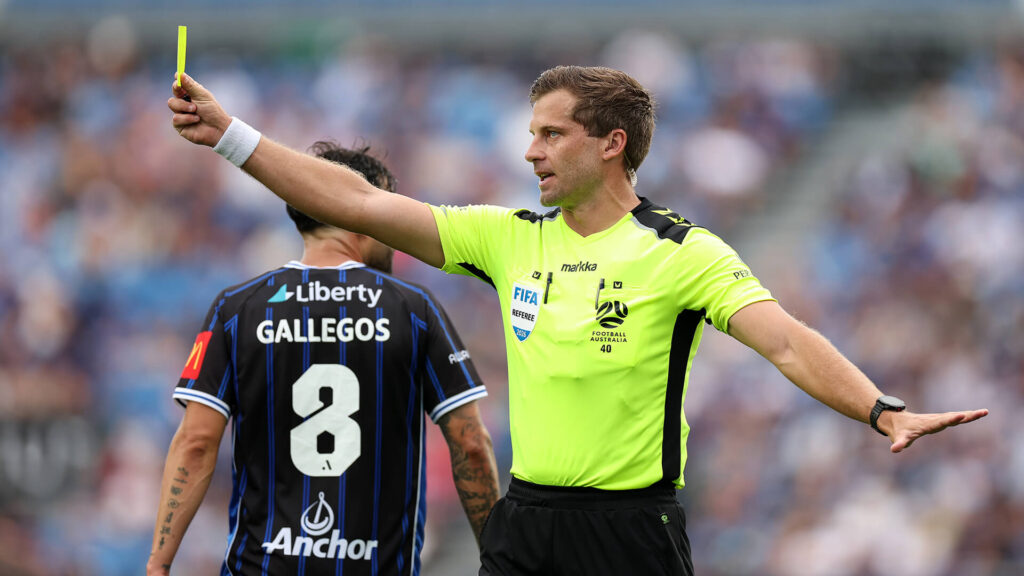
The Isuzu A-League finals series is a huge event in the footballing calendar, though its contribution to stagnant attendance numbers in the league is something to be said.

If the 2025/26 finals series follows similar patterns to those before it, it will gather huge traction and strong ticket sales.

It is the largest event for the domestic league, bringing in massive amounts of viewership through media and gate receipts.

Finals series from years past have shown this, with the 2024/25 final, a Melbourne derby, being sold out within 48 hours and gathering significant viewership online.

The idea of a finals series lies within the Australian sporting ethos; the other sporting codes have had this tradition for most of their existence, especially in recent history.

Football, though, is different from the rest of the sporting codes in Australia, unique even. This has historically contributed to its inability to integrate into the same supported status as other codes.

Many in the Australian footballing community, supporter groups, players, coaches, and even the new Director of Football Australia, have voiced concerns over fan numbers in the league competition.

It wouldn’t be absurd to say that maybe, though profitable now, the finals series is actually taking away from the league itself.

Consider the media image: the league winner is called the “minor premiership,” and ticket sales and viewership figures reveal a huge disparity between the two parts of the A-League.

It must be said that an alternative that could work in unison with the league and possibly increase viewership of the league itself would be a great advantage.

It would allow the league to gain more jeopardy and drama, which could build greater interest in attending league games.

One alternative is already here.

No other sporting code in Australia has both a league competition and a cup competition. Football in Australia does.

The Hahn’s Australia Cup is our equivalent to the FA Cup in England or the Copa del Rey in Spain.

These are competitions that offer a finals option in a different competition entirely. They generate huge traction while never diminishing the importance of the league and, therefore, its popularity.

These cup competitions cannot be discussed without acknowledging some obvious differences.

They don’t face the same popularity issues that football does in Australia. It’s obvious the Hahn’s Australia Cup doesn’t yet gain the traction that the finals series does.

However, for a healthy footballing environment with increasing fan numbers, it should.

The idea of elevating the Hahn’s Australia Cup and scaling back the finals series is a complex question, one that is treated like a “no-go zone” by many in the Australian footballing community, and that is understandable.

Though big changes like this might, in the end, be credible options for the future of the sport in this country.

Larger plans must be set in motion, strategies that can be worked towards and refined along the way. It is the process by which all large organisations, business models and even national governments build their strategies.

Such a shift will be scrutinised and pushed back against.

Though with further fine-tuning and smart investment in development, not to mention the introduction of promotion and relegation and the possibility of changing the footballing calendar.

It could replicate the success that these two-competition models already enjoy in other leagues.

The added importance that the premiership would gain, the reality that every game matters, could alongside other strategies entice fans to more games, increase viewership and ticket sales, and create more dedicated fan bases. It works in other nations, very well in fact.

The possibility of two teams lifting a trophy, rather than one single event defining it all, sounds like a strategy that could deliver more engagement over longer periods of time.

Maybe Australian football doesn’t need to answer this question just yet. It is complex, difficult and it would require a great deal of work, including significant investment into the game, which is another issue entirely.

Yet as low attendance numbers persist in the A-League, even alongside increased media viewership, something needs to change for football in Australia.

The rise in popularity of this game and its dedicated community deserves bold ideas and forward thinking.

Ideas like this could eventually begin to change the landscape of the beautiful game in Australia for the better.

Most Popular Topics

Editor Picks

Send this to a friend