



Everton agree to 777 Partners takeover amidst seasons of turmoil

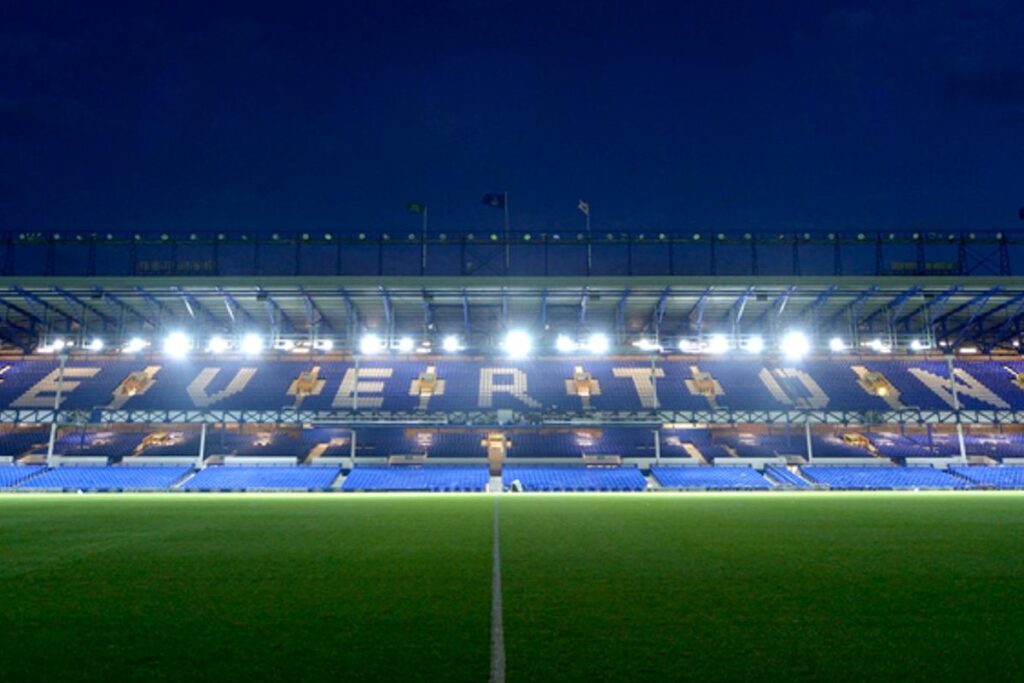
Goodison Park

Everton have agreed on a deal with 777 Partners, as the U.S. private equity firm is looking to taking over from Farhad Moshiri in a deal reports said was worth more than 550 million pounds ($1.06 Billion AUD).

Everton have no doubt been going into turmoil over recent years, between battling close relegation races twice, getting into Financial Fair Play trouble regarding their financial losses and struggling to pay for the new Bramley Moore Dock stadium in full before its completion in 2024.

After another slow start to the new Premier League season, it has left the club in a spot of bother regarding its ownership. Majority owner Farhad Moshiri has been publicly open to selling the club since the end of the 2022/23 season, claiming he could not keep up with the finances after the Everton annual financial report showed losses of over £430 million ($817 million AUD) over the last five years.

Founded in 2015, 777 Partners is an alternative investment platform that helps bold entrepreneurs transform visions into enduring value. The Miami-based company has subsequently branched out into sports club ownership with a vision to play a key part in football in the near future as mentioned on their website.

777 Partners have a number of clubs in its portfolio that have all been acquired over the last four seasons, including Italian side Genoa and Belgian team Standard Liege, while they also have stakes in Bundesliga 2 club Hertha Berlin and more recently A-League side Melbourne Victory.

However, even in their football ownership infancy, there has been major controversy surrounding their lack of investment into players for the clubs they own, as well as a general lack of care for on-pitch results which could spell major trouble for Everton.

Hertha Berlins recently held out banners in disgust for 777 after their shocking start to the Bundesliga 2 season, months after getting relegated from the first division under 777 owner Josh Wander with a dismal 29 points in 34 games, a club record low. The banners read  ‘Josh Wander, the only thing we assure you of is our disapproval of you’. In early September, Standard Liege fans held demonstrations inside their ground with banners such as ‘No money, no ambition’.

Another issue that could play a major role in the success of this takeover is the owners’ and directors’ test that must be passed by all potential owners of premier league clubs. Co-founder Josh Wander was charged and arrested for cocaine trafficking in 2003 and only ended a long period of probation in 2018. Wander admitted in an interview on Sky Sports Italia that this charge would come under additional scrutiny for the owners’ and directors’ test and could be a big roadblock. There are also a number of legal claims against the company still outstanding.

The future looks increasingly bleak for Everton with the poor reputation and record 777 Partners has with its current clubs and this takeover may do more harm than good if that is even possible. Staring down a possibly first-ever Premier League relegation, this change might be better than sitting still under the failure of Moshiri and Kenwright, but there is a rightful lack of optimism surrounding a lot of the club at the moment, especially with the loyal fans.
Previous ArticleNext Article

Football South Australia renews partnership with Datacord as Community Football Commitment Deepens

Football South Australia has announced the renewal of its partnership with Datacord, continuing a relationship that has grown steadily since the South Australian print and document solutions provider first entered the football community as naming rights sponsor of the Collegiate Soccer League Division 1.

That initial agreement, which saw Datacord align with one of Adelaide’s most historic amateur competitions, marked the beginning of what has since developed into a broader commitment to South Australian football at every level. The renewed partnership extends Datacord’s involvement beyond the CSL and into the wider Football SA ecosystem, with clubs across the state now able to access exclusive offers and preferred pricing on photocopying, managed print services and tailored business solutions.

The practical value of that access should not be understated. Community football clubs operate on tight margins, relying heavily on volunteer administrators managing everything from registration paperwork to grant applications. Cost-effective print and document solutions reduce the operational burden on those volunteers, a small but meaningful contribution to the sustainability of clubs that form the backbone of the game in South Australia.

“George is a great supporter of sport in South Australia and we are delighted to have Datacord as a supporter of football,” said Football SA CEO Michael Carter. “Service is second to none and we highly recommend their services to the business community within the Football Family.”

For Datacord Managing Director George Koutsoubis, the renewal reflects a genuine investment in the community rather than a transactional commercial arrangement. “It is important to support the local community, and Football South Australia is the perfect place to start spreading the word about Datacord and what we do for the South Australian community,” he said. “We are locally owned and operated, and I think it is a great partnership to be part of.”

Football NSW releases $600,000 towards Grassroots Grants to meet Participation Pressure

The Victorian State Government has announced new grants and funding for 11 new community infrastructure projects for local football clubs, totalling $3.8 million.

Sixty-five football clubs across New South Wales have secured a combined total of nearly $600,000 in funding through the NSW Office of Sport’s Local Sports Grant Program. It follows as a result of Football NSW’s scale of demand for community sport support and the growing pressure on clubs struggling to keep pace with surging participation.

The grants, covering 69 individual projects across the Football NSW footprint, will fund facility upgrades, equipment purchases, participation programs and accessibility improvements: the unglamorous but essential infrastructure that determines whether community clubs can function at the level their members require.

The Local Sports Grant Program made up to $4.65 million available statewide in 2025, with $50,000 allocated to each electoral district and individual grants capped at $20,000. Football’s share of nearly $600,000 reflects the sport’s status as the largest participation code in NSW, and the degree to which that status has not always been matched by corresponding investment in the facilities and resources required to sustain it.

Volunteers carrying an unsustainable load

The announcement arrives against a backdrop of mounting pressure on the volunteer workforce that keeps community football operational. Across NSW, thousands of volunteers dedicate significant unpaid time each week to administration, ground preparation, canteen operation and the logistical demands of running competitive junior and senior programs. As participation numbers climb, driven in part by the sustained visibility of the AFC Women’s Asian Cup and the legacy of the 2023 FIFA Women’s World Cup, those demands have intensified without a corresponding increase in the resources available to meet them.

“As the largest participation sport in NSW it is pleasing to see almost $600,000 will be reinvested back into supporting our players, coaches, referees and volunteers to improve the football experience across our community clubs,” said Helen Armson, Football NSW’s Group Head of Strategic Partnerships and Corporate Affairs.

The equity dimension

The distribution of the grants across 65 clubs and 69 projects also speaks to the geographic breadth of football’s footprint in NSW, and to the uneven distribution of resources that has historically characterised community sport in this country. Clubs in outer metropolitan and regional areas tend to operate with smaller budgets, older facilities and thinner volunteer bases than their inner-city counterparts. Grant programs structured around electoral allocation, rather than club size or existing resource base, provide a degree of equity that market-driven funding cannot.

The kinds of projects funded under this program disproportionately benefit clubs serving communities where the barriers to participation are highest. A club that cannot offer adequate facilities or equipment is a club that turns players away, often without intending to.

Football NSW has used the announcement to call on the NSW Government to maintain and extend its investment in the sport. “We urge the government to continue to invest in football,” Armson said, in the midst for a nation-wide push for a $343 million decade-long infrastructure fund to address the facilities gap across the state.

The nearly $600,000 secured through this round is meaningful. Against the scale of what is needed, it is also a measure of how far the investment still has to go.

Most Popular Topics

Editor Picks

Send this to a friend