


Females in football celebrated through She Can and the World Cup

She Can

With the widely anticipated 2023 FIFA Women’s World Cup just around the corner, it is becoming ever so more important to teach, support and empower young Australian females about their rightful place in sport.

It is acknowledged that being involved in sports can assist in breaking down gender stereotypes, improve the self-esteem of women and girls, and add to the advancement of leadership and strategic skills.

However, with all the positives of female participation in sports, it is a shame to see that young girls aged 11-17 in Australia have a lower retention rate in sports compared to their male counterparts of the same age.

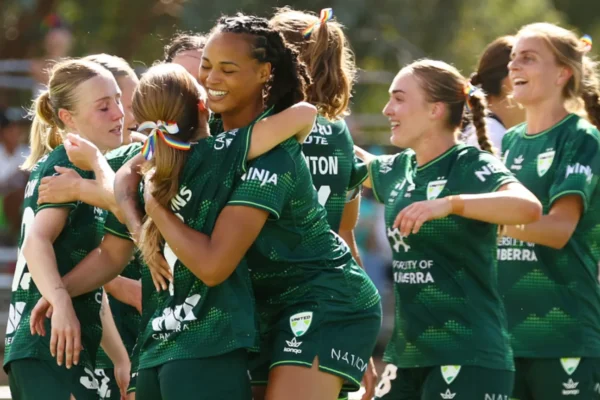
Tackling this problem head-on, the 2023 FIFA Women’s World Cup, hosted jointly in Australia and New Zealand, is expected to be a celebration of women’s football in both countries.

Showcasing the footballing talent of females all across the globe, the World Cup is bound to supercharge women’s football in Australia and New Zealand. The hope is to increase future female participation, starting in grassroots programs.

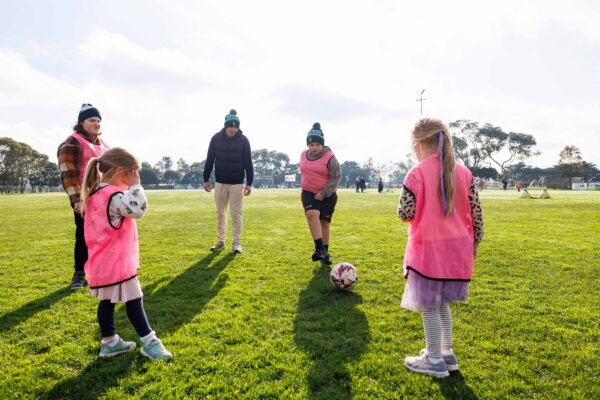
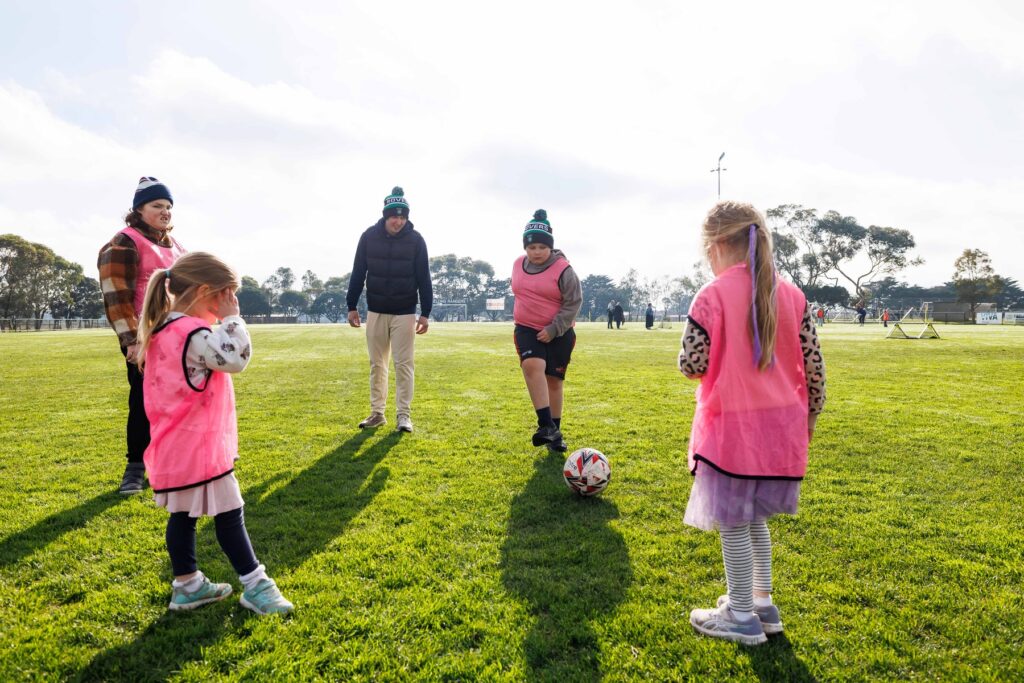
Proactive in addressing this same issue, Sydney FC has recently unveiled its new grassroots initiative, the ‘She Can’ program.

The She Can Program was developed by Sydney FC to break down barriers to sports faced by young girls across the country. It involves both practical and theoretical elements that hope to provide participants with skills and a more in-depth understanding of their own support networks. The program acknowledges that barriers to participation can be overcome as they arise and encourages girls to continue to play their chosen sport in the future.

Rolling out the program in late 2022, students from Illawarra Sports High School were the first to take part in She Can.

The female participants discussed many important topics that young girls could potentially be too nervous or afraid to talk about, such as confidence, leadership, menstruation, body image, and relationships.

A young female participant expressed her gratefulness to the program in a statement:

“She Can has allowed me to open up and talk to the girls about things I wouldn’t normally talk about.”

Mirroring the same gratification, another participant added:

“I have also been able to learn more about who to talk to if I have issues with different things that might put me off taking part in sport.”

The Director of Sport at Illawarra Sport High School, Amy Child, was excited about the opportunity her students had to take part in the program. She spoke about the importance of the program via press release:

“It’s really important for girls to be involved in programs like She Can so that they remain in sport, and also become engaged in lifelong activity and start to overcome and think about the barriers to dropping out of sport.”

Sydney FC Foundation Chair, Jenny Abood is proud of the ‘She Can’ program, addressing her club’s pleasure in a statement:

“Sydney FC is a club known for supporting and developing champion women footballers. We are proud of what our women have achieved domestically and offshore over the last 15 years and now to roll out the She Can Program to keep young girls playing sport is fabulous,” she said.

“Our Board appreciate the importance of such a program, especially given the heightened interest in the beautiful game as we approach the Women’s World Cup this year, hosted in Australia.”

Sydney FC’s Premium Partner Under Armour supported the program by providing participants with a sports bra each to use during and after the program.

Currently, across the globe, different initiatives are designed to support and empower women. Similar to the ‘She Can’ program of Sydney FC, ‘Supporting Her Education Changes a Nation’ (SHE CAN) was developed in 2011. This initiative is aimed at building global female leadership by equipping and empowering talented low-opportunity women from post-conflict and climate-challenged countries with the education, mentorship, and leadership skills needed to change their nations and the world.

The Australia and New Zealand 2023 FIFA Women’s World Cup begins on July 20, with record crowds expected to attend.

Previous ArticleNext Article

Football NSW releases $600,000 towards Grassroots Grants to meet Participation Pressure

The Victorian State Government has announced new grants and funding for 11 new community infrastructure projects for local football clubs, totalling $3.8 million.

Sixty-five football clubs across New South Wales have secured a combined total of nearly $600,000 in funding through the NSW Office of Sport’s Local Sports Grant Program. It follows as a result of Football NSW’s scale of demand for community sport support and the growing pressure on clubs struggling to keep pace with surging participation.

The grants, covering 69 individual projects across the Football NSW footprint, will fund facility upgrades, equipment purchases, participation programs and accessibility improvements: the unglamorous but essential infrastructure that determines whether community clubs can function at the level their members require.

The Local Sports Grant Program made up to $4.65 million available statewide in 2025, with $50,000 allocated to each electoral district and individual grants capped at $20,000. Football’s share of nearly $600,000 reflects the sport’s status as the largest participation code in NSW, and the degree to which that status has not always been matched by corresponding investment in the facilities and resources required to sustain it.

Volunteers carrying an unsustainable load

The announcement arrives against a backdrop of mounting pressure on the volunteer workforce that keeps community football operational. Across NSW, thousands of volunteers dedicate significant unpaid time each week to administration, ground preparation, canteen operation and the logistical demands of running competitive junior and senior programs. As participation numbers climb, driven in part by the sustained visibility of the AFC Women’s Asian Cup and the legacy of the 2023 FIFA Women’s World Cup, those demands have intensified without a corresponding increase in the resources available to meet them.

“As the largest participation sport in NSW it is pleasing to see almost $600,000 will be reinvested back into supporting our players, coaches, referees and volunteers to improve the football experience across our community clubs,” said Helen Armson, Football NSW’s Group Head of Strategic Partnerships and Corporate Affairs.

The equity dimension

The distribution of the grants across 65 clubs and 69 projects also speaks to the geographic breadth of football’s footprint in NSW, and to the uneven distribution of resources that has historically characterised community sport in this country. Clubs in outer metropolitan and regional areas tend to operate with smaller budgets, older facilities and thinner volunteer bases than their inner-city counterparts. Grant programs structured around electoral allocation, rather than club size or existing resource base, provide a degree of equity that market-driven funding cannot.

The kinds of projects funded under this program disproportionately benefit clubs serving communities where the barriers to participation are highest. A club that cannot offer adequate facilities or equipment is a club that turns players away, often without intending to.

Football NSW has used the announcement to call on the NSW Government to maintain and extend its investment in the sport. “We urge the government to continue to invest in football,” Armson said, in the midst for a nation-wide push for a $343 million decade-long infrastructure fund to address the facilities gap across the state.

The nearly $600,000 secured through this round is meaningful. Against the scale of what is needed, it is also a measure of how far the investment still has to go.

Victory unites with Roasting Warehouse in culture-led partnership

The Melbourne-based anf family-owned business will join the Victory family, uniting two institutions which represent the city’s culture and identity.

A partnership with local roots

As the newest partner of Melbourne Victory, Roasting Warehouse joins forces with a vital part of the city’s sporting landscape.

The club’s Managing Director, Caroline Carnegie, outlined why the partnership bears so much value to both parties.

“We are excited to collaborate with Roasting Warehouse, a community-oriented destination for high-quality coffee, proud of its foundations in Melbourne,” said Carnegie via official media release.

“Football and coffee sit at the epicentre of Melbourne’s culture. The two go hand-in-hand, consistently at the centre of the conversation that stirs Melburnians, which is no different to the conversation sport and Melbourne Victory stir in the State.”

Indeed, this is a partnership which combines the identity, passions and culture of an entire city, therefore giving it the foundations required for long-term, mutual success.

Representing the best of Melbourne

Both Victory and Roasting Warehouse are hugely successful in their respective industries. They are institutions with community-oriented philosphies, who pride themselves on craft and quality.

“We’re incredibly proud to partner with Melbourne Victory, a club that represents the heart, passion, and ambition of Melbourne,” revealed Roasting Warehouse Head of Brand, Alexander Paraskevopoulos.

“As a Melbourne-founded, family-run business, supporting a team that means so much to the local community feels very natural for us.”

Furthermore, through their high-quality blends, Roasting Warehouse will look to prepare Victory’s players and staff for high performances on the pitch as the seasons nears completion.

But this is about far more than just fueling athletes.

This is a partnership which embodies and unites two of Melbourne’s greatest strengths and cultural markers – a connection forged from the city’s very own DNA.


For more information about Roasting Warehouse, click here.

Most Popular Topics

Editor Picks

Send this to a friend