


FIFA and FIFPRO rollout social media moderation tool to stamp out online abuse

FIFA and FIFPRO, the global football player’s body, are rolling out a social media moderation tool to combat online abuse during international tournaments, ahead of the Qatar 2022 World Cup.

A recently published independent report commissioned by football’s global governing body used artificial intelligence (AI) to track more than 400,000 social media posts during the latter stages of the Euro 2020 and African Cup of Nations (AFCON) 2021 tournaments.

The study found that 50 per cent of players were subject to some form of discrimination online, with data revealing significant volumes of homophobic and racist abuse. Despite the likes of Twitter, Facebook and Instagram claiming they are cracking down on such behaviour, many of the offending posts were found to still be viewable via the accounts that published them.

To combat this, FIFA and FIFPRO are launching a moderation service that will track hate speech on social media directed at players during tournaments and prevent those posts from being seen by the intended recipient or their followers, significantly reducing the reach of such posts.

With the study revealing that 90 per cent of accounts posting abusive comments have a high probability of identification, the social media tracking tool will also help in reporting those users to platform moderators. Offensive posts will remain visible to FIFA and FIFPRO, who can alert social media platforms and law enforcement authorities if it is felt that further action needs to be taken.

The partnership will also see FIFA and FIFPRO offer educational support for managing social media accounts, as well as mental health advice for all players participating in upcoming tournaments.

“Our duty is to protect football, and that starts with the players who bring so much joy and happiness to all of us by their exploits on the field of play,” FIFA President Gianni Infantino said in a statement.

“Unfortunately, there is a trend developing where a percentage of posts on social media channels directed towards players, coaches, match officials and the teams themselves is not acceptable, and this form of discrimination – like any form of discrimination – has no place in football.”

He added: “With the FIFA World Cup Qatar 2022 and FIFA World Cup Australia and New Zealand 2023 on the horizon, FIFA and FIFPRO recognise it is important to make a stand and to include what is monitored on social media with what is already being monitored in the stadiums.

“We want our actions to speak louder than our words and that is why we are taking concrete measures to tackle the problem directly.”
Previous ArticleNext Article

Gold Coast International drives futsal growth as international interest surges

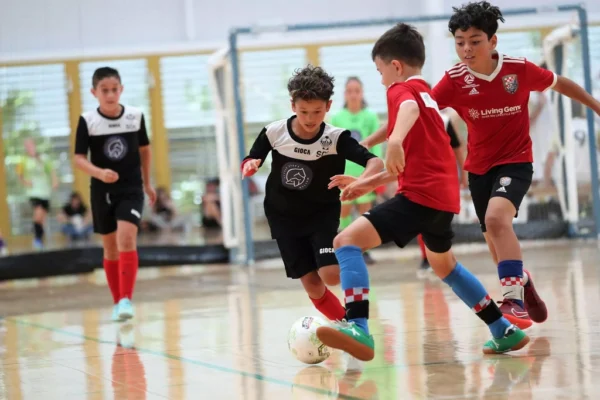
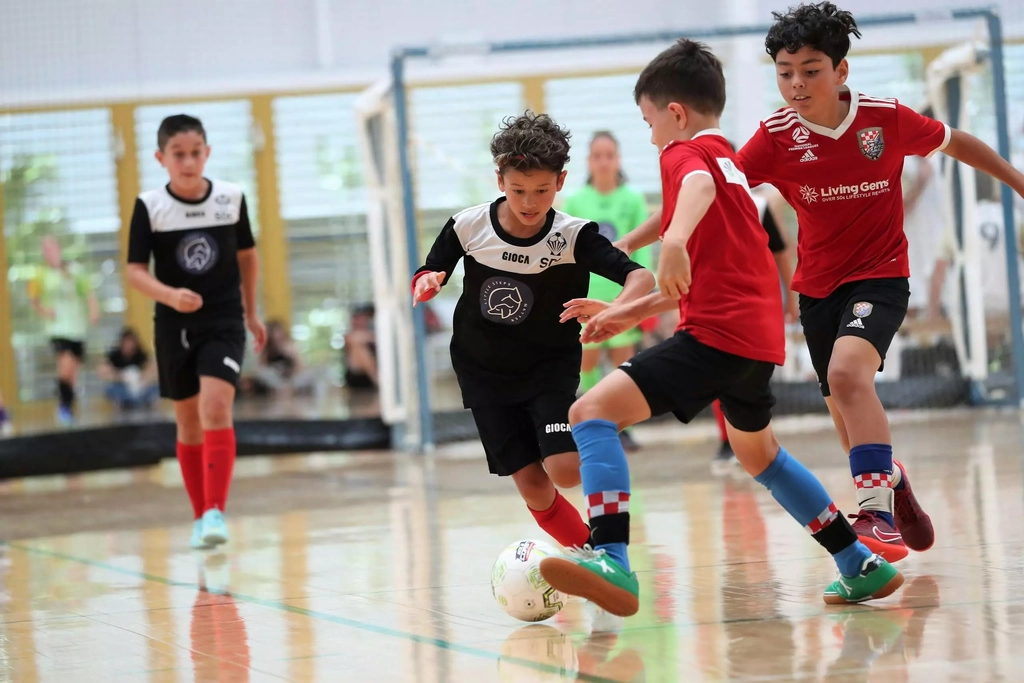
The 2027 Gold Coast International is set to be the biggest year of growth in the tournament’s history. The tournament has become one of Australia’s premier futsal events. Attracting the best teams from not just Australia but around the world. Andrew Parkes is the founder and managing director of the Gold Coast City Futsal Association and an advisory board member at Football Queensland. He says the tournament, and its international reputation, is only strengthening.

“Registrations are actually a step up from what they were last year,” Parkes said.

“We’ve got several teams from New Zealand. At the moment, we’ve got some Pacific Island teams that have expressed interest in coming. We got interest from Japan, and from England as well.

“We’ve got over 140 teams so far, and that’s not including anything from the local areas.”

Over 200 teams attended the 2026 edition, and the Gold Coast International is well set to break that record next year. The figures show the tournament is becoming more than a local competition. It is building a strong national and international presence.

Football Queensland and Football Australia unite behind growth

Parkes believes collaboration has played a major role in the development of futsal in Queensland. The tournament is sanctioned by both Football Queensland and Football Australia. He praised Football Queensland for its work across the sport. He said the organisation has helped create a stronger and more professional futsal system. This relationship between state and national bodies and the event has allowed the Gold Coast to play host to the national competition as well. This ensures shared resources including referees and courts.

“Football Queensland have been a major driving force and a godsend in relation to the development of futsal,” Parkes said.

“We’ve got the nationals the week before the Gold Coast International now. We’re working in harmony and synergy and supporting each other.

“I think the proofs in the pudding, not just with the Gold Coast International, but with the exposure and obviously the diversity of teams that attend. But then the further development in our local leagues, and that’s resulted in.”

E-sports adds another pathway for players and clubs

E-sports has become another major part of the Gold Coast International. Parkes said he had explored the idea for several years and that the tournament allows the community to grow beyond just the physical players on the court. The use of e-sports also allows friends and families to have an interactive experience with simulators and games whilst at the Gold Coast International.

“We launched e-sports about 2 years ago, just with a bit of a light feel. We’ve incorporated the competition into the tournament fees, which is excellent. So it doesn’t cost anybody anymore to be part of it,” Parkes said.

“It actually allows the clubs and academies to extend on their current offerings as it is at the moment and allows gaming players to be part of the club, to be part of the atmosphere and to join and that unity and be part of that sporting community.”

“We had three times the amount of teams that we had from the first year of e-sports. We’re looking to probably even double that again this year, which is really exciting as well.”

New pathways shape the tournament’s future

Parkes wants the Gold Coast International to keep expanding. He is now looking at ways to create pathways beyond the tournament itself. He said the use of its international experiences that can be earned through the tournament is not only about investing in players. But ensuring coaches have a more time-efficient avenue to be involved with futsal. It also gives more coaches the chance to work with players at an international tournament.

“We’ve now created the Gold Coast International All Stars, which is now embraced by many of the coaches and the players,” Parkes said.

“That also provides coaches who don’t have the time or the ability or whatever for the state teams, and the commitment that they need to put in the state teams throughout the year.”

“It allows us to have a lot more outreach to far more coaches that have a lot of passion and enthusiasm, and be part of the Futsal community. They want to build on the players’ abilities but may not have that year-long or eight-month-long exposure that is required by the state Futsal team coaching staff.”

For Parkes, the future is about widening access while continuing to raise standards. The tournament is growing its international reach, strengthening partnerships and creating new opportunities for both physical and e-sports players. The Gold Coast International is no longer just a tournament. It is becoming a broader platform for the development of futsal and its wider community.

For more information on the Gold Coast International and to inquire about competing in the 2027 edition, visit their website.

Active Club Program offers South Australian football clubs a funding boost

South Australian football clubs can tap into another round of government support, with the Active Club Program offering grants of up to $3,000 to help clubs improve participation and strengthen their local communities. The Office for Recreation, Sport and Racing (ORSR) opened its new round of funding on the 28th of August. Clubs have until midday on Wednesday, 14 October 2026 to apply.

The grassroots benefits

The South Australian Government has allocated $1.448 million to the round. Clubs with fewer than 100 members can receive $1,500. Clubs with 100 or more members can receive $3,000. The program targets grassroots sport, including football. It helps clubs purchase equipment and resources that make participation easier and more affordable.

Football clubs can use the funding for sporting equipment, uniforms and protective gear. They can also fund playing venue maintenance equipment, professional development, medical equipment and training. The program also supports projects that improve inclusion. Clubs can use grants for positive health initiatives and hardship subsidies. These measures can help remove barriers that stop people from playing sport.

That focus creates opportunities for football clubs to support more women and girls. It can also help clubs create more welcoming environments for players of different ages and backgrounds. Water and energy efficiency also form part of the program. Clubs can fund eligible initiatives that reduce water use or improve energy efficiency. That could prove particularly valuable for football clubs managing local playing venues and facilities. The program also allows minor club infrastructure upgrades and technology that directly supports participation or club sustainability.

Who is eligible?

To qualify, a club must operate as a not-for-profit sport or active recreation organisation in South Australia. It must have at least 20 members and have operated for at least 12 months.

ORSR will also consider a club’s participation profile when assessing applications. The assessment looks at female and male junior and senior participation, alongside factors such as the club’s affiliation and when it last received Active Club Program funding.

How to apply

The funding can make a direct difference at grassroots level. In the previous round, 558 South Australian clubs shared more than $1.4 million. The government says the investment helped clubs meet essential costs while supporting participation and inclusion.

For football, that support can stretch beyond the playing field. Stronger clubs create more opportunities for players, coaches and volunteers. They also provide places where people can build connections and stay active. Applications for Round 56 will be screened in November, assessed in December, with clubs notified in January 2027.

To learn more about the South Australian Active Club Program, visit their website.

Most Popular Topics

Editor Picks

Send this to a friend