




Football Australia acknowledges successful FIFA Women’s World Cup to date as records are broken

Matildas

Last Thursday, Football Australia honoured the end of an extraordinary group stage of the FIFA Women’s World Cup Australia and New Zealand 2023, having established a level of excellence in setting new standards and displaying the organisation’s pivotal role in co-hosting a significant event and strengthen women’s football in Australia and beyond.

The outstanding success of the World Cup up to this point is further evidence for the well-thought-out projects handled by Football Australia to magnify the brand of the CommBank Matildas, by elevating them to an equal status with the Subway Socceroos.

Some of the highlights that have stood out in the group stage of the tournament observed record-breaking numbers such as fan’s attendance at games in extraordinary numbers with over 1.7 million ticket sales.

In terms of broadcast, the Seven network announced their coverage of the FIFA Women’s World Cup 2023 had got up to 8.02 million viewers plus 1.14 million on their streaming platform, as well as the victory for the Matildas over Canada in the last group stage game was the most watched program on the Seven network with a reach of over 5.32 million.

Football Australia CEO James Johnson stated via press release:

“This FIFA Women’s World Cup has been a milestone for Football Australia and for women’s football in our country, the success of the tournament so far shines a spotlight on the transformative power of the FIFA Women’s World Cup and football’s ability to unite and inspire beyond borders,” he said.

“This is why we have invested in women’s football and made a firm commitment to support and promote the women’s game by bringing the FIFA Women’s World Cup to Australia, we are overwhelmed with the profound impact of the tournament so far.”

After an impressive victory against Denmark in the Round of 16, the next Matildas game will be in the quarterfinals against France on Saturday at 5pm at Suncorp Stadium.
Previous ArticleNext Article

South Canberra FC Breaks the Mold: Equity-Driven Model Earns ‘Club Changer’ Honour

South Canberra Football Club has been named Club Changer of the Month for April, in a recognition that reflects a broader shift across Australian football toward rewarding clubs that are actively dismantling the structural barriers limiting women’s access to the game.

The AFC Women’s Asian Cup has just delivered record crowds and unprecedented visibility for women’s football in Australia, and the Club Changer program is now asking what comes next. Its decision to name South Canberra Football Club as Club Changer of the Month for April signals a clear shift in how the program defines contribution: away from participation numbers alone, and toward the equity frameworks that determine whether women stay in the game once they arrive.

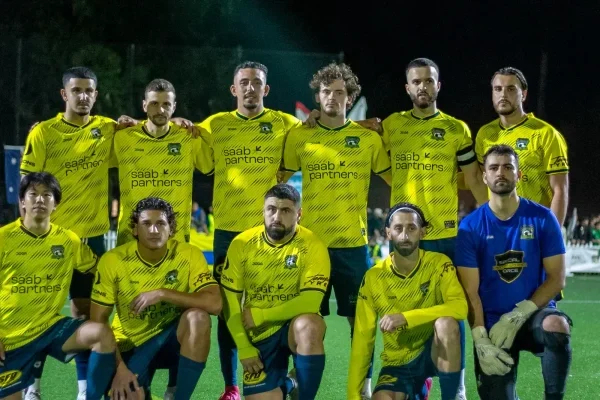
South Canberra FC built that framework from the ground up. Established in 2021, the club set out to give women and female-identifying players a safe, inclusive environment to play football at any level. It runs entirely on volunteers, operates as a not-for-profit, and is governed by an all-female committee with 13 of its 14 coaches identifying as female.


Building the infrastructure of inclusion

In 2026, the club secured grant funding and put it to work immediately. Two coaches are completing their C Licence qualification, and ten coaches, players and community members have undertaken the Foundations of Football course, which directly tackles the cost and accessibility barriers that exclude women out of coaching pathways.

The club also commissioned a female-specific strength and conditioning program with sports physiotherapists ahead of the 2026 season, targeting injury prevention and explicitly supporting players returning after childbirth.

SCFC’s leadership team draws from LGBTIQ+ individuals, First Nations people and veterans, strengthening the club’s connection to the communities it was built to represent.

The Club Changer program is backing clubs that do this work- clubs that treat equity as infrastructure rather than aspiration. At a moment when Australian football is under pressure to turn its biggest-ever surge of women’s interest into something lasting, SCFC’s model offers a clear answer to the question of how.

Football NSW announces 2026 First Nations Scholarships as pathway access program enters new phase

Football NSW has announced the recipients of its 2026 First Nations Scholarships, with ten emerging Aboriginal and Torres Strait Islander players from metropolitan and regional NSW receiving support designed to reduce the financial and structural barriers that have historically limited First Nations participation across the football pathway.

The scholarship program, developed and assessed in collaboration with the Football NSW Indigenous Advisory Group, targets players across both elite and development environments – recognising that talent identification alone is insufficient without the resources to support progression once players are identified.

Co-Chair of the Indigenous Advisory Group Bianca Dufty said the calibre of this year’s recipients reflected the depth of First Nations football talent across the state, and the importance of structured support in converting that talent into long-term participation.

“Their dedication to football and the desire to be role models for younger Aboriginal footballers in their communities is to be celebrated,” Dufty said. “I’m confident we will see some of these talented footballers in the A-League and national teams in the future.”


Beyond the pitch and into the pipeline

The 2026 cohort spans both metropolitan clubs and regional associations, an intentional distribution that acknowledges the particular barriers facing First Nations players outside major population centres, where access to development programs, qualified coaching and pathway competitions is more limited and the cost of participation more prohibitive.

The next phase of the program will introduce First Nations coaching scholarships, extending the initiative’s reach beyond playing pathways and into the coaching and administration pipeline – areas where Indigenous representation remains among the lowest in the game.

The structural logic is clear. Scholarships that reduce financial barriers at the entry point of elite pathways matter most when they are part of a sustained ecosystem of support rather than isolated gestures. Football NSW’s collaboration with the Indigenous Advisory Group provides that continuity, ensuring the program is shaped by the communities it is designed to serve.

Most Popular Topics

Editor Picks

Send this to a friend