
Football Australia celebrates diversity for Harmony Week

Football Australia have directed the spotlight towards the nation’s diversity, celebrating Australia’s rich plethora of communities throughout the 2024 edition of Harmony Week.

Funded and endorsed by the Australian Sports Commission, the aim of the event is to build a connection with culturally and linguistically diverse newly arrived migrants, ranging between the ages of 5 to 18, through the sport of football.

The week showcased the importance of respect, inclusiveness and sense of belonging amongst everyone.

Victoria were the state in particular whom relished the harmony week on a football front. Three respective diverse communities across Manor Lakes, Croydon and Dandenong were involved in the celebration of diverse culture.

Those Melbournian suburbs include Asian, African and Middle Eastern communities in whom recently arrived to Australia as migrants. Given that football is the primary sport across each of those country’s, members of those experiencing life in Australia for the first time were able to be involved in something which reminds them of home.

Members of those communities had the chance to be involved within football related activities allowing them to showcase their flair and ability.

Those in whom had previously participated within the sport had the opportunity to participate in more advanced activities, while beginners were offered to participate in clinics while being provided information about Miniroos programs.

The events also allowed for new or existing players to seek the possibility of participating at a club level, junior or senior at clubs within close proximity of the suburbs listed.

Dandenong Primary School Teacher, Leanne Skaftouros talked about there being no barrier when playing football.

“There is no barrier, no language barrier. It doesn’t matter if I don’t know your language, you don’t know my language, we can get out and play a game of soccer, which is just amazing,” she said via press release.

Endeavour Youth Australia CEO Mohammad Semra mentioned the importance of community involvement for migrants through the sport of football.

“It gives young people access to club football and also different opportunities to succeed,” he said via press release.

The community event was a collaborative effort, the Wyndham Council alongside Endeavour Youth and migrant information centre were the primary pillars called upon to make the event a success.

FA understand the significance of establishing connections amongst new members of a community, that is the brilliance of Football. The globalisation of the sport allows for these inclusive events to occur. It’s an aspect of Australian culture in which can bring an abundance of people together, all while unifying and inspiring them along the journey.

Previous ArticleNext Article

Melbourne Victory announce next stage of infrastructure strategy at Arden Central

In a statement on their website last Thursday, Melbourne Victory revealed the Arden Campus, situated within Melbourne’s new Arden Central parkland precinct, as the latest stage of its ongoing infrastructure strategy.

The news follows Victory’s February 2025 announcement of it’s first campus in Beveridge, with each seeking to cater to growing demographics within the city’s CBD and inner north-west suburbs.

The latest campus sits within the new cultural precinct centred around Arden Station, as part of a $7 billion redevelopment project helmed by Hamton and HostPlus on behalf of the Victorian Government.

Developers Hamton and HostPlus share a 17-year history of joint venture partnerships, which include a portfolio of large-scale, complex urban projects.

Victory is joined by other major precinct partners Live Nation, North Melbourne (Australian Rules) Football Club and the University of Melbourne’s School of Design, to deliver a new campus whose goals are aligned to the club’s strategic infrastructure plan, with the aim of supporting and nurturing the growth of it’s women’s and youth programs.

Arden Campus’ proposed slate of programs will include a hub for women’s and youth female pathway programs, (for both elite and community football) plus a Community Field and Community Hub, whose shared assets will provide space for future community soccer teams, the university and future local schools, with the capacity to host more than 300 on-site activations annually.

Melbourne Victory has lauded the investment – to be administered by Development Victoria, in collaboration with local Wurundjeri Woi-wurrung Elders and communities – as a ‘once-in-a-generation opportunity‘, allowing the state to build on its network of cultural and parkland zones linked by, and built around, Melbourne’s expanding rail system.

Once complete, the $7 billion transformation of Arden Central is predicted to create a new school, as well as more than 5,400 new homes to cater to more than 10,000 people, located just 1.5kms from the CBD.

John Dovaston, Chairman of Melbourne Victory, is confident Arden Central will ‘cement itself‘ as a critical up-and-coming destination for sport, education and entertainment. Campuses such as this, he said, ‘guarantee a synergy between elite focus and community development,’ which he believes only football – ‘the world game’, can achieve.

Speaking on Victory’s female and youth infrastructure strategy, club Managing Director, Caroline Carnegie, described the plan as a ‘multi-faceted‘ reflection of their vision to lead, unite, connect and inspire.

This update to the club’s infrastructure is an overdue one, but is nonetheless a strategy which she hopes will form part of the ‘micro and macro touch points of Melbournians’ lives at Arden Central’, strengthening Melbourne Victory’s commitment to being ‘a club for all Victorians.’

Carnegie highlighted football’s impact on social cohesion in early 2025, when Victory’s infrastructure strategy was first unveiled. She emphasised the club’s responsibility to establish programs that can positively impact communities, regardless of their members’ gender, background or location.

Benefits of the ‘Campus Model’

In an official Melbourne Victory report on their long-term infrastructure strategy, published early 2025, the club laid out the following goals for the future of the state’s fastest-growing participatory sport: to unlock common opportunities for the game, create greater accessibility for talent and their families across the State (including cutting out travel time for both training and matches) to enhance Victory’s ability to grow soccer’s footprint, and to expand community connection.

The report compares Melbourne’s extensive geographical sprawl to cities such as London, Rome and Madrid – stating their campus model helps break down geographical barriers to success, with the long-term aim of establishing campuses across Melbourne’s North, South, East and West, each within a 1-hour’s drive from their AAMI Park HQ, as well as ttheir existing men’s traning facilities at Gosch’s Paddock.

Melbourne Victory’s long-term plans for their Campus development

As per the project’s FAQs, Victory will run women’s, pre-academy and academy programs from each campus once fully completed, with the club maintaining transparent communications in the meantime with fans, players and key stakeholders as to the full schedule and details of its interim offerings.

The club aims to maintain a cohesive, uniform ‘look and feel’ across each campus, so that people can know what to expect when training, playing or otherwise connecting with the Melbourne Victory brand and broader community.

This approach allows the club a wider reach in terms of attracting, developing and retaining new talent, as well as creating more familiar places for players and their supporters to call home.

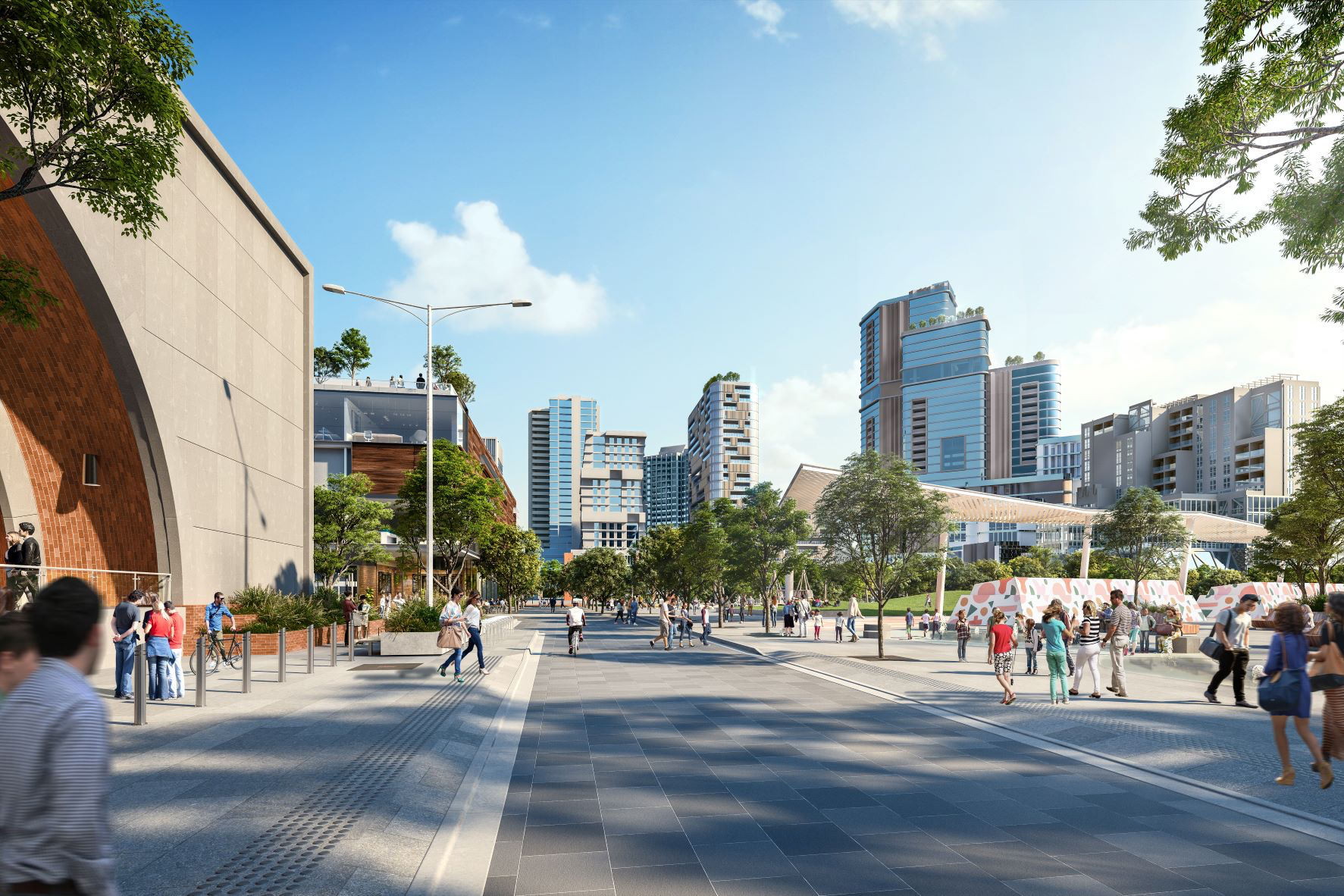
Arden Station, Melbourne (Arden Precinct Development)

Borussia Dortmund & Vodafone launch ‘Fan Mode’ to keep supporter attention on the pitch

Borussia Dortmund have launched ‘Fan Mode’, a new initiative aimed to incentivise supporters to put their phones away and live in the moment while supporting their side at home matches.

Dortmund have paired with club sponsor Vodafone, with the program in use from Saturday’s 1-0 win over Eintracht Frankfurt.

Under the initiative, fans can activate ‘Fan Mode’ within the Borussia Dortmund app – in a manner similar to flight mode – before locking their phone as the action kicks off. From there, time spent inactive on their phone during play equates to points, which in turn sees fans in the running for prizes – including autographed jerseys and fan shop gift cards.

‘With Vodaphone, we have a partner who not only understands what technology is capable of, but also when it should take a back seat,’ said Dortmund CEO Carsten Cramer.

‘Here, a global technology company is specifically using its innovative strength to protect the experience that no technology can replace.

‘Fan Mode sends a powerful message. Over 81,000 people in the stadium, singing, cheering, and holding their breath together: this here and now is irreplaceable.’

The move comes following a 2023 survey conducted by Vodafone themselves, which showed 63 percent of general football fans regularly use their smartphones during matches but simultaneously, listed an increase in social media, selfies and streaming at the football as an annoyance.

‘Anyone at a soccer game should experience the moment and the emotions – not just a cell phone screen,’ said Marcel de Groot, CEO of Vodafone Germany.

‘Let’s leave our smartphones in our pockets more often at the stadium and instead focus on what’s happening on the field and in the stands.’

Partaking in the initiative is completely voluntary, as is the claiming of any points or prizes.

Dortmund, managed by Niko Kovac and currently second on the Bundesliga table, led the Bundesliga’s average attendance for season 2025/26 with just under 80,000.

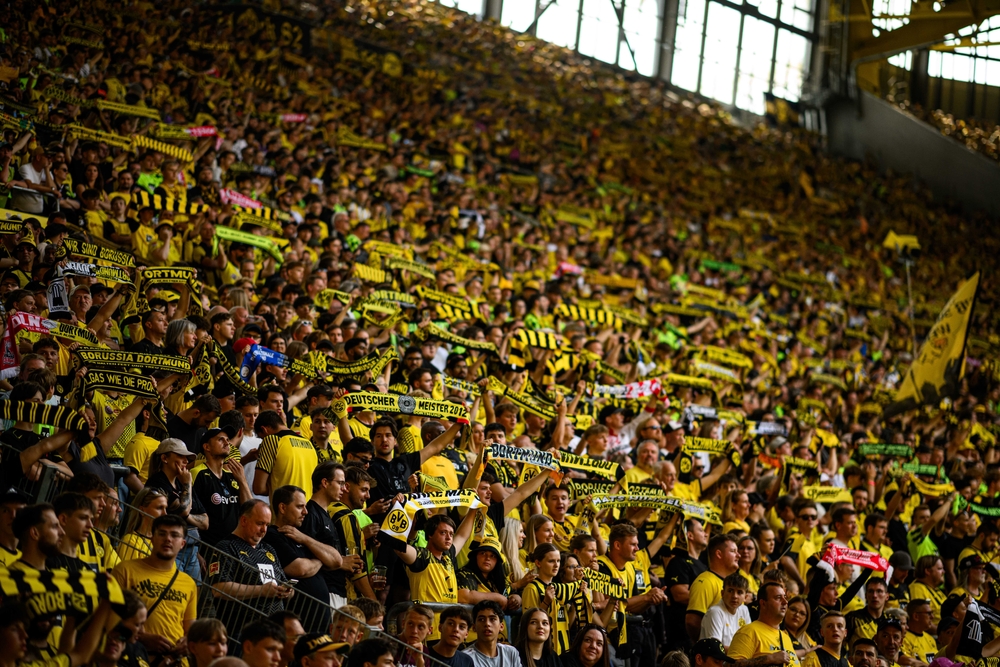
Their ‘Yellow Wall’ – the supporters in the Südtribüne, or South End of Westfalenstadion (known commercially as Signal Iduna Park) – are widely considered among one of the iconic sights of global football fandom.

Most Popular Topics

Editor Picks

Send this to a friend