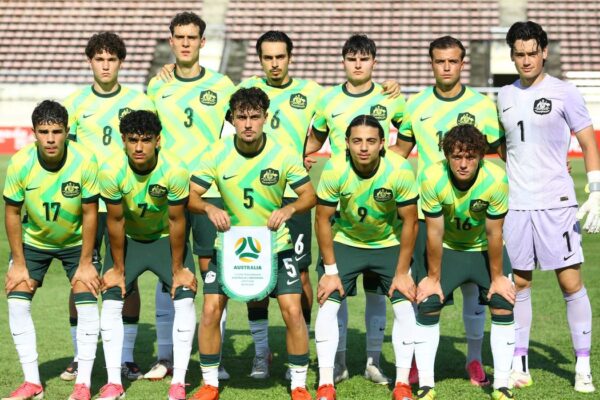

Football Australia CEO James Johnson on National Second Tier: “It needs to be complementary to the A-League and also the NPL”

James Johnson

Football Australia CEO James Johnson had a chat with Paramount+ commentator and the host of SEN’s The Global Game podcast, Simon Hill.

Johnson was a recent guest on the show to discuss the National Second Tier, as well as the reason for the lack of funding in football for the national team.

Over 400,000 people have engaged with the social media posts of Football Australia, which is not a surprising figure due to the build-up of the Expression of Interest (EOI) which has been a topic of many football fans and players alike in the broader local community. From everything that James Johnson has seen to date, there is exceptional interest for this to go ahead.

With the men’s national team achieving their best result on the world stage since 2006, narrowly missing out in a hard-fought battle against the eventual winners in Argentina, and also to add the women’s national team preparing for a historic FIFA Women’s World Cup campaign co-hosted by Australia and New Zealand, the interest and the ever-growing engagement and success of football in Australia has been more prominent.

The recent split of the A-Leagues from Football Australia presents a special opportunity for the governing body to direct and invest resources into an excellent standard of measure for football development and performance that is capable of producing and improving the connection of various levels, pathways and participants throughout the Australian football ecosystem. For these goals to become attainable, the Board of Football Australia is confident that this is the right time to create a National Second Tier and set in motion a new and exciting future for the sport in the country.

From his appearance on The Global Game podcast, Johnson stated:

“We’ve really tried to steer away from it from becoming competition with the A-League, it’s actually the opposite and it needs to be complementary to the A-League and also the NPL and broader ecosystem and that’s why this competition is really fabricated on a winter competition, one that’s going to be focused on sporting merit.”

In regard to how the two competitions will align in the future for the second division, as stated by Johnson these discussions have occurred with the CEO of Australian Professional Leagues, Danny Townsend, who has been very supportive of this concept, and also the process to introduce an aligned transfer system. This will be beneficial for the younger group of players who are not getting minutes for an A-League club to be loaned out to a second-tier club to develop their skills.

However, James Johnson briefly mentioned why the Socceroos do not even get $1 from Sport Australia via The Global Game:

“At this point, the Socceroos do not get $1 from Sport Australia, because the way the funding model works for high-performance sports in Australia, which is decades old, is it focuses first of all on Olympic tournaments only, the men’s World Cup is not considered important for the purposes of high-performance funding and secondly your probability of meddling at the Olympics is that we’re probably not going to get a gold medal anytime soon.

“Our view is that this model needs to be flipped on its head and we need to look at more competitions like the men’s World Cup that brings 2 million people together in Australia, we need to look at our competitors because governments in China and Japan now are investing millions and millions of dollars in their national teams.”

Interested clubs would have need to registered for the EOI Response, with the next stage due on March 3.

To listen to the full podcast between Simon Hill and James Johnson, click here.
Previous ArticleNext Article

IMG takes commercial lead on inaugural FIFA ASEAN Cup

IMG has been appointed to lead the global commercialisation of the inaugural FIFA ASEAN Cup, giving the new Southeast Asian national-team competition an established international sports business partner ahead of its first edition.

Under the strategic partnership, IMG will manage worldwide media and sponsorship rights sales while also overseeing broadcast production for the tournament, which takes place from 24 September to 5 October across Indonesia and Hong Kong, China.

The inaugural competition will feature 14 national teams, including all 11 ASEAN members alongside guest nations, with matches split between two divisions. Division 2 fixtures will be played in Jakarta and Badung, while Division 2 matches will be played in Hong Kong.

The agency’s role will include selling sponsorship and media inventory internationally while helping establish the broadcast infrastructure required to present the tournament to audiences outside Southeast Asia.

The partnership builds on IMG’s existing strategic relationship with PT Garuda Sepak Bola Indonesia, which has been working with the Football Association of Indonesia since 2025 on areas including commercial strategy, media rights, production and digital development.

For FIFA, the tournament creates another international football property in a region with a large and increasingly connected football audience.

For IMG, it adds another major regional property to a football portfolio that already includes competitions and organisations across Europe, the Americas, Asia and Africa.

The immediate challenge will be turning the inaugural tournament into a sustainable commercial property capable of attracting broadcasters and sponsors beyond its first edition.

If successful, the FIFA ASEAN Cup could provide Southeast Asian national teams with a recurring commercial platform while giving IMG another foothold in one of football’s developing markets.

GIS Sydney continues to connect students with Australia’s sports industry

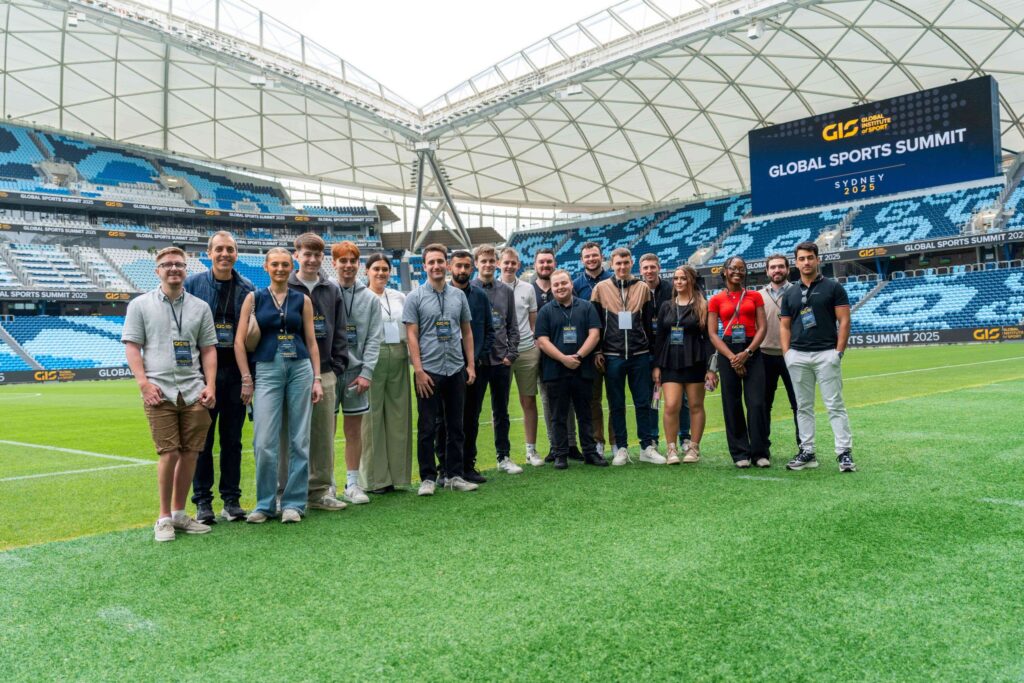
Following the launch of its Sydney campus in 2025, the Global Institute of Sport (GIS) is continuing to establish itself in the nation’s sports industry. A leading provider of degrees and executive education in sport, GIS provides students the chance to study at two of Australia’s biggest sporting venues: Allianz Stadium and the Sydney Cricket Ground (SCG).

Programs such as Sports Analytics and International Sports Business are delivered in collaboration with the University of Newcastle, and feature the chance for students to gain exclusive access to the sports industry.

More than 50 guest speakers have shared their experience with students studying at GIS Sydney, representing organisations like FIFA, Red Bull, Cricket Australia, and the AFL. While learning about the regional and national sports industry in the classroom, students have also had the chance to gain an international perspective through GIS’ signature Global Sports Summits, which have given Sydney students access to iconic sporting venues around the world from London to Miami.

Outside of the iconic venues students can call their classrooms, the organisation prioritises the real, industry placements needed to put theory into practice by providing each student with 140 hours of relevant work experience throughout their studies. Included in this are several sporting organisations who are keen to welcome GIS students on board, including the Professional Football Scouts Association (PFSA), Football Coaches Australia, and Basketball NSW.

GIS also has a partnership with popular network and app Yakka Sport to connect students with paid employment opportunities while they study.

Behind these advancements at the GIS Sydney campus is an Industry Advisory Board which features a host of experienced figures from the world of sport. Included in the Asia-Pacific branch is Chair James Rosengarten, GM of the Melbourne Renegades; Kevin Jang, Managing Director of CAA Stellar Korea; and Brad Lloyd, GM of the Carlton Football Club.

Since launching, GIS’ Sydney campus has ultimately combined its locations and industry connections to provide the next generation of sports professionals with the knowledge, network, and confidence to tackle the rapidly evolving sports industry.

Most Popular Topics

Editor Picks

Send this to a friend