Football Australia meets with AAFC to discuss National Second Tier

Football Australia consulted with the Australian Association of Football Clubs (AAFC) last week to discuss modelling and other considerations for a National Second Tier.

The Thursday night meeting was attended virtually by representatives from Football Australia, including CEO James Johnson, as well AAFC Chairman Nick Galatas and representatives from member clubs.

Within the meeting, the commercial, financial, and modelling aspects of the competition were discussed.

A Football Australia spokesperson stated that the meeting was an opportunity for clubs to voice their opinions and views on certain questions posed by FA, and considerations for a National Second Tier directly to the peak body.

“Football Australia held a meeting with the Association of Australian Football Clubs (AAFC) and a number of representative clubs from around Australia on Thursday 26 August as part of a consultation to discuss the objectives and vision for a National Second Tier, commercial, financial and competition modelling considerations, the Domestic Match Calendar and access to and from a proposed National Second Tier,” a FA spokesperson said.

“CEO, James Johnson and several other senior executives of Football Australia participated in the meeting and welcomed the opportunity to hear directly from the clubs on some of their views on these considerations and look forward to having further and more detailed discussions in the coming months as we move the conceptual discussions towards practical ones, and in turn the national second tier becoming a reality at the appropriate time.”

Galatas said the meeting was well received by the AAFC, and that it was held professionally and in good faith.

“The next steps are firstly we will provide the material that Football Australia has requested, secondly we will finalise our report, and finally we will continue to liaise with Football Australia as they progress towards finalising their model,” he said.

The AAFC released the report in January as a framework for how they believe a second division could be structured, ran and implemented.

No timeline has been placed on the development of the competition by either Football Australia or the AAFC, according to Galatas.

“We didn’t think it was appropriate to press for a timeline, and instead work towards providing information for Football Australia to develop the right model,” he said.

“Getting it right in more important than imposing some sort of deadline. Clearly the intention that emerged from that meeting was that we now work as stakeholders to complete the tasks, so short term is better than long term but there is no specific timeline.”

Football Australia recently included a placeholder for a National Second Tier competition on its domestic match calendar.

Previous ArticleNext Article

Episode 4: “You could have sold it out twice”: Peter Filopoulos on why unification is the way forward

PETER FILOPOULOS sees Saturday’s Australia Cup final between Melbourne Victory and South Melbourne Hellas as a ‘unification event’ that must be harnessed as a window to the future – rather than a means of stirring up old division – if Australian football is to progress.

“This game sold out organically, and having run marketing, corporate affairs and communications at Football Australia previously, I don’t think they would have needed to spend one single dollar on marketing,” Filopoulos told Soccerscene Unfiltered.

“You could have probably sold it out twice! This tells me it’s the sort of product the fans want; it’s authentic and taps into the new and the old, and demonstrates culture as a real asset. You couldn’t have scripted it better.

“If I was in a decision-making position at the A-League, I’d be looking very closely at why fans have responded in such an emphatic way.”

Filopoulos has seen it all across his near-35 year career in sports administration, which by his calculation has been split evenly inside the Australian football tent and outside it – but when outside, always with at least one eye glancing back.

Fifteen years across AFL clubs Hawthorn & North Melbourne as that code moved from a financially traumatic 1990s into a wealthier new millennium; five years at Football Australia: ‘easily the most transformative period for Australian football in its history’; stints with Etihad Stadium and even a period ‘completely out of my comfort zone’ at Swimming Australia.

There’s been crisis management, stepping in as Perth Glory CEO after the 2015 salary cap scandal; he’s seen the A-League’s boom times under the Lowys & Fox Sports’ 2018 broadcast deal; he’s enjoyed the euphoria of the 2023 Women’s World Cup in Australia and New Zealand.

But all stems back to the National Soccer League and South Melbourne Hellas, and his bold decision to take on the Club’s inaugural general manager position in December 1993, aged just 25.

“I wasn’t ready… but what it taught me is when an opportunity is presented to you, just say ‘yes’ and work out how to do it later. I’ve used this throughout my career, and that was one of those instances where I threw myself in the deep end.

“I had my career mapped out, and was working quite happily in accounting. But I was a passionate fan and having grown up at the old Middle Park, it was a natural ‘yes’ – and I was young enough to take a risk.”

With today’s A-League financially ailing and great clubs of yesteryear enjoying what Filopoulos terms a ‘renaissance’ – and agitating as vociferously for a return to the top flight as at any point since the demise of the NSL – he feels it is again time for bold leadership, and a little risk.

“You can have all the ambition in the world, and in being part of a club, you’re a custodian. But as I’ve always seen it, you need a sustainable commercial model: sound ownership, sound facilities, revenue, etc…

‘But you also need to understand how to tap into that asset of culture. What we’re seeing with the Australia Cup final is a result of culture, right? You need to create it amongst your fans, and know who your fans are, and tell them what you’re striving for. Bring them along on the journey!”

Catch the full chat with Peter Filoupolos on Soccerscene Unfiltered: from ‘eyeballing’ Frank Arok and backing Ange Postecoglou, overcoming resource challenges at Football Victoria, to the rise of the Matildas, and plenty more…

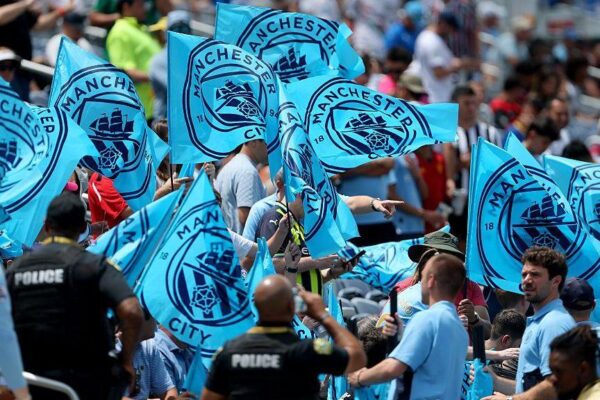
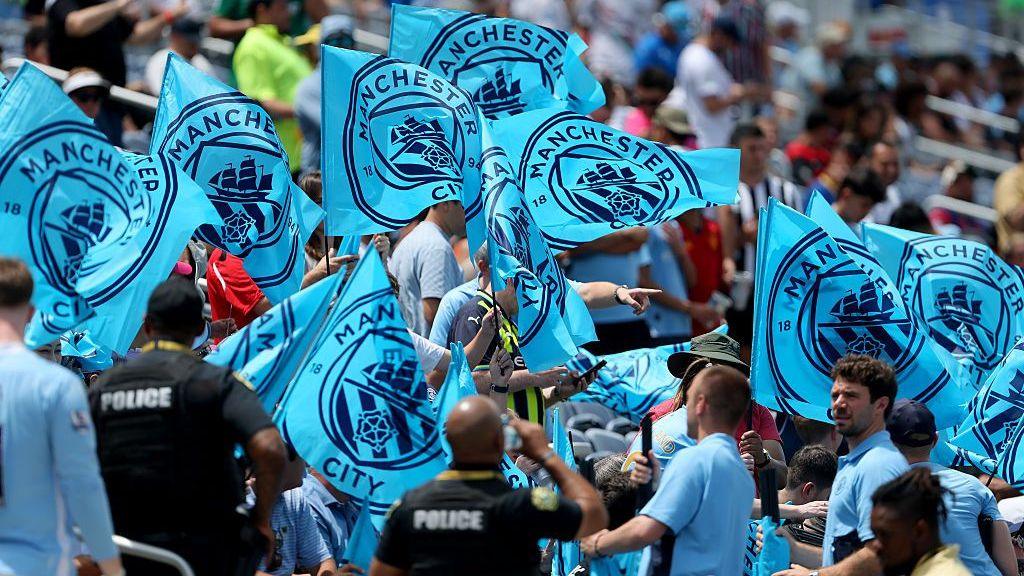
Manchester City must pay the ultimate price for financial cheating

Manchester City’s financial scandal has reached boiling point. On the 29th of September, an independent commission found City guilty of all charges relating to serious breaches of the league’s financial rules across nine seasons, from 2009/10 to 2017/18. The commission also upheld three of four charges concerning the club’s failure to cooperate with the Premier League investigation.

The Premier League says City used sham commercial arrangements and disguised owner funding to inflate revenue and reduce costs by more than $1.7 billion (£900 million). Abu Dhabi United Group funded $1.58 billion (£830.69 million) that appeared in City’s accounts as sponsorship money from Abu Dhabi companies. The commission concluded that City’s accounts concealed the true financial position from auditors and regulators.

The 115 charges cover inaccurate financial information, player and manager payments, financial rules and the investigation itself. City has lodged its appeal against the guilty verdict, but for such a serious sporting scandal, attention has already turned to the potential punishments. In a Premier League era where foreign investment is king and revenues have skyrocketed, we should be asking questions. How did Manchester City get away with this for so long, and how can the punishment act as a deterrent to keep the reputation of football’s biggest league intact?

The hack that exposed the story

The most uncomfortable part of this saga is how the authorities discovered it and how most likely City never would have been exposed. In 2018, German publication Der Spiegel published leaked internal City emails and documents obtained through Football Leaks. Rui Pinto, the Portuguese hacker behind Football Leaks, supplied material that alleged City had disguised owner investment as sponsorship revenue and manipulated arrangements to satisfy financial regulations.

The Premier League investigation began in December 2018. City were formally charged in February 2023, after a four-year investigation, and the hearing finally began in September 2024. That timeline is nothing short of extraordinary; eight years between the leaks being exposed and charges being brought to Manchester City does significant sporting damage.

Man City won eight major titles during the alleged period, including three Premier League titles. Recalling titles in any sport leaves a sour taste in any sports fan’s mouth. The fans of opposing sides given titles feel robbed of the special moment, and Manchester City fans could feel rightfully deceived. But it goes beyond even this as we look at who Manchester City signed during those seasons. Players such as Ilkay Gundogan and Kevin De Bruyne played vital roles in City’s later titles beyond the 2017/2018 season. Would they have joined if this had been uncovered earlier? It’s impossible to say, but it shows how City’s early investment from 2009/10 still contributed to their titles in the 2020’s.

The Premier League’s credibility

That delay is not just embarrassing for City; it damages the Premier League. The league is the most competitive and commercially powerful domestic competition in football. Its rules are supposed to create a framework in which clubs compete on sporting merit while remaining financially sustainable. If a club can allegedly distort its accounts by hundreds of millions of dollars and the process takes years to reach a verdict, despite City’s potential obstruction, every other club has a reason to question whether the system works.

The irony is obvious: if Football Leaks hadn’t shared what they found on Manchester City through its hack, the scheme never would have been uncovered. If financial rules were designed to stop clubs gaining an unfair competitive advantage, then the Premier League may need to change how it investigates how its clubs’ finances are being managed. If anything should be gained from this, it may be that financial regulation needs to be improved as the Premier League and its clubs spend billions.

As for Manchester City, punishment cannot simply be a fine that becomes another operating cost.

Relegation is the only serious answer

If the verdict survives the appeal, Manchester City should be removed from the Premier League and those three aforementioned league titles removed. A fine would be inadequate and, depending on what points deduction City got, would punish the club in one season while leaving the historical record largely intact. Nottingham Forest received a four point deduction for a charge of Profitability and Sustainability rules in 2023-2024. City’s 114 charges will see much greater punishment then that.

Even if City are relegated they would almost be guranteed to be promoted the next season so even that feels like a slap on the wrist. Despite their investment during the nine seasons being questioned their five titles subsequent to that period will be expected to remain in their hands. My solution is to relegate City to the Championship without the potential of promotion for three seasons, one for each title won during that time.

City fans will call that harsh but their is strong reason to come down hard and that’s because this is bigger than Manchester City. Foreign ownership has brought huge investment into English football, but investment cannot mean exemption from the rules. Owners, executives and clubs must know that the Premier League’s financial regulations carry consequences that cannot be negotiated away.

The league has a choice. It can impose a manageable punishment and move on, or it can demonstrate that competitive integrity matters more than the commercial power of its biggest clubs. If City’s appeal fails, the answer should be clear: relegation, a reckoning over the titles and a message to every owner that the Premier League’s rules are not optional.

Most Popular Topics

Editor Picks

Send this to a friend