


Football Australia’s #EQUALISER campaign is already bearing fruit ahead of Women’s World Cup

July 20 next year will mark the opening match of the 2023 FIFA Women’s World Cup at Auckland’s Eden Park. Moreover, it will signify the beginning of a historic footballing tournament held by two nations yet to fully realise their potential with the sport on and off the pitch.

The development of facilities and infrastructure that serve to suffice the ever-growing population base and football participation rates within Australia (and New Zealand) is one thing. But to construct amenities with one eye on contributing to a progressive and inclusive Australia that encourages greater overall growth is an entirely separate concern that deserves to be prioritised.

The year leading into the Women’s World Cup will undoubtedly serve as a pivotal stretch in the collective Australian sporting psyche, and capitalising effectively on such an influential period is what Football Australia has endeavoured to do with the launch of its #EQUALISER campaign.

#EQUALISER is an initiative supporting the ‘Community Facilities’ Pillar of its Legacy 23’ Plan, with the sole purpose of delivering adequate female-friendly facilities across the country.

In a time where significant attention is being paid to the necessity of equal pay between men’s and women’s national teams – with the Socceroos and Matildas achieving an equal pay deal in 2019 and the US national teams following suit just last month – the spotlight on women’s football is bigger than it’s ever been.  And subsequently, the need to sustainably nurture and foster female football participants presents itself accordingly as being crucial to the growth of the women’s game, something which can be achieved through investment into facilities and infrastructure.

USA

As an Australian football fan, it can be mystifying to see various strategies and prospective plans announced with the intention of leading football to greater heights come and go, which often leaves us pondering how and when they are going to come to fruition. Perhaps it is due to the seemingly ever diminishing state of Australian football media coverage that these plans don’t receive the attention they deserve; the reality is however that these strategies take time to implement and to see the fruits of their labour.

Pertinently though, Football Australia’s #EQUALISER campaign has already proven to be a success.

Having conducted a survey which received more than 6,000 individual responses, Football Australia revealed in their announcement of their #EQUALISER campaign that as little as 8% of respondents believe football actually receives a fair-share of government funding, compared to other sports.

In addition, a new Football Australia report has revealed that only 35% of football facilities across Australia are currently categorised as being female-friendly or gender-neutral.

In the recent Federal Budget, the Government emphasised the importance of maximising the social, economic and sporting outcomes of the FIFA Women’s World Cup Australia and New Zealand 2023 – the single largest women’s sporting event in the world with an estimated one billion viewers set to tune in – and the unique opportunity it presents to influence substantial legacy initiatives.

Furthermore, the Australian Federal Government has announced an investment of $3.1 million over two years to encourage greater participation of women and girls in football, to expand the MiniRoos for Girls Program (for girls aged 6-12 years) and the Girls 12+ Football Your Way Engagement Experience Program.

The funding forms part of Football Australia’s ambitious Legacy ’23 plan to deliver enduring benefits as a result of co-hosting the Women’s World Cup Australia and New Zealand 2023, including gender parity by 2027, which would see an additional 400,000 female participants.

Football facilities

Early steps are already being taken, with Northern NSW Football (NNSWF) set to welcome nine promised infrastructure upgrades from the Labor Government following the party’s win at the Federal election.

Namely, Dudley United Senior FC is set to receive $320,000 for gender neutral amenities upgrade, disability access and toilets, whilst Garden Suburbs FC will see $400,000 put towards female friendly changerooms. These commitments are a direct result of NNSWF’s strategy to lobby Federal MPs as part of its key strategic priority of Places to Play, as well as the FIFA Women’s World Cup 2023 Legacy plan.

Within Football NSW, the sport will receive a $10 million boost from the NSW Government as a legacy of hosting matches in the 2023 Women’s World Cup. Separate to this, Ryadalmere Lions FC have received $3 million for improved facilities and new female changing rooms.

In addition, the NSW Football Legacy Program will support football at all levels through the construction of new community facilities, participation initiatives, high performance, leadership and development programs as well as tourism and international engagement. With Football NSW also recently celebrating their biggest Female Football Week yet, it’s evident that the buy-in is there from aspiring female footballers.

To adequately build on hosting what is set to be the biggest-ever FIFA Women’s World Cup, Football Australia must continue to deliver on their word and on the projected plans of the #EQUALISER campaign.

Football NSW

Previous ArticleNext Article

The A-Leagues Final Series important status also a secret hinderance

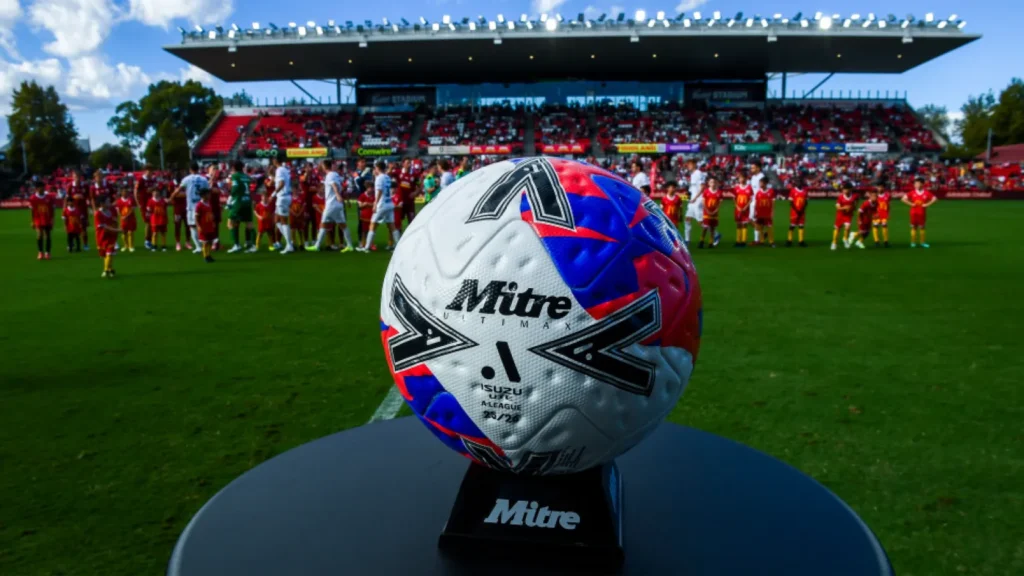
The Isuzu A-League finals series is a huge event in the footballing calendar, though its contribution to stagnant attendance numbers in the league is something to be said.

If the 2025/26 finals series follows similar patterns to those before it, it will gather huge traction and strong ticket sales.

It is the largest event for the domestic league, bringing in massive amounts of viewership through media and gate receipts.

Finals series from years past have shown this, with the 2024/25 final, a Melbourne derby, being sold out within 48 hours and gathering significant viewership online.

The idea of a finals series lies within the Australian sporting ethos; the other sporting codes have had this tradition for most of their existence, especially in recent history.

Football, though, is different from the rest of the sporting codes in Australia, unique even. This has historically contributed to its inability to integrate into the same supported status as other codes.

Many in the Australian footballing community, supporter groups, players, coaches, and even the new Director of Football Australia, have voiced concerns over fan numbers in the league competition.

It wouldn’t be absurd to say that maybe, though profitable now, the finals series is actually taking away from the league itself.

Consider the media image: the league winner is called the “minor premiership,” and ticket sales and viewership figures reveal a huge disparity between the two parts of the A-League.

It must be said that an alternative that could work in unison with the league and possibly increase viewership of the league itself would be a great advantage.

It would allow the league to gain more jeopardy and drama, which could build greater interest in attending league games.

One alternative is already here.

No other sporting code in Australia has both a league competition and a cup competition. Football in Australia does.

The Hahn’s Australia Cup is our equivalent to the FA Cup in England or the Copa del Rey in Spain.

These are competitions that offer a finals option in a different competition entirely. They generate huge traction while never diminishing the importance of the league and, therefore, its popularity.

These cup competitions cannot be discussed without acknowledging some obvious differences.

They don’t face the same popularity issues that football does in Australia. It’s obvious the Hahn’s Australia Cup doesn’t yet gain the traction that the finals series does.

However, for a healthy footballing environment with increasing fan numbers, it should.

The idea of elevating the Hahn’s Australia Cup and scaling back the finals series is a complex question, one that is treated like a “no-go zone” by many in the Australian footballing community, and that is understandable.

Though big changes like this might, in the end, be credible options for the future of the sport in this country.

Larger plans must be set in motion, strategies that can be worked towards and refined along the way. It is the process by which all large organisations, business models and even national governments build their strategies.

Such a shift will be scrutinised and pushed back against.

Though with further fine-tuning and smart investment in development, not to mention the introduction of promotion and relegation and the possibility of changing the footballing calendar.

It could replicate the success that these two-competition models already enjoy in other leagues.

The added importance that the premiership would gain, the reality that every game matters, could alongside other strategies entice fans to more games, increase viewership and ticket sales, and create more dedicated fan bases. It works in other nations, very well in fact.

The possibility of two teams lifting a trophy, rather than one single event defining it all, sounds like a strategy that could deliver more engagement over longer periods of time.

Maybe Australian football doesn’t need to answer this question just yet. It is complex, difficult and it would require a great deal of work, including significant investment into the game, which is another issue entirely.

Yet as low attendance numbers persist in the A-League, even alongside increased media viewership, something needs to change for football in Australia.

The rise in popularity of this game and its dedicated community deserves bold ideas and forward thinking.

Ideas like this could eventually begin to change the landscape of the beautiful game in Australia for the better.

FA Board of Directors Welcomes Two New Appointments

Rachel Wiseman and Angela Mentis will join the FA as Directors, reflecting a continued drive within the governing body to prompt a new era for football in Australia.


Leading with expertise

Both Wiseman and Mentis join the FA at a time of immense change and ambition.

In February, the appointment of Martin Kugeler as CEO was symbolic of new beginnings for the industry. And now that Wiseman and Mentis are on board, the FA looks set for a defining year.

“We are pleased to welcome Rachel (Wiseman) and Angela (Mentis) to the Football Australia Board,” expressed Football Australia Chair, Anter Isaac.

“These appointments reflect a deliberate effort to strengthen the Board’s capability across commercial strategy, digital transformation, financial services and major rights environments.”

If Australian football is to progress across digital, commercial and beyond, industry experts must sit at the centre of governance.


Aligning experience and vision

Most recently Chief Executive Officer Member Capital at NRMA, Wiseman brings experience and knowledge in executive roles, and legal practice.

Further to overseeing the growth and diversification of NRMA since 2016, as well as leading Tabcorp Holdings Limited as General Manager, Commercial Development – International, Wiseman has past experience in the sports landscape.

As Director of Business Affairs for Fox Sports Australia between 2007 and 2024, Wiseman negotiated agreements to broadcast key sports rights. With Football Australia looking to grow its financial power and commercial strategy in the coming years, Wiseman’s knowledge aligns perfectly with the governing body’s vision.

Mentis is an industry leader in financial services, with an extensive range of skills across customer and culture transformations.

Furthermore, following more than 30 years of work spanning Australia, New Zealand, Asia, United Kingdom and USA, Mentis will help the FA with essential, high-quality leadership.

While at the National Australia Bank, Mentis led a division over 900 people across Australia, Vietnam and India. And as the first female Chief Executive Officer at the Bank of New Zealand from 2018-2021, there is no question that Mentis’ credentials and expertise will bring about significant change and organisation at the FA.

Most Popular Topics

Editor Picks

Send this to a friend