


Football Queensland unveil stadium at sport’s spiritual home

Football Queensland have officially released their vision for a dedicated stadium in Brisbane to be built at the sport’s spiritual home in Bowen Hills, according to Brisbane Times’ Cameron Atfield.

According to FQ’s plans, Perry Park would get its long awaited upgrade becoming a top rectangular stadium with the developments helping increase the capacity between 15,000 and 20,000.

Funding has not yet been secured and the estimated cost of the project will be “up to $200 million.”

The stadium plans to host teams from all levels such as the Brisbane Roar’s men’s and women’s teams, as well as community clubs in preparation for Queensland’s inevitable involvement in the National Second Tier. FQ suggested it can be multi-use so lower-drawing professional teams like cricket’s Brisbane Strikers and rugby’s Queensland Reds can use the facility.

On ‘The Subs Bench’ podcast months ago, Cavallucci spoke in length about the importance of using the historic Perry Park as their next big infrastructure project to enhance the ‘Home of Brisbane football.’

He stated that this upgrade was necessary for the sport to advance in the state and shed light on how it would affect all tiers of the football pyramid.

Cavallucci explained the importance of this stadium’s upgrade for the potential National Second Tier and expansion teams, with a second Brisbane professional team helping football boom in the state.

The plan to upgrade this stadium, whilst centred around football, also benefits the city and its other sports.

Perry Park’s location in the inner city makes it easy to commute to with the train station nearby as well as it being on major road infrastructure. It has all the suitable elements of a top stadium and intertwines with Brisbane’s sporting spine (Suncorp and Gabba).

Cavallucci also mentioned that a potential second Brisbane A-League team, in the event of an expansion past Auckland and Canberra, is only possible with the appropriate infrastructure and that this stadium upgrade will “mobilise a broader fanbase.”

In the wake of the Olympics in 2032, the government will be considering investing in upgrading their current facilities to accommodate the games, but more focus is on FQ’s rampant push to proactively prepare for the NST and a potential A-League expansion.

This news is really exciting for the state and will be vital for their involvement in the future of Australian football, with the city of Brisbane in particular dying for an elite football home.
Previous ArticleNext Article

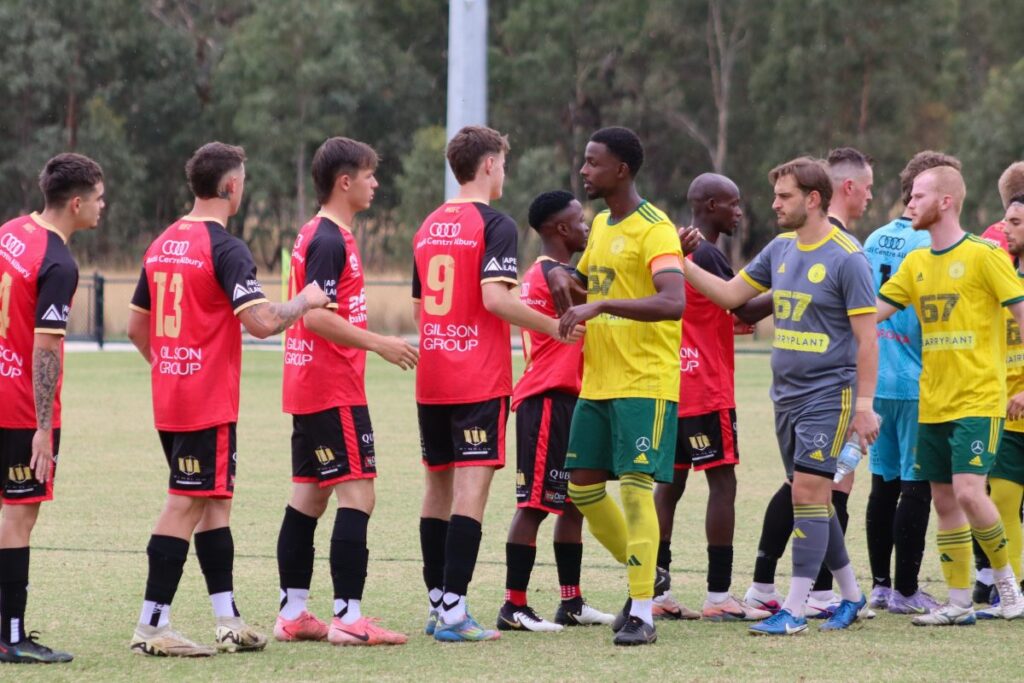
Murray United calls Football Victoria review following wave of State League forfeits

Murray United has called on Football Victoria to undertake a comprehensive review of State League football after a series of fixture forfeits left the regional club questioning the integrity of the competition and the long-term sustainability of its senior pathway.

In correspondence sent to Football Victoria, Murray United outlined concerns following what it says has been an unprecedented number of forfeited fixtures during the 2026 State League season. According to the club, its senior men’s program has been impacted by five forfeited rounds, equating to 10 matches. This includes the club’s last two fixtures, significantly disrupting competition across both senior and reserve grades.

The club and its chairman Pedro Afonso, argue the consequences extend far beyond missed fixtures, affecting player development, community engagement and confidence in the State League system.

“This is extraordinary, unacceptable, and completely inconsistent with the integrity and intent of Football Victoria’s State League competition,” Afonso said to Football Victoria.

“This impact extends well beyond lost fixtures. It has damaged player morale, member engagement, volunteer morale, sponsorship and club revenue, and the reputation of the sport and competition itself.”

Located at the club’s $20 million facility in Wodonga, Murray United has invested heavily in creating a regional football pathway. However, repeated forfeits have limited opportunities for players, coaches and supporters to participate in home State League fixtures.

The club has hosted just three home rounds this season despite the significant investment made into facilities and matchday operations.

“Our players, coaches, members, supporters, sponsors and the sport expect a legitimate State League competition, not one regularly disrupted by forfeits,” Afonso said.

“Our confidence must be restored by Football Victoria.”

While the immediate concern centres on this season, Murray United believes the issue reflects broader structural challenges facing regional football within Victoria’s State League system. Between the north-west and south-east competitions, there are 14 divisions of State League football in Victoria.

Among its recommendations, the club has called for Football Victoria and its Football Development Committee to undertake a formal review of the State League Seven North West competition, including club compliance and the frequency of forfeits.

Murray United also questioned whether the current competition structure provides an appropriate development environment for ambitious regional clubs. The club could be promoted to division six due to a large proportion of fixture forfeits. But fearing further cancellations, the club is requesting a review to be placed in an even higher division where clubs are willing to travel to Wodonga.

“We believe we should be sensibly placed in a competition that reflects our playing standard, facilities, player and coach pathways and our ambitions,” Afonso said.

The club has requested that Football Victoria assess its senior program using grading principles similar to those recently applied within senior women’s competitions, with consideration given to placement in a competition more suited to its football program and long-term objectives.

Alongside competition grading, Murray United has proposed stronger penalties for clubs that repeatedly forfeit fixtures. Recommendations include increased financial sanctions to $2,100 for senior teams alongside a three-point deduction per forfeit and compensation for host clubs to offset matchday operating costs.

The submission also encourages Football Victoria to review minimum participation standards across State League clubs, strengthen accountability measures and examine whether the existing league structure adequately supports regional football.

Afonso believes reform is necessary to ensure regional clubs are not disadvantaged within a statewide competition.

“We remain fully committed to providing quality football opportunities for our regional members and community and have heavily invested in facilities, player and coach development and volunteers,” he said.

The club has requested that Football Victoria provide clarity on the actions it intends to take before the commencement of the 2027 season, arguing that restoring confidence in competition integrity will be critical for the continued growth of regional football.


Kansas City Current receive financial backing for stadium expansion

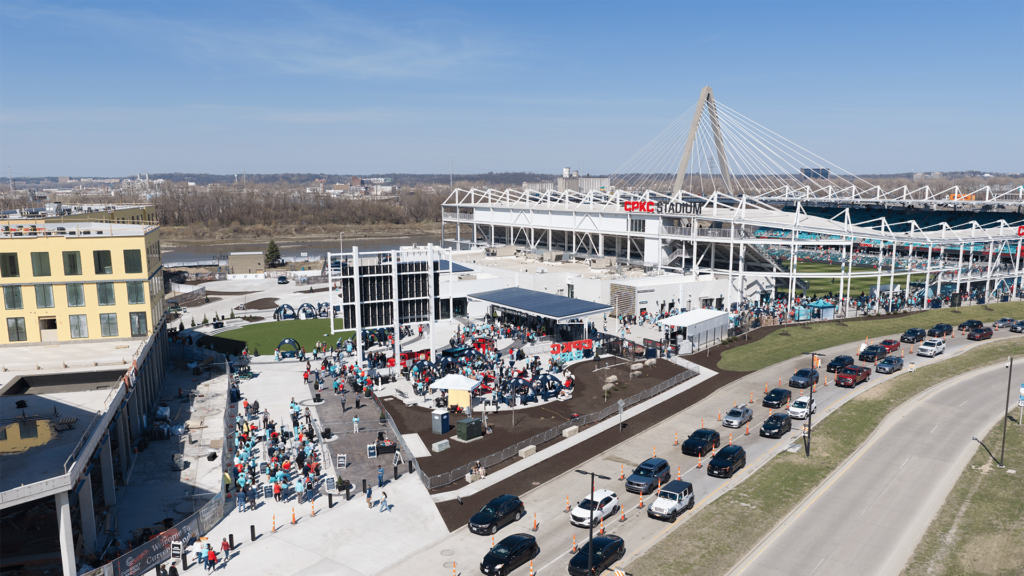
The CPKC Stadium, home to NWSL side KC Current, will see a major financial injection transform its capacity from 11,500 to 18,000.


Leading by example

Amid the excitement, chaos and attention on the FIFA World Cup this summer, the football industry in the US has, once again, come into the spotlight.

But one story which truly represents the progress and development of football in the US is not within the men’s game, but the women’s.

Kansas City Current – a team who privately funded the world’s first purpose-built football stadium for a women’s professional team – is once again leading by example for women’s football in the US.

Only this time, their stadium plans will have the backing not just of the club, but of the Kansas City Council. A recently approved package of AUD 336 million (USD 235 million) will add 6,500 seats to the venue, an expansion which comes as a welcome development for fans who regularly fill the CPKC Stadium to capacity.


Big investment, fast expansion

The CPKC Stadium, however, is little over two years old, having reached its project completion in 2024. But after matches consistently sold out, expansion was always the next step in the inspirational journey of the KC Current.

Co-founders and co-owners, Angie and Chris Long, outlined what the coming investment will mean for both club and community.

“We are proud to continue investing in Kansas City’s future and grateful for the partnership that makes this chapter possible,” the Longs said.

“The success of the Current and the Riverfront benefit our entire community, and we are honoured to help create a lasting legacy for a city that has given so much to us.”

The public funding for the project takes it to AUD 2 billion (USD 1.4 billion). Such financial commitment, of course, reflects the welcome backing from the Kansas City Council.

Yet, more importantly, it shows that women’s football is one of the most rapidly growing industries in the sporting world. In just a few years, the KC Current went from a 3,200 capacity stadium to one which boasts 18,000.

Who knows, in the coming seasons, where this rapid rise will lead to next.

Most Popular Topics

Editor Picks

Send this to a friend