

Football Victoria looking to grow women’s football into the future

In a statement released on Monday, Football Victoria released a new report into the structure of Women and Girls’ football for the future.

The report is aimed at improving the gender balance in Victorian football, with the overall goal of a 50/50 balance by 2027.

The statement can be found below in full.

Football Victoria (FV) today released its independent final report following a comprehensive review into the Women and Girls’ competition structure for football in Victoria.

Tasked with delivering an enhanced football experience for all senior and junior players and a clear vision for the game, the review sought to identify the optimal structure for Women and Girls’ football in the state. It seeks to grow participation, provide the best pathways for junior development and identification and enhance the overall involvement of women and girls in the world game.

Endorsed by the FV Board, the final report covers key areas of improvement for the Women and Girls’ competitions and outlines 22 key recommendations. Its focus areas are football’s culture, players, referees, clubs, coaches, Government and other external stakeholders.

The recommendations are aligned to FV’s overall strategic direction and commitment to growing investment in Women and Girls’ football as we pursue our journey towards a 50:50 gender balance by 2027. Some of the report’s key recommendations include:

  1. Developing a bespoke Victorian Women and Girls’ overarching Football Strategy;
  2. Introducing single age-group competitions (e.g. separate U13s and U14s age-groups rather than current U13-14 combined age group);
  3. A proposed overhaul of Victoria’s Women’s Football Competition Structure;
  4. Methods to develop, retain and grow the number of women and girls in refereeing roles;
  5. Development of a standardised club induction toolkit and process outlining the roles, responsibilities and gender equity expectations for clubs, players, coaches and parents; and
  6. Further driving the push at local and state government levels for more “female friendly” facilities

The Football Competition Review was conducted by independent sports consultancy firm Sports Business Partners (SBP), who worked in collaboration with FV to undertake a comprehensive stakeholder engagement process led by a dedicated and independent Review Steering Committee.

The review’s Steering Committee comprised 26 dedicated and experienced representatives from all levels of the game and was chaired by the President of Women Sport Australia, Carol Fox. Ms. Fox expressed her sincere gratitude for the time and effort contributed by all Steering Committee members.

“The team comprised many talented individuals who brought wide-ranging expertise and knowledge from a variety of backgrounds,” Ms Fox said.

“The team was provided with the opportunity to ensure that all the key themes were discussed, to review areas that were operating well and identify key areas requiring change. It was a privilege to chair this group of experts,” she said.

FV Board Director, Sezar Jakupi, was pleased with the depth of stakeholder engagement, the quality of analysis SBP and the final recommendations.

“The review has seen significant engagement with our female participants in the game and has provided clear guidance to Football Victoria on the game’s challenges and how we can work together to overcome them,” Mr. Jakupi said.

The report’s recommendations will now move to the next phase of work to be completed with key stakeholders, with a view of implementing changes over the next few seasons.

The report also concludes the most comprehensive review ever conducted by Football Victoria into both the Men’s & Boys and Women & Girls competitions.

“Victoria is leading Australia with the proactive approach in reviewing and enhancing the competition structures for both women and girls as well as men and boys.  This requires a clear vision for the game and with the completion of both competition reviews, we believe that we have paved the way for the future which will deliver enhanced experiences for all participants as well as improved developmental outcomes.” Peter Filopoulos, FV CEO said.


Previous ArticleNext Article

Australia football needs to fix its football governance before it can fix its referees

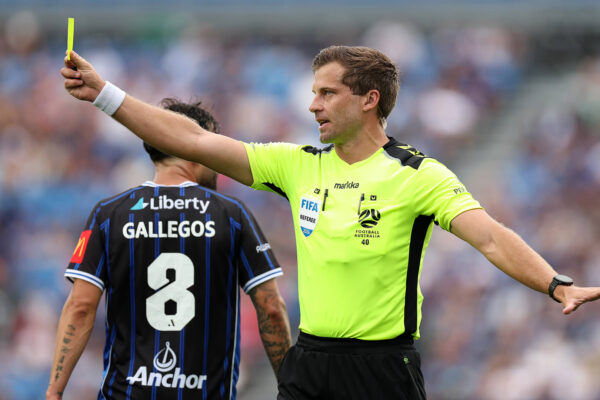
The clearest image yet of Australian football’s refereeing crisis arrived on Wednesday night as Sydney FC and Melbourne Victory met in an Australia Cup semi-final at Jubilee Stadium.

A first ever Big Blue in the competition – and towards it’s pointy end – should have been a showcase event for Australian football but instead, the referees were in the spotlight. Not because of the quality of their officiating, but because of the dire situation the game finds itself in and it’s present need to resort to international imports.


Four Singaporean referees were in charge of the fixture, which Victory won 2-0. Australian referees had refused appointments because of their ongoing dispute with Football Australia. The issue is no longer theoretical. Australian referees are not simply threatening industrial action – their absence has already changed how major matches are delivered. That is a governance failure on the part of Football Australia and the Australian Professional League.

What are the referees fighting for?

Around 90 elite Australian match officials are currently without contracts. That includes referees, assistant referees, fourth officials and video match officials working across the A-Leagues and Australia’s national competitions. The previous contracts expired last month. Some officials are also waiting for outstanding payments from A-League trial matches.

The Professional Football Referees Association (PFRA) has set three main requirements:

  • It wants the existing contracts extended until June 30, 2027, or until a new agreement or independent refereeing structure is established. 
  • It wants all outstanding match fees and expenses paid.
  • It wants a professional refereeing structure that does not place elite officials directly under the APL, which is controlled by the clubs they officiate. A new central structure is what the referees are demanding and should get.

Evgeny Vizelman, chairman of the PFRA, believes that whilst the strike action is extreme, it is necessary to protect Australian referees.

“We do not take the decision to stop officiating matches lightly,” Vizelman told Sydney Morning Herald last week.

“Our referees are being asked to perform in one of the most scrutinised roles in Australian sport without basic certainty around their employment and, in some cases, without even being paid for work already completed. That is not acceptable.”

Football Australia and the APL have been working towards a new structure, but one in which the two organisations contract separately for Australia Cup and A-League matches. The referees believe that is the wrong model.

Their concern is simple: The APL is 67.7% owned by the A-League Club Unitholders. Essentially, the clubs are appointing their own referees. That creates a perceived conflict.

If the referees sit under Football Australia as a regulator, it ensures there is no conflict of interest and that A-League clubs have no opportunity to influence the referees they may be appointed to matches.

England shows another way

England has already built the structure Australia is struggling to create. Professional Game Referees, or Pro Ref, is the central body overseeing refereeing across the Premier League, EFL, WSL Football and FA competitions. It is funded by those aforementioned competitions.

The important distinction is those competitions do not each run their own separate professional refereeing workforce. Pro Ref manages the system. It oversees appointments, development, training and performance. For the 2026-27 season, its new Professional Referee Group will service the Premier League and EFL Championship.

Officials work within the same professional structure and can be selected across competitions. That centralisation brings consistency. It also allows referees to be treated as a professional group rather than a collection of officials contracted separately by different competitions.

Whilst it is centralised, the system is not perfect. England has also recognised the need for greater independence in assessing referee performances due to Pro Ref being owned and funded by leagues and, as a result, the clubs they represent. However, as the body is also owned in part by the English FA, the governing body can oversee practices.

Pro Ref has also implemented world-leading officiating practices. Its Key Match Incidents panel includes former players and coaches, alongside representatives from the Premier League and Pro Ref, and reviews major decisions independently each week.

Pro Ref now has dedicated development groups, specialist coaching, sports science, psychology and performance analysis. 37 Pro Ref officials are currently on the FIFA International List. That does not prove centralisation alone creates better referees. But it shows what happens when refereeing receives a professional structure, long-term investment and consistent management.

Australian football needs to collaborate

This is where the Australian dispute becomes bigger than referees. Football Australia and the APL have been unable to secure agreement over who funds the referees over a long period of time, leading to this standoff; it comes at the same time as the APL’s difficulty in negotiating a new CBA with the players’ union.

Both organisations have a role in running their respective parts of the Australian game, but again an industrial dispute has the game appearing in shambles on the eve of another domestic season.

The most frustrating part of this dispute is that everyone needs the same thing. Football Australia and the APL need referees; there is no doubt the refs deeply value their employment at the elite level. With due respect to Wednesday’s flow-in Singaporean officials – themselves from a valued partner member through our shared position in the AFC – nobody wants to see the circumstances under which they were required on Wednesday continue any longer.

The PFRA dispute should therefore be treated as more than an industrial disagreement. It is an opportunity to fix the structure. Australia should learn from the principle behind Pro Ref and the English system. Centralise, professionalise and protect the officials who manage the game.

Gold Coast International drives futsal growth as international interest surges

The 2027 Gold Coast International is set to be the biggest year of growth in the tournament’s history. The tournament has become one of Australia’s premier futsal events. Attracting the best teams from not just Australia but around the world. Andrew Parkes is the founder and managing director of the Gold Coast City Futsal Association and an advisory board member at Football Queensland. He says the tournament, and its international reputation, is only strengthening.

“Registrations are actually a step up from what they were last year,” Parkes said.

“We’ve got several teams from New Zealand. At the moment, we’ve got some Pacific Island teams that have expressed interest in coming. We got interest from Japan, and from England as well.

“We’ve got over 140 teams so far, and that’s not including anything from the local areas.”

Over 200 teams attended the 2026 edition, and the Gold Coast International is well set to break that record next year. The figures show the tournament is becoming more than a local competition. It is building a strong national and international presence.

Football Queensland and Football Australia unite behind growth

Parkes believes collaboration has played a major role in the development of futsal in Queensland. The tournament is sanctioned by both Football Queensland and Football Australia. He praised Football Queensland for its work across the sport. He said the organisation has helped create a stronger and more professional futsal system. This relationship between state and national bodies and the event has allowed the Gold Coast to play host to the national competition as well. This ensures shared resources including referees and courts.

“Football Queensland have been a major driving force and a godsend in relation to the development of futsal,” Parkes said.

“We’ve got the nationals the week before the Gold Coast International now. We’re working in harmony and synergy and supporting each other.

“I think the proofs in the pudding, not just with the Gold Coast International, but with the exposure and obviously the diversity of teams that attend. But then the further development in our local leagues, and that’s resulted in.”

E-sports adds another pathway for players and clubs

E-sports has become another major part of the Gold Coast International. Parkes said he had explored the idea for several years and that the tournament allows the community to grow beyond just the physical players on the court. The use of e-sports also allows friends and families to have an interactive experience with simulators and games whilst at the Gold Coast International.

“We launched e-sports about 2 years ago, just with a bit of a light feel. We’ve incorporated the competition into the tournament fees, which is excellent. So it doesn’t cost anybody anymore to be part of it,” Parkes said.

“It actually allows the clubs and academies to extend on their current offerings as it is at the moment and allows gaming players to be part of the club, to be part of the atmosphere and to join and that unity and be part of that sporting community.”

“We had three times the amount of teams that we had from the first year of e-sports. We’re looking to probably even double that again this year, which is really exciting as well.”

New pathways shape the tournament’s future

Parkes wants the Gold Coast International to keep expanding. He is now looking at ways to create pathways beyond the tournament itself. He said the use of its international experiences that can be earned through the tournament is not only about investing in players. But ensuring coaches have a more time-efficient avenue to be involved with futsal. It also gives more coaches the chance to work with players at an international tournament.

“We’ve now created the Gold Coast International All Stars, which is now embraced by many of the coaches and the players,” Parkes said.

“That also provides coaches who don’t have the time or the ability or whatever for the state teams, and the commitment that they need to put in the state teams throughout the year.”

“It allows us to have a lot more outreach to far more coaches that have a lot of passion and enthusiasm, and be part of the Futsal community. They want to build on the players’ abilities but may not have that year-long or eight-month-long exposure that is required by the state Futsal team coaching staff.”

For Parkes, the future is about widening access while continuing to raise standards. The tournament is growing its international reach, strengthening partnerships and creating new opportunities for both physical and e-sports players. The Gold Coast International is no longer just a tournament. It is becoming a broader platform for the development of futsal and its wider community.

For more information on the Gold Coast International and to inquire about competing in the 2027 edition, visit their website.

Most Popular Topics

Editor Picks

Send this to a friend