Football Victoria provides coaching support through Club Coach Coordinator program

Football Victoria

Through the Club Coach Coordinator (CCC) program, Football Victoria (FV) is committed to working with Clubs to create a positive culture within the state’s football community.

Having been developed by Football Australia to enhance the coaching and playing experience for all involved within a Club, the CCC program represents an immense resource for clubs looking to upskill and ultimately retain coaches to ensure football in Victoria continues to thrive.

The CCC Program promotes retention and development of skills, offering a simple and controlled support network for new or inexperienced coaches. It also offers an opportunity for Club coaches to gain a recognised coaching accreditation within the season and without having to travel to attend an external course.

Under the FV CCC Program, a selected person within a Club works closely with the FV Program Manager to:

  • Build strong sense of inclusion and belonging.
  • Welcome new players, members, and supporters.
  • Maintain good communication between all Club stakeholders and;
  • Create a positive, safe, and non-threatening environment in which players and coaches feel that they can try new things and make mistakes.

The CCC role provides relevant and valued coach support in the Club environment and supports coaches to ensure sessions are safe, inclusive, organised, enjoyable and engaging for all involved.

Clubs can support their coaches through a variety of packages ranging from a Basic package which primarily involves online support, through the Bronze & Silver packages which offer regular online catch-ups. Gold packages are also available, which provide a higher level of in-person support including Club visits, Community Coaching Certificates and a planned Coaching Conference.

There are already nearly 60 Clubs active within the program in 2022, with a strictly limited amount of packages Bronze, Silver and Gold packages left.

Those looking to register their interest can do so here.

Previous ArticleNext Article

Victorian State Budget delivers $750,000 to football facilities as governing body signals more to come

Two of Victoria’s most prominent football clubs have secured a combined $750,000 in facility funding from the 2026 Victorian State Budget, in what Football Victoria describes as the beginning of a broader set of announcements for the sport from this year’s budget cycle.

Avondale FC will receive $500,000 to install lighting at Avenger Park in Avondale Heights, while Hume City FC has secured $250,000 for major upgrades at Nasiol Stadium in Broadmeadows, including a new LED scoreboard and improved lighting infrastructure. Both clubs compete in the Victorian National Premier Leagues and serve large multicultural communities in Melbourne’s north and northwest.

The announcements are modest in scale relative to the infrastructure deficit facing community and semi-professional football across the state, but their political significance extends beyond the dollar figures. They represent a tangible return on Football Victoria’s sustained advocacy campaign, which includes the Level the Playing Field parliamentary petition calling for more equitable government funding for football relative to other codes.

Facilities as Equity Infrastructure

The Avondale funding addresses a problem that has constrained the club’s operations for years. Avenger Park currently cannot be used at night, forcing the club to play matches at neighbouring venues or arrange temporary lighting for significant fixtures, including last year’s Hahn Australia Cup tie. The $500,000 investment will allow the club to host evening matches and training sessions on its own ground for the first time, removing a structural disadvantage that has affected scheduling, participation and the overall experience for hundreds of players each week.

For Hume City, the implications carry a specific equity dimension. Club President Ersan Gulum noted that upgraded lighting and facilities would directly support the growth of the club’s girls’ and women’s programs by providing better access to training environments and creating more opportunities for female participation.

“We have hundreds of players across all age groups utilising these facilities each week, and these improvements will help create an even stronger environment for excellence, participation, and community engagement,” Gulum said.

The connection between lighting and women’s football access is not incidental. Inadequate or absent lighting at community grounds disproportionately affects female programs, which have expanded rapidly in recent years but frequently find themselves scheduled into daytime slots because evening use of the facility is not viable. Infrastructure that enables night training and matches does not merely improve conditions. It expands the hours during which the ground can be used, directly increasing the number of teams and players a facility can serve.

The Political Context

Both clubs are located in state electorates where local members played an active role in securing the funding. Avondale celebrated the announcement with Parliamentary Secretary Sheena Watt, while Hume City acknowledged the support of local members in its public statement.

The pattern is familiar in Australian sports funding. Facility grants flow through electorate-level political relationships as much as through any centralised allocation process. Football Victoria’s acknowledgement of both Merri-Bek and Hume City Councils, in addition to the state government, reflects the layered advocacy required to move funding from budget allocation to ground-level construction.

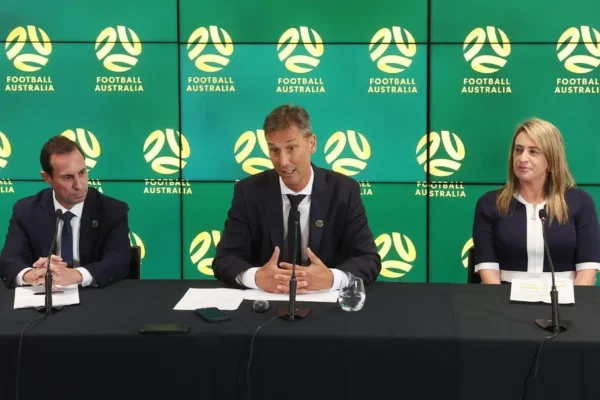
Football Victoria CEO Dan Birrell praised both clubs and pointed toward further announcements.

“Both Avondale and Hume City are pillars in the Victorian football landscape, building strong and supportive communities around their top level junior and senior football programs,” Birrell said. “Professional level facilities like Avenger Park and Nasiol Stadium are critical for the development of Victorian football.”

Football Victoria has indicated more budget-related football announcements are forthcoming and has urged supporters to sign the Level the Playing Field petition ahead of the next Victorian State Election.

Football Victoria’s Female Football Week Awards Recognise the People Empowering Women’s Football

Football Victoria has named its 2026 Female Football Week Award winners, recognising five women whose contributions across playing, coaching, refereeing, volunteering and community leadership represent the human infrastructure behind the most significant period of growth in Australian women’s football history.

The announcements come in the final days of Female Football Week, a ten-day national celebration that has taken on particular resonance in 2026 following a record-breaking AFC Women’s Asian Cup on Australian soil. The tournament filled stadiums, broke attendance records and generated a level of public enthusiasm for women’s football that governing bodies are now under pressure to translate into something lasting. These five recipients are among the people who will determine whether it does.

Brooke Wyatt of Trafalgar Victory FC has been named Volunteer of the Year. Her contribution was coordinating the MiniRoos, managing match days, organising club events and driving recruitment efforts that have helped the club field new junior teams. Wyatt’s work is the kind of work that keeps community football functioning without ever appearing in a match report. Wyatt has also been central to strengthening Trafalgar’s women’s program, building the welcoming environment that determines whether female players feel the club was built with them in mind.

Karishma Wijeyesinghe of Victoria Park FC has been recognised as Community Champion of the Year. Serving simultaneously as Senior Women’s Liaison Officer, voting committee member and club captain while maintaining a demanding professional career, Wijeyesinghe has built the women’s program infrastructure that clubs across the country require. Her presence at the decision-making table at Victoria Park is precisely the kind of representation that shapes whether female players feel the game is for them from the moment they walk through the door.

The cost of showing up

Chelsea Phillips of Mt Eliza SC has been named Player of the Year in a recognition that goes well beyond her captaincy of one of the club’s most successful Under-18 groups. Over the past year, Phillips faced a serious neurological health condition that temporarily affected her vision and mobility. She continued attending training and matches throughout, supporting teammates from the sidelines and maintaining a leadership presence during a period when most people would have stepped away entirely. Her club has described the impact on those around her as profound; a reminder that what players model for each other in difficult moments shapes the culture of a program far more than results alone.

Hannah Riess has been named Referee of the Year for her rapid progression to NPL Women’s Under-20 officiating level and her active mentorship of emerging referees across Gippsland. Female referees remain significantly underrepresented at every level of the game in Australia. The pipeline that will change that is built by people like Riess, those experienced enough to progress, invested enough to bring others with them rather than simply move ahead alone.

Building the pipeline that sustains the boom

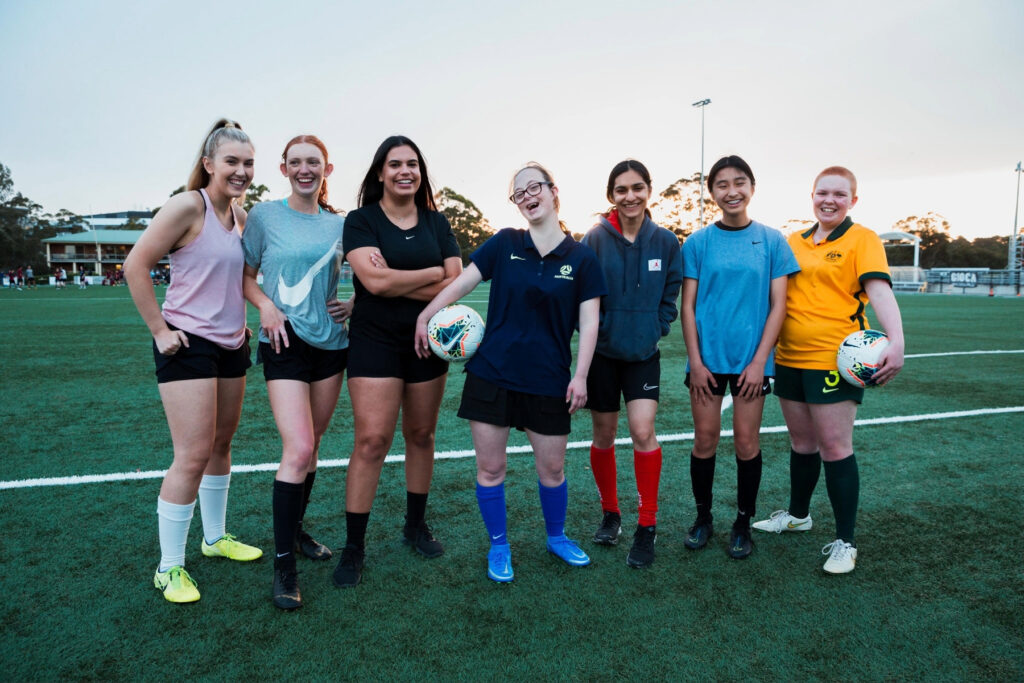
Natasha Groves of Darebin Falcons has been recognised as Coach of the Year for her work across junior, senior and women’s social football programs, including her delivery of Football Victoria’s PlayHER initiative and her completion of advanced coaching accreditation. Groves has consistently created environments at Darebin where women and girls new to the game feel genuinely welcome, addressing the retention challenge that sits directly behind every participation surge the women’s game generates.

Taken together the five recipients illustrate something the attendance figures from the AFC Women’s Asian Cup cannot. Record crowds are the visible outcome of decades of invisible work, by volunteers, coaches, referees and community builders who showed up long before the cameras did, and who will still be there long after the tournament has moved on.

Most Popular Topics

Editor Picks

Send this to a friend