



Geelong regional soccer centre a step closer to reality

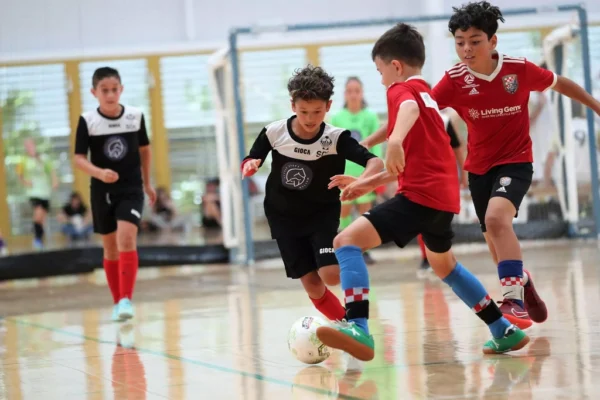
The City of Greater Geelong has committed $50,000 of its budget towards a feasibility and business plan for the development of a new regional soccer centre, with hopes that funding from federal and state governments could make the multi-million dollar facility a reality.

Councillor Kylie Grzybek said that while other regional areas like Shepparton and Ballarat have regional soccer centres, Geelong is missing out on opportunities without one of their own.

“We’ve been missing out in Geelong, and want to have the opportunity to host all types of soccer events, even rugby events, country championships, Croatian Cups, A-League and W-League. For example, when the World Cup comes we could host a team. We feel we have been missing out,” she said.

Grzybek explains this is a continuation of the council’s support for the world game, and the new facility was a part of her election campaign.

“It shows a dedication to the fastest growing sport in the country. Council has over the past 4 years invested heavily in soccer across the region, we are talking from female-friendly change rooms, lighting projects, to new pitches and clubs, trying to support the game generally,” she added.

Councillor Eddy Kontelj revealed that the idea for a regional soccer centre of Geelong has been in the pipeline since 2010, and the focus on soccer-specific infrastructure could make it a reality.

“It’s taken a while to get the level where we could seriously consider it, in the past decade there hasn’t been a lot of infrastructure work and investment at the local level, because the Geelong area has not had as much focus on soccer-specific facilities until now,” he said.

Cr Grzybek is hopeful that by the end of her current term, which is due to end in 3 years, work will have begun on the new facility.

“In my view, we will do the business case, and be out there spruiking it in time for the state and federal elections. You can get these types of funding or you don’t,” she said.

“I think the council will be looking to work out this financial year how much the council can contribute. It’s a facility that is probably anywhere between $10 million and $20 million, which is a lot of money. How can we stage it, how we can set aside the land for this type of facility.”

The City of Greater Geelong Council may be able to tap into the World Game Facilities Fund, or the Community Sports Infrastructure Program, which has helped fund other projects in the state of Victoria.

Previous ArticleNext Article

Mizuno’s Australian gamble: can a 120-year-old brand break through?

When Mizuno unveiled a mural of Socceroos captain Harry Souttar on a Richmond wall during the 2026 World Cup, the company’s name did not appear on the artwork. The artist, Rory Ledge, painted Souttar as the “Minister of Defence” behind a brick wall. Channel 7 and Channel 9 turned up. The Herald Sun ran it in their Saturday edition. Mizuno’s brand director called it “mainstream awareness” without paid media.

The mural sat within a broader push by the Osaka-based company to expand in Oceania. For the fiscal year ending March 2026, Mizuno reported sales of ¥259 billion, up 7.8 per cent year-on-year, with net income of ¥18.4 billion representing 20.5 per cent growth . Operating profit rose to ¥22.6 billion. The Asia and Oceania segment is central to the company’s medium-term plan, which targets net sales of ¥290 billion by fiscal 2027.

The growth imperative

Australian football has not historically been kind to specialist boot brands. Nike, Adidas and Puma dominate retail shelves. A-Leagues collective bargaining agreements and club deals have locked in incumbents. For a brand without the marketing budgets of its competitors, the path to relevance runs through the players.

Mizuno has grown its Australian ambassador base from one athlete to around 20 across the A-Leagues in recent seasons. Melbourne City’s Tolgay Arslan, who played in the Bundesliga and Serie A before arriving in Australia, told Front Page Football: “If I discovered these boots ten years ago, I would wear these boots overseas in my career.” Western United midfielder Angus Thurgate called them “the comfiest boots I’ve ever worn”.

The mural moment

Richmond was chosen for the mural because of its location. The suburb sits at the centre of Melbourne’s sporting precinct, five minutes’ walk from the MCG and AAMI Park. It is already home to murals of AFL players. Rowena Corner Store owner Con, who agreed to host the artwork, had previously welcomed murals of Dusty Martin and an AFLW player.

“We didn’t have access to Harry because he was in the US competing,” brand director Rishi said. “We couldn’t do a photoshoot. So we had to be clever. The best ideas come from real time, aligned with what the public discourse looks like. Once we saw his Wikipedia page updated to refer to him as the Minister of Defence, we knew we could play into this.”

Ledge incorporated an existing window into the design to create a net behind Souttar’s figure. The mural appeared the morning of the Paraguay match, when Australia’s clean sheet sent them into the knockout phase.

The World Cup provided a massive backdrop. The Socceroos’ run captivated the nation: 4.84 million Australians tuned in to the Paraguay match, making it the most-watched World Cup match in SBS history at the time, with an average audience of 3.086 million . The final reached 5.26 million viewers, and cumulative tournament reach hit 18.04 million— 64 per cent of Australia’s population. SBS director of sport Ken Shipp said: “We’ve never seen engagement at this level.” Mizuno spent comparatively little and had Channel 7 and Channel 9 on site.

The commercial question

For a brand with limited marketing firepower, organic PR coverage is the prize. The question for the company’s Oceania division, still in growth mode, is whether a mural and a handful of player endorsements can convert into sustained commercial traction. Retail partnerships with Ultra Football, which has created a dedicated Mizuno space at its Melbourne store, suggest the company is thinking beyond campaigns.

Mizuno’s European expansion has taken a different path. The company signed a five-year deal to become AS Monaco’s technical equipment partner from the 2025-26 season, its first entry into Ligue 1. It already has a presence in Germany’s Bundesliga and Italy’s Serie A. In Australia, institutional partnerships are harder to secure. The approach has been slower: build through athletes, then through community, then through culture.

The Queensland government signed a Memorandum of Understanding with Mizuno in March 2026 to explore the Japan-Australia Sports & Health Innovation Exchange (JASHIE), a two-year partnership focused on sport and health innovation . The agreement supports Queensland’s preparations for the 2032 Olympic and Paralympic Games.

The mural campaign reflected a broader trend in sporting brand marketing, where IP restrictions and athlete availability increasingly demand creative solutions. “I love what Levi’s did because they were able to lean into their brand codes and tell what I believe to be the most memorable advertising story from the World Cup,” Rishi said. “This is a different page out of fundamentally the same playbook.”

Mizuno’s boots are not cheap. The Made-in-Japan models retail well above competitors’ offerings. The brand’s pitch rests on quality and heritage, not price or volume. That is a harder sell in a country where discounting dominates and cost-of-living pressures are squeezing households.

The Souttar mural will eventually fade or be painted over. Mizuno is betting that by the time it does, enough Australian football fans will have noticed the three stripes’ quieter rival.

Murray United calls Football Victoria review following wave of State League forfeits

Murray United has called on Football Victoria to undertake a comprehensive review of State League football after a series of fixture forfeits left the regional club questioning the integrity of the competition and the long-term sustainability of its senior pathway.

In correspondence sent to Football Victoria, Murray United outlined concerns following what it says has been an unprecedented number of forfeited fixtures during the 2026 State League season. According to the club, its senior men’s program has been impacted by five forfeited rounds, equating to 10 matches. This includes the club’s last two fixtures, significantly disrupting competition across both senior and reserve grades.

The club and its chairman Pedro Afonso, argue the consequences extend far beyond missed fixtures, affecting player development, community engagement and confidence in the State League system.

“This is extraordinary, unacceptable, and completely inconsistent with the integrity and intent of Football Victoria’s State League competition,” Afonso said to Football Victoria.

“This impact extends well beyond lost fixtures. It has damaged player morale, member engagement, volunteer morale, sponsorship and club revenue, and the reputation of the sport and competition itself.”

Located at the club’s $20 million facility in Wodonga, Murray United has invested heavily in creating a regional football pathway. However, repeated forfeits have limited opportunities for players, coaches and supporters to participate in home State League fixtures.

The club has hosted just three home rounds this season despite the significant investment made into facilities and matchday operations.

“Our players, coaches, members, supporters, sponsors and the sport expect a legitimate State League competition, not one regularly disrupted by forfeits,” Afonso said.

“Our confidence must be restored by Football Victoria.”

While the immediate concern centres on this season, Murray United believes the issue reflects broader structural challenges facing regional football within Victoria’s State League system. Between the north-west and south-east competitions, there are 14 divisions of State League football in Victoria.

Among its recommendations, the club has called for Football Victoria and its Football Development Committee to undertake a formal review of the State League Seven North West competition, including club compliance and the frequency of forfeits.

Murray United also questioned whether the current competition structure provides an appropriate development environment for ambitious regional clubs. The club could be promoted to division six due to a large proportion of fixture forfeits. But fearing further cancellations, the club is requesting a review to be placed in an even higher division where clubs are willing to travel to Wodonga.

“We believe we should be sensibly placed in a competition that reflects our playing standard, facilities, player and coach pathways and our ambitions,” Afonso said.

The club has requested that Football Victoria assess its senior program using grading principles similar to those recently applied within senior women’s competitions, with consideration given to placement in a competition more suited to its football program and long-term objectives.

Alongside competition grading, Murray United has proposed stronger penalties for clubs that repeatedly forfeit fixtures. Recommendations include increased financial sanctions to $2,100 for senior teams alongside a three-point deduction per forfeit and compensation for host clubs to offset matchday operating costs.

The submission also encourages Football Victoria to review minimum participation standards across State League clubs, strengthen accountability measures and examine whether the existing league structure adequately supports regional football.

Afonso believes reform is necessary to ensure regional clubs are not disadvantaged within a statewide competition.

“We remain fully committed to providing quality football opportunities for our regional members and community and have heavily invested in facilities, player and coach development and volunteers,” he said.

The club has requested that Football Victoria provide clarity on the actions it intends to take before the commencement of the 2027 season, arguing that restoring confidence in competition integrity will be critical for the continued growth of regional football.


Most Popular Topics

Editor Picks

Send this to a friend