


Gold Coast United Chairman Danny Maher: “We are chomping at the bit to get back into the A-League”

Danny Maher is the current Chairman of Gold Coast United FC and is leading the charge to bring a Gold Coast team back into the A-League.

In a wide-ranging chat with Soccerscene, Maher speaks openly about his involvement in the game, provides an update on Gold Coast’s bid for the A-League, the current on and off the field progress of Gold Coast United and his future ambitions for football in the city.

First of all, I’ll ask about your role in Gold Coast United – how did your involvement come about and what is your background in the game?

Danny Maher: There was a group of business people who got together to return A-League to the Gold Coast basically, but with a strong focus on reforming the elite pathways at the Gold Coast. We wanted to start by ensuring there was at least two top NPL clubs on the Gold Coast and provide some local interest in the game.

So, we reformed Gold Coast United, entering it into the National Premier Leagues (NPL). I am the Chairman of the club and I was obviously heading that reformation process. I’m also chairing the A-League bid for the city.

I’ve got kids that play the game, I played representative football and was one of those people who left the game as a teenager. I was president of Magic United prior to this, which has basically now turned into the Gold Coast Knights (the other NPL club in the city).

I’m very much using my background of being a tech entrepreneur and investor, looking at it as a long-term play, with a group of business people that are very interested in football.

Is there an update on Gold Coast’s A-League bid, are there any details you can reveal?

Danny Maher: I can. The A-League bid is separate from Gold Coast United and it’s an all of city bid supported by both NPL entities and the city itself. I chair an investment firm and that’s the lead entity for the bid. It’s backed majorly by a group of US business people including Jordan Gardner and Brett Johnson. They lead a US consortium that own football clubs around the world and would like to add the Gold Coast in to their portfolio of clubs.

If a Gold Coast bid were to be accepted in the A-League again, how would the team excel this time around?

Danny Maher: First of all, we need to determine the brand it would fall under and whether we would return to the Gold Coast United moniker. That will be up to the city, all the football clubs and participants, but ultimately the decision will be made by the owners and the APL.

One of the previous myths about the A-League and the Gold Coast is that United went under, but it actually didn’t. The license was removed by the FFA when Clive Palmer was butting heads with Frank Lowy, but the club didn’t fold.

We’ve got a situation at the Gold Coast where we have two excellent NPL clubs, the fastest growing population in Australia, the largest population without an A-League team, an empty $200 million stadium and an international football group that is backing the bid.

The AFL and NRL both have a professional team here and they are investing heavily in those sports in this area, but we are not asking for a dollar. We are just asking for permission to invest.

Would the consortium look to enter a national second division, or would it only consider an A-League expansion spot?

Danny Maher: The consortium for the A-League bid isn’t interested in joining a National Second Division at the moment, but the NPL clubs individually will look at that. For example, Gold Coast United, the NPL entity, may be interested in the second division and we are currently part of that group investigating the viability of a second division.

How is the Gold Coast United NPL club currently progressing on and off the pitch?

Danny Maher: It’s a really happy place. It’s the highest rated academy in Queensland, I believe. It’s the only academy in this region that has females and our senior women were the league champions last year. The men are going well, we don’t spend the amount of money some of the other clubs do as we are pursuing a long-term strategy with a youth policy. We’ve got a great facility that council has provided us down at Tallebudgera. It’s a really peaceful, scenic setting with six football fields and three of them operated by Gold Coast United. We have a really low turnover of players and its quite difficult to get in the academy.

We have good levels of sponsorship so we don’t use any junior fees to fund senior programs, so that’s great, and we focus strongly on the junior setup having to be self-sustaining.

One last one Danny, where do you want to see Gold Coast football with the NPL entities and the A-League bid moving forward in the next 5-10 years?

Danny Maher: We definitely would like to see sustainable NPL clubs that have good local competition and we want to see the football ecosystem connected. So, for example, clubs working together and not being sensitive about talented players moving to the correct pathway for them. We want to see committees, from the Gold Coast Knights and ourselves, collaborating together for the greater good of the game and leaving the competition to the fans, players and coaches.

Then ultimately, the A-League is an all of city entity so it doesn’t belong to any one club. It belongs to the city and all football fans in the region. We want to see the A-League team connected to all the NPL clubs and the NPL clubs connected to other clubs below them in their geography (which we are very close to reaching).

We are chomping at the bit to get back into the A-League for the city; we don’t talk about it a lot in public because we don’t need anything, everything is in place.


Previous ArticleNext Article

It’s Time for Football Administrators to Lead: CPD and Membership Standards Can’t Wait

As CEO of Soccerscene, I’ve been watching Australian football grow and evolve. Crowds are bigger, clubs are modernising, and communities are reconnecting with the game. But there’s a gap that can’t be ignored.
football administrators CPD membership meeting

Australian football is growing fast. Crowds are bigger, clubs are modernising, and communities are reconnecting with the game. However, football administrators CPD membership and professional development are still lacking. The people running clubs and governing bodies operate without clear frameworks or accountability.

For too long, administrators have worked without structured professional standards. If we want a sustainable future, professionalising football administration must match the standards we already require from coaches, agents, and other key roles in the game.

The Gap in Professional Development for Football Administrators

The gap is obvious. Coaches must earn AFC coaching licences or Football Australia equivalent qualifications and complete Continuing Professional Development every three years. Agents must earn 20 CPD credits each year with an 80 percent pass rate.

Administrators, who run clubs and federations, have no similar rules. Consequently, there are no CPD requirements, baseline standards, or accountability measures. This is not a small problem. Instead, it is a major gap in how we see football administration standards.

Membership and CPD Frameworks for Football Administrators

A membership-style framework for administrators would fix this. It could include mandatory CPD, accredited courses, recognition for good work, and clear accountability rules. Importantly, this is not bureaucracy. It helps administrators make better decisions, lead with purpose, and manage football responsibly.

Learning from Chartered Accountants to Guide Football Administrators

Other sectors offer a model. Chartered Accountants Australia and New Zealand CA ANZ represents over 140,000 professionals. Members follow strict ethical rules, ongoing education, and recognition programs. Their Member Benefits Program supports members personally and professionally through technology, business services, and lifestyle tools.

Chartered Accountants are known for their skill and integrity. Therefore, if football administrators had similar structured professional standards, the game off the pitch could match the ambition on it.

Global Inspiration: Made in Korea and Football Administration Reform

There are strong examples nearby. Over the past two years, the Korea Football Association Made in Korea project has overhauled coaching and administrative systems. It created a clear philosophy, fixed gaps in development, and built a national identity.

Korea Republic has qualified for every FIFA World Cup since 1986, but it has never broken into the top tier of world football. The Made in Korea project shows that progress needs structure, planning, and shared purpose. Australian football needs the same.

Encouraging Moves at Home for Football Administrators

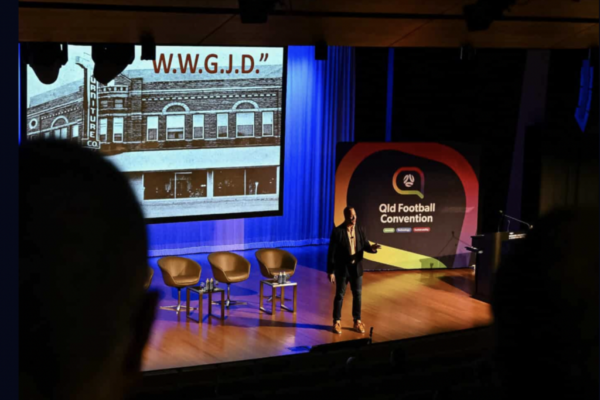
Positive steps are happening locally. For example, the recent Football Convention in Queensland empowered all stakeholders and lifted the discussion about governance and professional development.

Michael Connelly from CPR Group, who spoke at the convention, highlighted Stewardship. This means making decisions for the long-term health of clubs, not just today. He also discussed pathways to sustainable growth from strategic partnerships to small practical changes. These examples show that we have people ready to lead reforms in football administration.

Strategic Planning and CPR Group in Football Administration

CPR Group is Australia’s leading provider of sports governance, planning, and community development. They help national and state bodies, councils, universities, and grassroots clubs. CPR Group delivers master plans, governance advice, constitutions, feasibility studies, and sport and recreation plans.

Michael Connelly’s leadership demonstrates how strategic planning provides a clear roadmap. It aligns decisions with a club’s vision and communicates values to members, sponsors, and funders. Many committees want to transform their clubs but struggle with day-to-day tasks. Strategic planning gives focus and confidence.

Keeping Pace with Growth: CPD for Football Administrators

Victorian football is growing fast. Crowds are bigger, clubs are modernising, and communities are more engaged. Growth brings opportunity but also responsibility. Therefore, administrators need tools, training, and frameworks to manage it effectively.

Professional development would give administrators access to digital membership tools, community engagement models, and financial planning strategies. Without this support, administrators risk falling behind. Structured training helps them lead rather than just react.

Recognition and Motivation for Football Administrators

Recognition helps build a professional culture. CA ANZ rewards excellence through fellowships, service awards, and honours. Football could do the same for administrators who innovate, lead inclusively, and strengthen clubs. Recognition motivates administrators to stay engaged and improve the game.

The Time to Act for Football Administrators CPD and Membership

Australian football is at an important point. Crowds are growing, investment is rising, and community support is strong. However, if this growth is to last, administrators must be prepared to lead professionally.

The CA ANZ model shows how professional standards can transform a sector. The KFA’s Made in Korea project shows how structure can redefine football identity. The Football Queensland Convention shows how stakeholders can elevate the debate. CPR Group shows how planning brings clarity and focus.

By introducing football administrators CPD membership programs, we can create a generation of ethical, capable, and accountable leaders. Football is more than what happens on the pitch. It is the reawakening of the game’s heart and identity. To protect that, we must invest in the people who manage, grow, and sustain football every day.

The time to act is now.

APL Chair Stephen Conroy Joins Foxtel Board as Media and Sport Worlds Converge

Stephen Conroy - A-Leagues Chairman

Former Communications Minister Stephen Conroy, who serves as independent chair of the Australian Professional Leagues (APL), has joined the Foxtel Group board, further strengthening the links between Australia’s sporting and media industries.

Conroy’s new appointment to Foxtel comes as the broadcaster’s ownership and direction evolve under billionaire Len Blavatnik’s Access Industries and global sports-streaming company DAZN. Both organisations are seeking to expand their influence in sports broadcasting, with Foxtel’s streaming arm Kayo Sports at the centre of its future growth strategy.

Conroy said Foxtel’s 30-year history gives it “a great heritage producing sport and drama in Australia for Australians” and that its new ownership “creates an opportunity to spread the love of Australian sport internationally.”

To prevent any conflict of interest with his role at the APL, Conroy confirmed he will step aside from all discussions or decisions involving A-League broadcast rights.

The APL’s current media deal with Paramount+ and Network 10, valued at around $200 million over five years, is due to expire in 2026. As that deadline approaches, attention is turning to what shape the next broadcast arrangement might take.

Adding further connections is Danny Townsend, the former APL chief executive who sits on DAZN’s board – after also previously working with Sydney FC. His career path illustrates the close relationships forming between Australia’s football administrators and the global media companies now investing in local sport.

Conroy’s appointment highlights how rapidly the boundaries between sport, media and technology are shifting. With his experience in government, regulation and sport, he is positioned to play an important role as Foxtel and the wider Australian sports industry navigate a changing broadcasting landscape and an increasingly international marketplace.

Most Popular Topics

Editor Picks

Send this to a friend