


How German company Onefootball is succeeding in the OTT streaming landscape

Following the growth of on-demand content and ever-increasing consumer choices, broadcasters are now becoming unable to dictate what will be shown to their audiences and at what times.

In today’s world, through viewing habits and data from user accounts, it is actually the opposite.

It is now up to those broadcasters to analyse this data and provide an attractive package at the right price to bring in the consumer.

Founded in 2008, Onefootball is one of Europe’s leaders in regards to investing in and recognising this trend.

This includes strategic decisions the company has made securing deals with Sky Deutschland and Eleven Sports. This allows them to show matches from multiple leagues around the world, through a pay-per-view, live streaming partnership.

Live matches can be streamed through their official app, including games from the 2. Bundesliga and the DFB-Pokal. Onefootball gives their growing young audience an attractive yet simple proposition: the opportunity to choose the games they want to watch.

Their model also allows consumers to sign up to a shorter and more convenient payment plan, instead of a costly long-term subscription.

“It’s our response to the ever-changing media landscape characterised by rights fragmentation and expensive subscription models,” said Onefootball CEO, Lucas von Cranach after the announcement of his company’s partnership with Sky Deutschland and Eleven Sports.

Von Cranach added: “Modern football fans want to consume live content in a more flexible, easily accessible way. They want to consume it when they want, where they want and how they want – and all of this at a reasonable price.”

Onefootball may have taken inspiration from NBA’s juggernaut streaming service League Pass, which also allows fans to pick and choose content that suits them. This promotes growth in engagement for the sport as a whole, whilst strengthening direct-to-fan relationships.

Despite this, different sports and services will not thrive if they are all identical. To have a successful OTT streaming service, differing needs have to be addressed.

These needs will likely change over time as Von Cranach explains.

“The industry needs to adapt to the evolving consumer behaviour. It’s about understanding and anticipating the highly sophisticated needs of younger generations – that’s the key” (as posted in FC Business).

Onefootball is driven by Sportradar OTT. Sportradar is a company founded in Norway, that collects and analyses sports data. Therefore, Onefootball can access these insights from the data collected and ensure an improved experience for users through gamifications aspects and overlays.

For example, statistical overlays can be implemented to highlight information that will complement footage of a match. Gamifications such as polls and quizzes will look to keep viewers engaged to the platform for a longer duration.

The rights holder is also informed about how to showcase their digital ecosystem in the best financially rewarding way.

When you combine all these factors and other insights which are taken from user data, you have the ingredients for a successful OTT service.

With regards to these OTT services, the ability to tweak your output and monetisation methods, based on viewer habits, is already a proven game changer.

Whilst linear broadcasts do still have a place in media consumption in the modern world, it lacks the insights and clarity you get through OTT.

Whether focusing on how content has fared or finding the best way to monetise it, OTT services provide rights holders with much needed guidance in their video strategy.

This is a win for the content producers who see what consumers want and how they should make it profitable. The user also benefits, as their viewing is influencing the content they are seeing.

Onefootball look like they are set to reap the rewards of listening to the market as they continue to head in the direction of effectively using audience data.

Their fan-focused strategy highlights why they are viewed as one of the most advanced players in the industry, with their affiliation with Sportradar OTT providing the foundations for this continued growth.

Previous ArticleNext Article

UEFA reaffirm partnership with Oceania Football Confederation

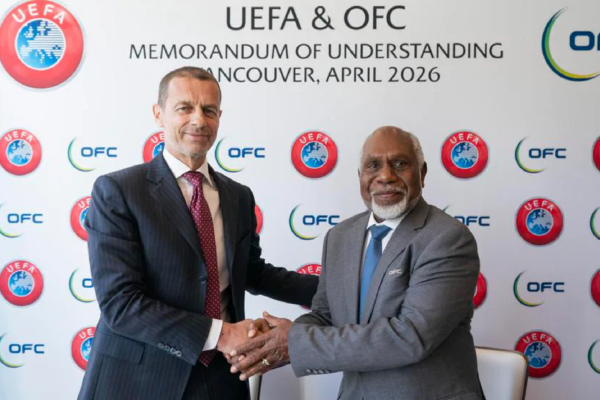
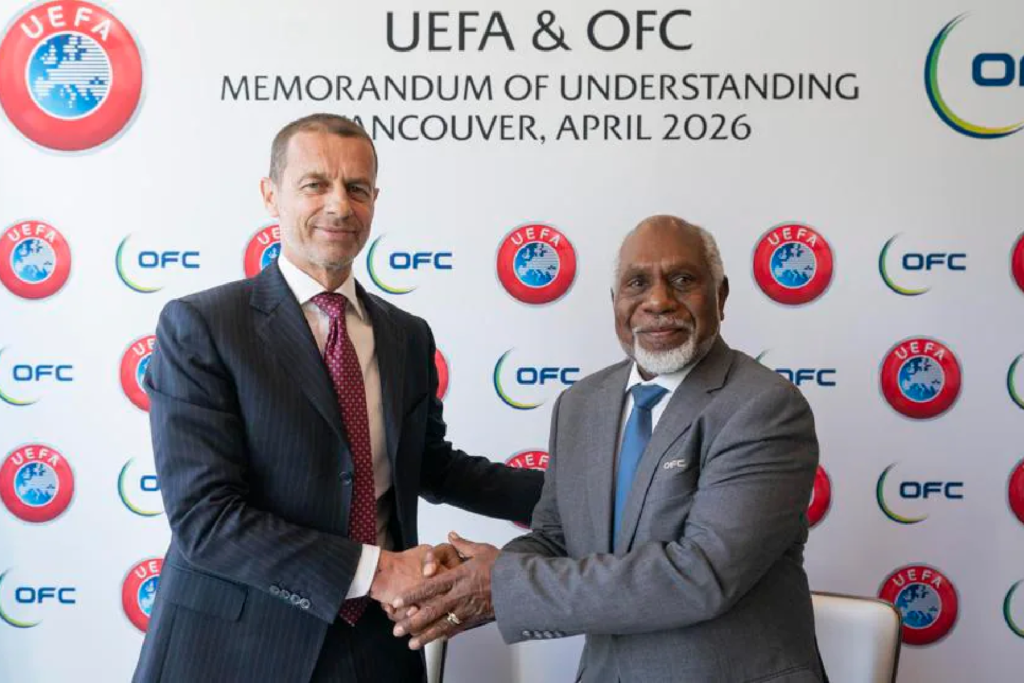
Last week, UEFA signed a Memoriam of Understanding (MoU) with Oceania’s football governing body to continue its commitment  to football in Oceania.


United through football

While being two governing bodies separated by distance, the MoU stands as a symbol of unity and collaboration which supports mutual growth.

The agreement will run until 2031, displaying both parties’ commitment to long-term development through football.

“Europe and Oceania are connected by a shared belief in the importance of investing in people as the foundation of football’s future,” said UEFA President, Aleksander Čeferin, via press release.

“This Memorandum of Understanding brings together UEFA’s experience in elite development and education with OFC’s clear focus on nurturing young talent and strengthening football leadership.”

Furthermore, OFC President, Lambert Maltock, also expressed his confidence in the agreement to support players and pathways alike.

“Our partnership with UEFA reflects a shared commitment to developing the game at every level – from grassroots to elite,” said Maltock.

“By investing in our people and working collaboratively, we are building a more connected, capable and globally competitive football ecosystem for Oceania.”


What the agreement promises

Continuing UEFA’s recent MoUs with CAF (Africa), Concacaf (North, Central America and the Caribbean) and CONMEBOL (South America), the partnership will seek to address several key aspects. These include:

  • Youth football opportunities – supporting OFC’s annual boy’s and girl’s U15 tournaments.
  • Knowledge exchange – reciprocal observer programmes at club finals and national team tournaments.
  • Football development – delivered through the UEFA Together programme.
  • Coach education – sharing of technical expertise and learning activities.
  • Refereeing – opportunities to referee youth tournaments, courses and technical programmes.

Moreover, the agreement outlines a commitment to ensuring football remains a tolerant and inclusive sport, capable of uniting communities and empowering individuals.

Therefore, the MoU between UEFA and the OFC is symbolic of aligned values, principles and vision for the future of football in both regions.


Final thoughts

An alliance of this nature – especially in these uncertain times for global cooperation – is vital.

Football has the power to unite like nothing else.

So governing bodies must recognise the value of connecting across cultures, countries and continents, not only for what it can do for football, but how it can promote fundamental values within the sport as a whole.

Project ACL: The initiative leading the way on injury research

Launched in 2024, the research project recently welcomed two US-based organisations: the National Women’s Soccer League Players Association (NWSLPA) and National Women’s Soccer League (NWSL).


About Project ACL

Led by FIFPRO, PFA England, Nike and Leeds Beckett University, Project ACL aims to research ACL injuries and understand more about multifactorial risk factors.

After piloting in England’s Women’s Super League (WSL), Project ACL will expand to the NWSL in the US, reflecting the global importance of the project’s research and outcome.

“We are incredibly excited to bring the NWSLPA and NWSL to Project ACL,” said Director of Women’s Football at FIFPRO, Dr. Alex Culvin, via official press release.

“Overall, we believe that player-centricity and collaboration with key stakeholders are central to establishing meaningful change in the soccer ecosystem and that players, competition organisers and stakeholdersaround the world will benefit from Project ACL’s outputs and outcomes.”

Interviews with over 30 players and team surveys across all 12 WSL clubs provided the project’s research team with valuable information about current prevention strategies and available resources.

Furthermore, the project tracks player workload and busy schedule periods during the season through the FIFPRO Player Workload Monitoring tool, therefore gaining insights into the link between scheduling and injury risks.


Looking to the data

Project ACL’s partnerships with the WSL – and now the NWSL – are immensely valuable for the future of player welfare in women’s football.

Although ACL injuries affect both male and female athletes, they are twice as likely to occur in women than men. However, according to the NWSL, as little as 8% of sports science research focuses on female athletes.

In Australia, several CommBank Matildas suffered ACL injuries in recent years: Sam Kerr was sidelined from January 2024 to September 2025, Ellie Carpenter for 8 months after suffering the injury while playing for Olympique Lyonnais, and Holly McNamara came back from three ACL’s aged 15, 18 and 20.

And this is just the tip of the iceberg. The 2025/26 ALW season saw several ACL incidents, including four in just two weeks.


Research, prevent, protect

Injury prevention and research are vital to sport – whether professional or amateur.

But when the numbers are so shocking – and incidents are so common – governing bodies must remember that player welfare comes above all else. Research can inform prevention strategies. Prevention means players can enjoy the game they love.

The work of Project ACL, continuing until 2027, will hopefully protect countless players across women’s football from suffering long-term or recurring injuries.

Most Popular Topics

Editor Picks

Send this to a friend