“If you don’t stick to your morals and values then why are you doing the job?”: Aurelio Vidmar speaks with Gary Cole

Vidmar FCA

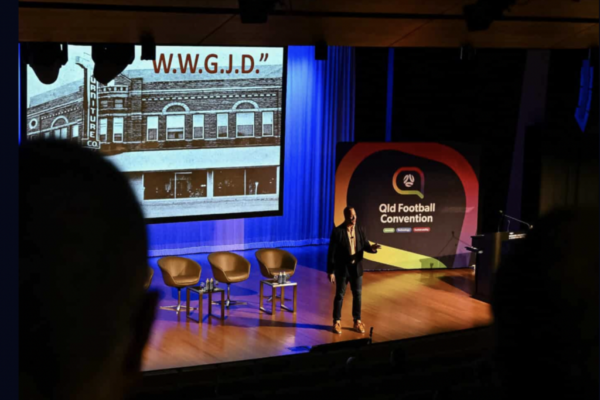
Season 3, Episode 8 of The Football Coaching Life Podcast sees Gary Cole chatting to Aurelio Vidmar, who has recently returned to Australia from coaching at BG Panthum United in Thailand League One.

Aurelio’s remarkable 500-plus game professional career saw the defender play in Australia, Belgium, Netherlands, Switzerland, Spain, and Japan, before finishing his time back in Australia. Over 260 games were with Adelaide City in the National Soccer League. And of course, he was a member of the ‘Golden Generation’ playing 44 times for the Socceroos.

Viddy, as he’s affectionately known, began his coaching journey in Australia with Adelaide United as assistant to John Kosmina, before taking on the head coach role and finishing runners up in both the A-League Men’s and the Asian Champions League in 2008 and 2009.

Aurelio then became assistant coach of the Socceroos and head coach of the Olyroos from 2010-2016, was U20 head coach in 2012 and had a short stint as caretaker Socceroos coach in 2013.

He moved off the grass into the office in a Director of Football role at Adelaide United, but realised he needed to be teaching, coaching and leading on the grass again and headed into Asia to work at Bangkok Glass in Thailand, then Lion City Sailors in Singapore before heading back to Thailand with BG Pathum United.

This is a wonderfully open and honest conversation. Aurelio has so much wisdom which he shares eloquently.

Aurelio’s ‘One Piece of Wisdom’ was: ‘Be true to yourself and don’t waiver. If you start wavering and it’s a little bit of this and a little bit of that, I don’t think that’s sustainable. So, whatever your beliefs and philosophies are, stick to them and don’t be someone you’re not.’

Enjoy this journey into Aurelio Vidmar’s Football Coaching Life.

Previous ArticleNext Article

The Coaching Crisis Hiding in Australian Football

The low standard of Australian football has often been attributed to limited resources and the relative immaturity of the sport’s development system in the country. A 2023 study suggests that coach education in Australia is a key issue, as it often fails to adequately prepare coaches for the realities of the game, resulting in weaker practical coaching outcomes.

Coaches have attributed this matter to a number of factors; including the contents quality, structure and delivery. However, deeper systemic issues can also explain its inefficiency. Identifying and understanding these concerns is necessary to improve coach training in Australia.


Why does coach training matter?

Coaching is central to any sport, encompassing the transmission of knowledge and the development of athletes to perform at their highest level and achieve their goals. It contributes to shaping sporting identity, club culture and path-dependent behaviour within an organisation. Coaches must participate in training to ensure their efficiency in leading a team.


Coach training in the Australian context

In 2020, Football Australia (FA), the national governing body for the sport, introduced new principles aimed at raising the standard of coaching and coach development. These included modernising the delivery of coach education and reviewing both course content and the broader Australian coaching methodology.

Despite this renewal of objectives, the Australian coach education system remains underpinned by the National Football Curriculum (NFC) released in 2013.

The NFC aims to provide coaches with an understanding of the national ‘playing’ and ‘coaching’ philosophy, advocating for a i) player-centred approach to coaching; ii) game-based and constraints-led approach to practice design; and iii) an information-processing view of motor learning.

In Australia, coach education is broadly divided into two pathways, each tailored to different stages of the game:

The Community Coaching pathway targets coaches working with participation players aged 5 to 17. These courses are relatively short and focus on equipping coaches with practical skills in session design and delivery.

The Advanced Coaching pathway is aimed at those operating in the performance phase. These courses are more intensive, centred on Football Australia’s Coaching Expertise Model, which outlines the key competencies required of high-level coaches.

Does the National Football Curriculum have a content issue?

Despite the importance Football Australia (FA) places on football knowledge, coaches reported that courses do not adequately address this area and expressed some dissatisfaction with how it is delivered.

Coaches also highlighted an expectation of conformity to the National Football Curriculum (NFC), which limits the value and impact of formal coach education in developing both theoretical understanding and practical coaching approaches. As a result, coaches can struggle to translate knowledge from coursework into on-field practice, with a lack of alignment between theory and application contributing to this implementation gap.

It is only at the ‘A’ Licence level that coaches are actively encouraged to develop their own football philosophy and vision. In contrast, earlier stages of the curriculum remain largely focused on adopting FA’s established framework.

This sustained emphasis on technical and tactical elements can also restrict the development of broader pedagogical and interpersonal skills required for effective coaching. Given the inherent complexity of coaching, this further complicates the effective translation of formal coach education into practice.

In addition, the NFC is seen as overlooking key off-field responsibilities of coaches. Beyond tactical duties, coaches play a significant role in player development, particularly in relation to well-being and welfare. In modern high-performance sport, coaches are increasingly viewed not only as tacticians, but as holistic developers of athletes both on and off the pitch.


No possibility to ‘climb the ladder’

Coaches also complain about the inability to grow and “climb the ladder” in the sport. Indeed, the development of football in Australia highly relies on volunteers.

The majority of NPL youth coaches in Australia are in a casual position. Many of them have full-time jobs in completely different fields. Often juggling two or three jobs just to make ends meet.

“There is no realistic ladder where a young coach can start at grassroots level, improve, get noticed, and work their way into a full-time position in a professional youth academy. The reason is simple. The positions barely exist.”

Jan Schmidt, former Technical Director of the NPL

Coaches are often unable to attend coaching courses during the week, which limits their ability to stay up to date with modern coaching methods.

Limited time and resources therefore restrict coaches’ capacity to deliver high-quality performance and effective coaching practice.

“Most NPL youth coaches earn between $6,000 to $8,000 a year. That is not a career. That is a sacrifice”. Jan Schmidt, former technical director in the NPL

Systemic limitations on the growth and development opportunities available to football coaches in Australia can reduce their motivation and constrain their capacity to deliver effective results. These constraints, in turn, negatively affect coaching quality and ultimately impact the standard of football.

When coaches are unable to fully commit to the demands of the game, they are less able to provide optimal training environments for their players. This limits player development pathways and, consequently, restricts the overall standard of Australian football.

If Football Australia (FA) aims to develop world-class coach education environments, it must better support the behaviours, knowledge, and practices of coaches across the country. This requires a stronger emphasis on aligning coach education with the real needs of the coaching community.

These findings highlight the importance of ongoing engagement between FA and Australian coaches to collaboratively improve coach education programs. Strengthening coach development has the potential to significantly enhance the quality of football delivered to the next generation of Australian players.

Beyond the Pitch: Miyuki Kobayashi on the Real Challenges Facing Japan’s Women’s Game

Last week, Soccerscene spoke to pioneer of women’s football in Japan, Miyuki Kobayashi, about the game’s development in Japan and the intersection between sporting and social change in the country.


Talent, quality and recent silverware

After Japan’s recent AFC Women’s Asian Cup victory in the final against Australia, the women’s national team solidified its standing as the No.1 team in Asia.

Throughout the last 15 years, Japan’s women’s national team has grown into a formidable opponent, boasting a World Cup trophy, an Olympic silver medal, as well as three AFC Women’s Asian Cups.

The talent is undeniable. The quality is unwavering. And the team shows no signs of slowing down.

But these victories and trophies on the world stage wouldn’t be possible without the leaders behind the scenes – none more so than Miyuki Kobayashi, former WE League Board Member and current JEF United Ladies Scout and Academy Chief.


Laying the foundations

Kobayashi has led the charge for women’s football in Japan, promoting not only a sport which values success, but one which empowers female footballers across the nation.

“At university, not many girls were playing and we didn’t have an official team. I went to the US and the environment was so different,” Kobayashi explained.

“That opened my eyes – women can play. That’s how I started the women’s soccer league when I came back: to make an environment for girls to play.”

Thus, accessibility and opportunity became driving factors behind Kobayashi’s work, not only for those on the pitch, but for those in the dugout.

“I got involved at the JFA (Japanese Football Association) to promote women’s football. We wanted to create the opportunity for women to be coaches.”

“They are coached by men all the time, so even when the top players leave the football world, they never think to be involved.”

Furthermore, as a former coach of JEF United Ladies Youth and General Manager, Kobayashi was intent on employing as many female coaches as possible. It was not merely a personnel change, but a challenge to widespread social attitudes.

“When I started to employ female coaches, the girls’ parents asked why the coach wasn’t a man. But gradually, we started to make it equal – they didn’t talk about the gender, but about the quality of the coach.”


The mission to empower

In 2011, the same year Japan’s women won the World Cup, the domestic league was yet to become professional. Known as the Nadeshiko League, players would work during the day and train in the evenings.

The transition from an amateur to the current professional league required time, resilience and a change in perspective.

“The sports world in Japan is more traditional – it is dominated by men,” said Kobayashi.

“If you want to make the environment even, or (want) more women to come into the (football) world, you can change the mind of the players.”

Since 2021, the WE League has embodied a sense of growth and positive change for the women’s game. In name and nature, it looks to empower players, coaches and all involved in the industry.

“I was in charge of mission achievement for women’s empowerment. We wanted to educate the players, to inspire girls and women who watch the game.”

However, the drive to empower women in football was not without backlash and challenges.

“Some people don’t like that word: ’empowerment’. It’s too strong for them. Some women really appreciate it, but it’s not easy to change the mind of society through football,” Kobayashi admitted.


Growing and attracting talent

Although WE League clubs are accelerating youth development and expanding pathways across U15, U18 and first team football, Kobayashi acknowledged that the overall product must improve to bring foreign players to Japan and entice homegrown talent to stay.

“Most of the national team players go to Europe or North America. I don’t say it’s a problem, but from a young age, girls who can play in the WE League want to go abroad,” Kobayashi outlined.

Indeed, when looking at the starting XI in last month’s AFC Women’s Asian Cup final, only one player – Hana Takahashi – plays in the WE League.

But the key to attracting domestic and international players to the WE League, is aligning financial investment and industry attitudes.

“The reason why women’s football has developed in European countries is the social thinking – you have to be equal and have the same opportunities as men in football. The Japanese way of thinking, especially in the football world, is not that at all,” Kobayashi continued.

“When I speak to people at Spanish clubs, women’s football is not a charity, but an investment.”

“We have assets. We have good, young players, but we’re exporting them, so we need to import too.”

Indeed, Spain is a perfect example of what can happen when investment becomes intentional, not optional. Back-to-back UEFA Women’s Nations League titles, 90% television viewership increase since 2016, and record-breaking crowd numbers reflect what can happen when the industry aligns in vision and commitment.

Japan has the players to compete against any nation in the world. Purposeful investment, combined with its overall quality of players and style, could transform the WE League into a true, global powerhouse.


The vision for the future

Moving forward, Kobayashi hopes that girls progressing through JEF United’s academies develop confidence and resilience, whether as players or people.

“We want to make the girls – even if they aren’t in JEF United – continue playing football and continue to be leaders,” Kobayashi said.

“Some of them have a dream to be a coach or a leader off the field too, so that’s one of the attributes we want to develop.”

This resilience, reflected by the club’s ‘never give up’ philosophy, is testament to the vision of empowerment championed by Kobayashi across the women’s game.

Even in the face of social obstacles and a lack of financial investment, perseverance and hard work is at the bedrock of women’s football in Japan. It is not just that these values exist, but that they are consistently manifested on and off the pitch, which can show future generations that football is a sport for all – men and women alike.


Final thoughts

There is no limit to what the WE League and the national team can achieve if given the resources it deserves. All the ingredients are there: individual quality, a distinct playing style, football philosophy and ambitions to grow.

By following the example of industry leaders like Kobayashi, women’s football in Japan can hopefully continue to make waves of impact – in the sporting landscape and society as a whole.

Most Popular Topics

Editor Picks

Send this to a friend