Infront X creates the ideal fan experience for leading clubs 

With popular football clubs among their extensive client list, Infront X presents as the perfect partner for anyone in the sports industry looking to improve their fan experience. 

Infront X is a digital media company focused on the link between data science and technology and how this can create more personal experiences for users  growing audiences for content owners, bridging the gap between storytelling and technology and creating digital platforms and experiences to help global brands engage with audiences and monetise their investments. 

Infront X works with many of the biggest names in sports, media, entertainment, and gaming, tailoring to meet their interests using data-driven insights to cater to audience passions and empower businesses to make millions of lasting impressions.  

Infront X has established themselves across the world with offices across North America, Europe, and Asia, where they have had a massive impact in helping elite organisations like the PGA TOUR, Verizon, NASCAR, FOX, Chelsea FC, AS Roma, the International Ski Federation, and the International Basketball Federation, as well as many others. 

Forming part of Infront X’s expertise is the way they have delivered fan experience for sporting organisations. One of their leading projects has been with 2020-21 UEFA Champions League winners, Chelsea FC. 

Launched in 2018, The 5th Stand App connects a global fanbase to their club and community. 

During a long-term partnership, Infront X has worked closely with Chelsea’s digital team to create and implement a data-driven digital product strategy, which brings the very best features together on The 5th Stand. The app is designed to let Chelsea’s global fanbase interact with each other and support the club, even when they cannot be in one of the four stands at Stamford Bridge, particularly key to capturing an international audience. 

The collaboration between Infront X and Chelsea both parties to develop and deliver an innovative digital strategy that focuses on deep fan engagement for a truly interactive interface. Since From the time The 5th Stand was released, it has been downloaded over 6.7 million times, making it the fastest growing football app in the world. A recent survey by Chelsea saw 92% of all fans recognise the importance of having The 5th Stand app. 

Moving across to Italy, Infront X and AS Roma FC form another partnership that is in amongst a multi-year deal. Regarded as one of the most successful clubs in Serie A, Infront X saw another perfect opportunity to help a club that has an incredibly passionate global fanbase.

Ordinally, AS Roma were able to relaunch their flagship website in 2018 thanks to Corebine, powered by Omnigon, in conjunction with Infront X. The introduction of the digital media company to AS Roma’s business strategy and planning identified the needs and requirements for the club, through insights gleaned that saw new monetisation opportunities and holistic recommendations to take the digital experience to the next level. 

Infront X were then able to develop and launch mobile apps to cater for the global community, alongside a revamped and responsive website that comes with a host of different languages. A verstaile platform gives AS Roma fans everything they need with in-match and player statistics, as well as enhanced video capabilities. 

Sporting leagues themselves can even get in on the action, as evidenced with the features that Infront X helped the Scottish Professional League (SPFL) with. 

The SPFL were seeking new ways to keep their fans engaged in a time where the league was postponed due to the Covid-19 outbreak. 

When league games were cancelled, Infront X found a way to fill a content gap by using a voting system to reach fans and create those interactions. Each week, they had the chance to vote for which archived match would be streamed each week. 

Eventually when matches resumed, a poll allowed fans to vote on ‘Team of the Season’ content and a variety of other campaigns ensured that fan engagement would always remain at a high. 

To see everything that Infront X has to offer across a range of industries, you can find it here. 

Previous ArticleNext Article

FA Board of Directors Welcomes Two New Appointments

Rachel Wiseman and Angela Mentis will join the FA as Directors, reflecting a continued drive within the governing body to prompt a new era for football in Australia.


Leading with expertise

Both Wiseman and Mentis join the FA at a time of immense change and ambition.

In February, the appointment of Martin Kugeler as CEO was symbolic of new beginnings for the industry. And now that Wiseman and Mentis are on board, the FA looks set for a defining year.

“We are pleased to welcome Rachel (Wiseman) and Angela (Mentis) to the Football Australia Board,” expressed Football Australia Chair, Anter Isaac.

“These appointments reflect a deliberate effort to strengthen the Board’s capability across commercial strategy, digital transformation, financial services and major rights environments.”

If Australian football is to progress across digital, commercial and beyond, industry experts must sit at the centre of governance.


Aligning experience and vision

Most recently Chief Executive Officer Member Capital at NRMA, Wiseman brings experience and knowledge in executive roles, and legal practice.

Further to overseeing the growth and diversification of NRMA since 2016, as well as leading Tabcorp Holdings Limited as General Manager, Commercial Development – International, Wiseman has past experience in the sports landscape.

As Director of Business Affairs for Fox Sports Australia between 2007 and 2024, Wiseman negotiated agreements to broadcast key sports rights. With Football Australia looking to grow its financial power and commercial strategy in the coming years, Wiseman’s knowledge aligns perfectly with the governing body’s vision.

Mentis is an industry leader in financial services, with an extensive range of skills across customer and culture transformations.

Furthermore, following more than 30 years of work spanning Australia, New Zealand, Asia, United Kingdom and USA, Mentis will help the FA with essential, high-quality leadership.

While at the National Australia Bank, Mentis led a division over 900 people across Australia, Vietnam and India. And as the first female Chief Executive Officer at the Bank of New Zealand from 2018-2021, there is no question that Mentis’ credentials and expertise will bring about significant change and organisation at the FA.

Media Mega-Mergers, Minor Leagues: Why Global Consolidation Should Be a Wake-Up Call for Australian Football

The approval of a reported $113 billion merger between Warner Bros. Discovery and Paramount Global is being framed as the creation of a “next-generation media and entertainment company.”

But beyond Hollywood headlines, the deal signals something far more consequential for sport: a global media landscape rapidly consolidating into fewer, more powerful hands.

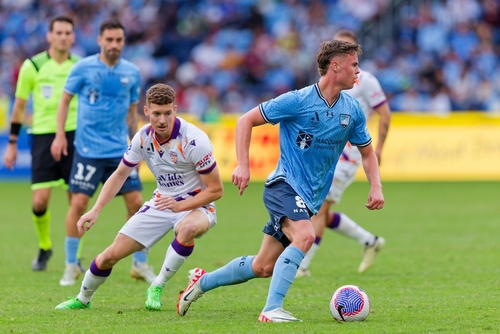
For Australian football, particularly the A-League, this is not just background noise. It is a structural shift that could define the league’s future.


A shrinking marketplace, a growing imbalance

The merger brings together an enormous portfolio of assets, such as film studios, broadcast networks and streaming platforms, under a single corporate umbrella. It reflects a broader industry trend: scale is no longer an advantage in media, it is a necessity.

Yet with that scale comes concentration. Fewer buyers now control more platforms, more audiences, and more capital. Critics of the deal have warned that such consolidation risks reducing competition and narrowing the range of voices in global media.

For sport, the implications are immediate.

Broadcast rights are no longer negotiated in a diverse, competitive market. Instead, leagues are increasingly competing for space within vertically integrated media ecosystems. This is because decisions are driven not just by audience demand, but by global strategy, bundled content offerings and long-term platform growth.


Why the A-League is particularly exposed

This shift lands unevenly across the sporting landscape.

Leagues like the Australian Football League (AFL) and National Rugby League (NRL) remain dominant domestic products, commanding billion-dollar broadcast deals and consistent mass audiences.

The A-League, by contrast, operates from a more fragile commercial base.

Despite its global game status, the league continues to face:

  • Inconsistent crowd figures
  • Fluctuating visibility
  • A comparatively modest broadcast deal with Paramount

In a fragmented media environment, this is manageable. In a consolidated one, it becomes a vulnerability.

Because as the number of broadcasters shrinks, so too does the margin for leagues that are not seen as “must-have” content.


From open market to closed ecosystem

The critical shift is not just economic, it is also structural.

In the past, leagues could leverage competition between broadcasters to drive rights value. Now, with fewer but larger players, the balance of power tilts toward the platforms.

Content is no longer simply acquired, it is curated.

And in that environment, only properties that deliver one (or more) of the following will thrive:

  • Guaranteed audiences
  • Global scalability
  • Year-round engagement
  • Strategic value within a broader content ecosystem

This is where the A-League faces both its greatest challenge—and its greatest opportunity.


The overlooked strength of Australian football

While often positioned as a “developing” product domestically, football offers something no other Australian code can replicate: global alignment.

As the world’s most popular sport, football operates within an international ecosystem that extends far beyond national borders. Australia’s geographic position, bridging Asian and Western markets, adds further strategic value.

For a global media entity like Paramount, this matters.

The A-League is not just local content. It is potentially exportable, scalable and aligned with global football narratives. It also taps into younger, more digitally engaged audiences, who are increasingly driving subscription-based streaming growth.

In a media environment defined by platform expansion, that is not a weakness. It is an underutilised asset.


Why consolidation should drive MORE investment

The instinct in a consolidating market is often caution by tightening budgets, focusing on proven performers and minimising risk.

But for Australian football, that approach is self-defeating.

Because without investment:

  • Production quality stagnates
  • Storytelling weakens
  • Audience growth plateaus
  • Commercial value declines

And in a system that rewards scale and engagement, stagnation is equivalent to irrelevance.

Instead, consolidation should be seen as a trigger for strategic investment:

  • Elevating broadcast presentation
  • Strengthening club identities and narratives
  • Expanding digital and streaming integration
  • Positioning the league within the broader global football conversation

In short, making the A-League indispensable, rather than optional.


The real risk: being left behind

The emergence of media giants like a merged Warner Bros. Discovery and Paramount Global signals a future where content is filtered through fewer, more powerful gatekeepers.

In that world, leagues that fail to assert their value risk being sidelined, not because they lack potential, but because they fail to meet the evolving demands of the platforms that distribute them.

For the A-League, the danger is not collapse. It is marginalisation.

A slow drift into irrelevance while larger codes capture the attention, investment, and audiences that define modern sport.


Conclusion: a defining moment

This merger is not about Hollywood. It is about power.

Power over distribution. Power over audiences. Power over what gets seen and what does not.

For Australian football, the message is clear.

In a world of media consolidation, visibility is earned through value, not assumed through presence.

And if the A-League is to secure its place in that future, investment is no longer optional.

It is existential.

Most Popular Topics

Editor Picks

Send this to a friend