



Kairos a sports technology company on the rise

Kairos

Kairos Sports Tech is a Belfast based company which has been gaining more attention since going to market in 2021.

Andrew Trimble is the CEO of Kairos, and as a former international Rugby Union player with 70 appearances for Ireland, he passion for sport has seen his company quickly rise up the ranks.

After a career which spanned 14 years, spending time with the best coaches and practitioners that the sport had to offer, Trimble wanted to create an efficient platform where coaches, medical staff, performance staff, and players could stay connected and up-to-date with the team. The technology would provide important information such as scheduling, communications, and plans for the team. Ultimately, the end goal being to ensure the team is adequately prepared for game day.

Trimble, along with the co-founder of Kairos, Gareth Quinn, designed the platform after widespread consultation. This included engaging with elite coaches around the world for a variety of different sports. With the information gained from coaches at the top of their respective sports, Trimble and Quinn were able to create a platform which best suited the demands of elite sport. Kairos is now a highly effective application which is used by sporting teams across the globe.

Kairos has been created for elite sports teams, academies in sports, and leagues. It gives elite teams the most complete communication tools on the market, which helps teams further drive their performance both on and off the field. This provides the best communication possible by reducing any unnecessary clutter, lost messages, and any time-consuming back and forth chasing.

Kairos is the perfect tool for any sporting academies. The platform is a simple and efficient, and it helps manage the complexities of scheduling and communications in elite sporting academies and youth set-ups. Kairos has been proven to improve the overall efficiency, culture, and performance of youth academies in sport. It allows members of youth academies to have an up-to-date schedule so that the kids and parents can easily stay in the loop with what is happening in the academy.

Kairos is the most comprehensive planning tool on the market currently for centrally operated leagues. Leagues can be complex to run with all the different teams and people within them. The Kairos platform allows leagues to be operated in the most efficient way possible.

As mentioned, the Kairos platform has been especially built for elite sporting teams. It can help develop the culture of a club, as the platform creates clarity, accountability, and overall excellence. All around the world, Kairos is now being used by a number of high-level sporting teams. Teams from the English Premier League, NBA, MLS, MLB, NHL, and MLR are now using Kairos for all their teams. Other sides in major sporting leagues across Europe and Australia are also using the platform.

Kairos was created with 3 P’s as it values: Professional, Privacy, and Productivity.

It was built by former professional athletes for the elite professionals in sport right now. Every aspect of the platform was made to assist an elite sporting team. Kairos has been made in a way that suits all teams, as the app has been created so that each team can adapt it and change it to their suiting. Unlike other apps, Kairos has eliminated any potential glitch or error from occurring within the platform. This means every message that gets sent between players and staff reaches the intended destination. Kairos is a highly professional and efficient platform and everything the staff and players in a sporting team needs can be easily accessed.

Kairos is dedicated to ensuring complete privacy for its many users. The platform uses encrypted cloud technology to ensure every user’s information is protected and secure at all times. Kairos allows users to be able to control who can view, access, or change documents uploaded onto the platform, giving users a clear audit trail of communication. The company has made sure that privacy has been met to the highest possible standard.

Productivity is another core element at the heart of Kairos. The platform gives users immediate access to critical information needed for the team. Up-to-date schedules for players and staff can be easily accessed, ensuring the team can be efficient. The platform also allows players to book meetings with physios and coaches.

Overall, Kairos is an extremely efficient way for elite sport teams to function efficiently and effectively every day. The app creates a unified communication and operation platform, with the benefits of Kairos being endless. It is already used by some of the strongest sporting teams around the world and there will sure to be many more in the coming future too.

Previous ArticleNext Article

FIFPRO demands governance reform after FIFA’s FFE failure

While FIFA cancelled plans to move forward with FIFA Forward Enterprise (FFE), FIFPRO are demanding change at the top of football’s global governing body.

‘Abuse of power’

The plan to sell minority stakes in future FIFA competitions to private investors brought intense criticism from fans across the world.

Governing bodies including UEFA (Europe), CONCACAF (North America, Central America and the Caribbean) and the AFC (Asia) rallied against FFE and FIFA President Gianni Infantino, leading to a crisis meeting in Morocco to determine Infantino’s seemingly untenable position at the head of world football governance.

The meeting, however, confirmed Infantino will remain as FIFA President going forward – a decision which has since prompted FIFPRO to make their stance clear: governance reform is a must.

“The withdrawal of FFE was inevitable. But withdrawing the proposal does not erase what it revealed,” the organisation said via an official statement on the FIFPRO website.

“A plan capable of permanently altering the ownership and governance of the FIFA World Cup, and commercialising the competitions built by generations of players, was conceived in secrecy, negotiated behind closed doors and brought to the brink of agreement before the FIFA Council, the Member Associations, players and football’s recognised stakeholders even knew it existed.”

“That is not merely a governance failure. It is a profound abuse of presidential power.”


How to navigate governance post-FFE

As reiterated by FIFPRO, the FFE controversy arrived a mere few weeks after a Memorandum of Understanding (MoU) between FIFA and the player’s union marked an optimistic step to a more collaborative future.

But what was previously a step in the right direction, now seems an insufficient policy to protect players – and the wider landscape of world football – from future unilateral decisions at the top.

FIFPRO’s demands – agreed upon by the Presidents of all FIFPRO regional divisions across Africa, Asia/Oceania, Europe, South America and Central & North America – include measures such as:

  • Using the Global Social Dialogue Platform as fundamental part of FIFA’s governance
  • Engagement with stakeholders over future decisions affecting the professional game
  • Voting rights for professional football’s stakeholders on the FIFA Council
  • Structural reforms to prevent future unilateral decisions

The message from FIFPRO is therefore clear. Now is not the time to rest on criticism; stakeholders in the professional game must encourage action and reform.

“These reforms are now indespensable. But they are the responsibility of the future, not an absolution of the past,” FIFPRO continued via their official statement.

“The players did not create this crisis. They will insist that football emerges from it with stronger institutions, stronger safeguards and leadership worthy of the trust the game demands.”

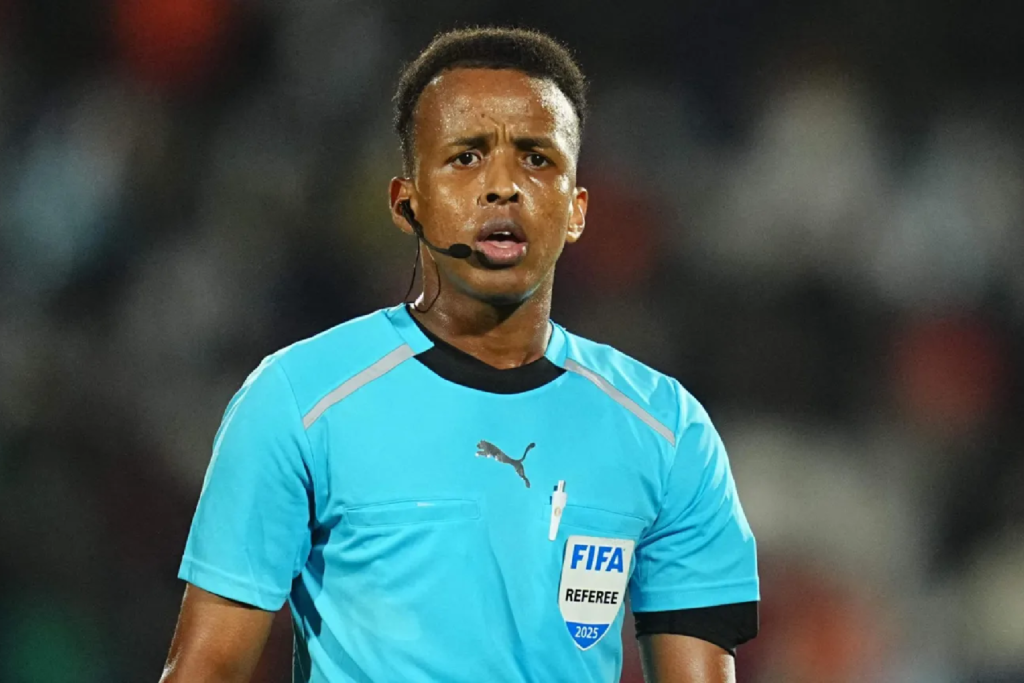
Referees to improve consistency with new UEFA guidelines

In a meeting between Chief Refereeing Officers within UEFA and its 55 national associations, enhancing consistency and clarity underpinned the principle goals for the upcoming season.

Improving officiating

Referees – and particularly the usage of VAR – are often at the centre of post-match debates.

As the introduction of new technology into match officiating increases year-on-year, referees are in the spotlight more than ever before. The expectation was that more technology would decrease errors and controversy, but the opposite has proven to be the case.

Which is why the agreement and alignment between European nations marks a key step in the future of match officiating; the meeting between UEFA, its national associations and a representative of the International Football Association Board (IFAB) displays intention and commitment to ensuring future in-game decisions are clear, not controversial.

Meeting chair and UEFA Director for Refereeing, Roberto Rosetti, outlined why the agreement will have a vital impact on the future of European football, both domestically and internationally.

“The fact that all 55 national associations and UEFA have agreed on guidelines towards a more consistent approach to the application of the Laws of the Game marks a significant milestone,” Rosetti said.

“It will help improve the understanding of refereeing decisions among players, clubs and supporters and all stakeholders in the game.”

“For the popularity of football it is essential to remove all doubt from the game and ensure that the laws are applied with clarity.”


Limiting technology use

A widespread criticism of match officiating in recent years is the regularity with which VAR intervenes and interrupts match tempo.

The issue, however, is not that VAR can review decisions – in fact, this summer’s FIFA World Cup displayed an effective use of VAR during a case of mistaken identity, in which a player received a yellow card offence for a foul committed by an opposition player. In this regard, VAR was a vital part of ensuring a simulation offence did not go unpunished.

Frustration, however, grows when the use of VAR goes beyond checking “clear and obvious” errors. Lengthy replays, a multitude of angle-checking clips and the disruption of game flow all contribute to feelings of frustration among fans.

But recent amdendments aim to limit this in the upcoming season. VAR is an essential part of fair officiating, but responsibility must lie with the referee.

The new rules introduced by the IFAB are available here, with further initiatives to follow from UEFA in the coming weeks.

Most Popular Topics

Editor Picks

Send this to a friend