Football Victoria induct Karen Hocking as Life Member

Football Victoria have held their Annual General Meeting (AGM), where they inducted Karen Hocking as their latest Life Member.

The AGM by Football Victoria, coinciding with the release of the 2019 Annual Report, was held via video conference due to Covid-19 restrictions.

On Monday May 25th, the meeting was attended by over 50 Life Members and Members across the Victorian football community.

On the night, it was made official that Hocking would be inducted as a Life Member following the amount of work she has done over her lifetime.

Hocking has been the Shepparton Junior Association secretary for almost two decades – a driving force behind the growth of football throughout the Goulburn Valley region.

Her commitments for the game extend to managing SJSA Academy Player Development Program, being the Vice President of the Victorian Country Leagues Football Association and as the SJSA Registrations Officer.

Hocking’s passion for grassroots football and the tireless effort to make sure every child gets the opportunity to play they game they love has been formally recognised by Football Victoria as their inducted Life Member.

Speaking to Shepparton News, she praised her fellow team at SJSA as she receives this major honour.

“You don’t do it for accolades, it’s felt like much more of a team effort than an individual one,” she said.

“It’s really lovely to be recognised, but I feel the whole association deserves this award.”

Football Victoria’s 2019 Annual Report featured how they would respond to the Covid-19 pandemic, including it’s effect on the sport – a topic of discussion for Members on the night.

“Football Victoria will continue to work tirelessly on understanding the impact of the virus on all stakeholders in the community,” the member federation said.

“The Board thanked the Members, Life Members, our 355 clubs, coaches, referees, community volunteers and all who support football for their incredible contribution – especially during the challenging times we are all facing at the moment.”

Photo Credit: Shepparton News

Previous ArticleNext Article

Adelaide United renews StudyAdelaide partnership for Asian campaign

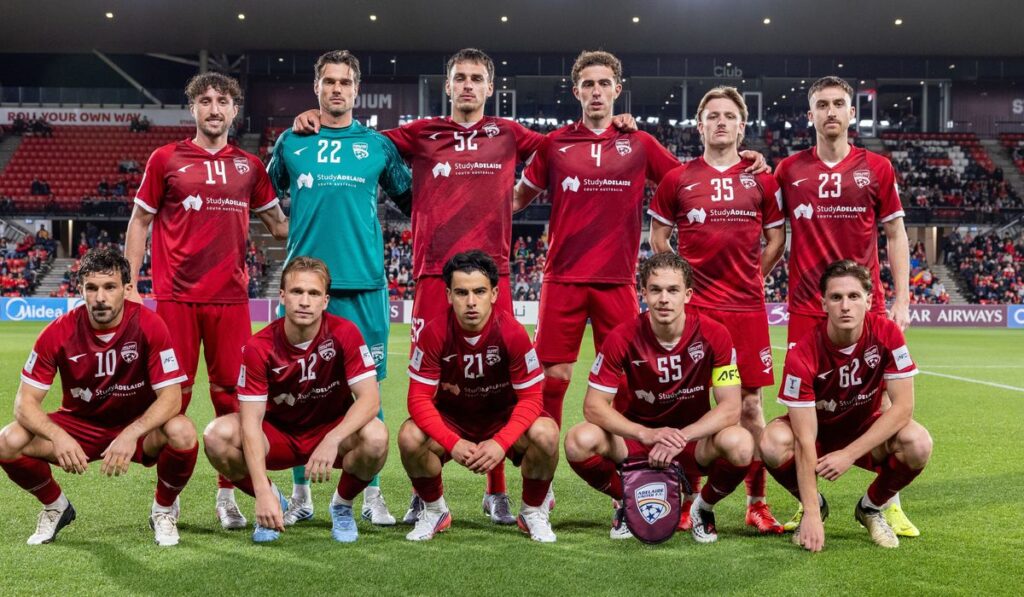
Adelaide United has brought back a familiar commercial partner for its return to continental competition, with StudyAdelaide signing on as front-of-shirt sponsor for the club’s 2026/27 AFC Champions League Two campaign.

The partnership reconnects two South Australian organisations after StudyAdelaide previously featured on Adelaide United’s shirt during their 2010 AFC Champions League campaign.

Adelaide commenced their six-match group-stage campaign on Thursday at Hindmarsh, defeating Hong Kong’s Tai Po 3-0.

For StudyAdelaide, the value of the partnership extends beyond traditional football sponsorship. The organisation, a partnership between the South Australian Government and more than 50 education institutions, is using Adelaide United’s Asian competition to promote South Australia as an international study destination.

The club’s continental schedule provides exposure in several key Asian markets, with Adelaide travelling to face BG Pathum United in Thailand and Lion City Sailors in Singapore during the group stage.

StudyAdelaide chief executive Jane Johnston said the partnership would provide a great opportunity to connect with young people across Asia.

“Having StudyAdelaide featured throughout this international competition is a unique platform to connect with young people across Asia and highlight the many reasons South Australia is their best option to study, live and build a career,” Johnston said.

The deal illustrates how football’s international competitions can provide commercial value beyond traditional brand exposure, particularly for organisations looking to promote to a specific or new region.

The Reds’ ACL Two campaign continues against BG Pathum United in Thailand on October 15.

Arncliffe Aurora’s Riverine Park investment creates a platform for growth

Arncliffe Aurora Football Club has started a new chapter with the launch of Riverine Park, creating a larger platform for football, community engagement and long-term growth in Sydney’s St George region. More than 2,500 people attended the community opening on 8 August, marking the club’s first matches at its new home and showcasing a significant upgrade in its operating capacity.

Riverine Park provides two full-size natural turf football fields, modern player and community amenities, and a new clubhouse. The additional capacity responds to strong growth in Arncliffe Aurora’s football programs, particularly at junior level. The club has also highlighted a $2.5 million investment in facility upgrades. Together with its existing Arncliffe Park base, Riverine Park gives Aurora two homes and a stronger physical platform for its football operations.

More capacity allows the club to accommodate more teams, players and programs, while updated facilities can support stronger member retention and recruitment. They create more opportunities for coaching, development programs, events and community activities. The new site can also strengthen the club’s commercial proposition; a modern facility gives sponsors greater visibility and provides more opportunities to activate partnerships around football and community events. It can also help the club build relationships with schools, community organisations and football bodies. That matters as grassroots clubs increasingly operate as community hubs rather than simply sporting organisations.

Riverine Park also creates opportunities for the wider football ecosystem. Football St George has identified the facility as a platform to grow participation and provide opportunities for players of different ages, abilities and backgrounds. Bayside Council’s project includes upgraded change rooms, toilets, canteen facilities, lighting, seating and solar panels, adding further functionality to the precinct.

For Arncliffe Aurora, the investment is therefore about more than adding fields. It creates infrastructure that can support participation, player development, community programs and commercial activity over the long term. The challenge now shifts from construction to utilisation. The club must maximise the new capacity, maintain the assets and convert greater participation into a sustainable operating model to benefit the community long-term.

Most Popular Topics

Editor Picks

Send this to a friend