

La Liga is the first major European sports competition to join Twitch

In recent weeks, La Liga has become the first major European sports competition to create an account on video live streaming service Twitch.

Twitch, a subsidiary of tech giant Amazon, is a well-known platform generally used to live stream gaming and Esports.

However, it continues to expand its online presence and is becoming increasingly attractive for users to consume sporting content on the service.

To cater for this, the company created a sports category a few months ago on its platform, to direct users easily to all sporting streams.

Each of those clubs have their own channel to publish exclusive content on the site, including press conferences, friendlies and youth team matches.

Since signing up for Twitch, La Liga have started to produce varying content on their channel, including a weekly series of compilations, clips and special programmes that feature players, ambassadors and icons of the competition.

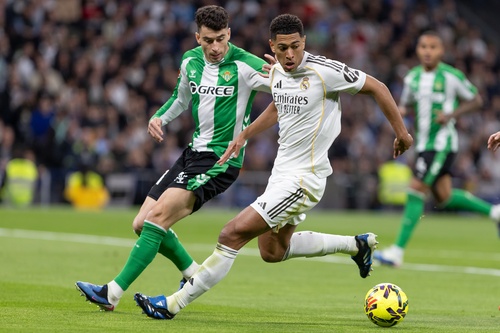
In the build-up to the ElClásico match between FC Barcelona and Real Madrid the other week, Esports simulations, profiles, debates and live warm-ups were featured on the La Liga account.

Scheduled programming of new original La Liga shows have also been broadcast on the video streaming service.

This includes anchor shows produced by La Liga North America, such as matchday review show ‘La Liga Zone’ and the shorter ‘One minute with La Liga’, which are hosted by recognised talent in English and Spanish languages.

Other short and long-form programming will be shown in the coming weeks, featuring special interviews with top athletes.

As the competition continues its partnership with the streaming service, La Liga will continue to work on developing new collaboration opportunities and experiences for the Twitch community.

Farhan Ahmed, Strategic Partnerships Manager at Twitch, is looking forward to working further with the Spanish league.

“LaLiga’s approach to this collaboration, built around enhancing the fan experience through unique content, is innovative, exciting and impactful. We can’t wait to see how the community of superfans continue to interact and immerse themselves in this content.”

Before opening an official channel for the competition on Twitch, the league had already built a strong following through its eLaLiga Esports account.

That account has just under 40,000 followers, with regular videos and tournaments of professional gamers playing FIFA 21 streamed on the channel.

The #eLaLigaAllStar tournament was a high-impact event on the Twitch platform in recent months, resonating with the platform’s community. The event featured leading gamers who were celebrating the return of the league’s official Esports competition, eLaLiga Santander.

It’s most important event, however, was in March of this year. At a time when the world was struggling with the coronavirus pandemic, eLaLiga organised the #LaLigaSantanderChallenge.

Alongside Spanish gamer Ibai Llanos, an 18-club tournament was created, with real-life stars from La Liga clubs competing in the event to raise funds to combat the COVID-19 pandemic.

Llanos, who has 3.4 million followers on Twitch, believed the event was a major success.

“We tried to do it the best way we could to raise as much money as possible. It was a success, because it was something unique,” he explained to Red Bull.

“A lot of people have seen the human side of the players and many players told me they wanted to repeat the experience, but I would like to leave it like this. Maybe we could do something else at a later date, because the state of alarm is going to last a long time. The players and the clubs are happy with the result and they would like to continue.”

Alfredo Bermejo, La Liga’s director of digital strategy, hopes to build on initiatives like this and continue to improve the league’s social media operations through Twitch.

“As a global entertainment brand, La Liga aims to offer the best product in the world,” he said.

“After the good experience with eLaLiga Santander, the official LaLiga account on Twitch is an opportunity to take the next step in our content and social media strategy. Twitch is a service that allows us to reach a new type of audience and explore new content formats to reach our global fanbase.”

As Twitch continues to make significant leaps in the sporting market, La Liga will not be the only major football league joining the platform.

Previous ArticleNext Article

FIFPRO demands governance reform after FIFA’s FFE failure

While FIFA cancelled plans to move forward with FIFA Forward Enterprise (FFE), FIFPRO are demanding change at the top of football’s global governing body.

‘Abuse of power’

The plan to sell minority stakes in future FIFA competitions to private investors brought intense criticism from fans across the world.

Governing bodies including UEFA (Europe), CONCACAF (North America, Central America and the Caribbean) and the AFC (Asia) rallied against FFE and FIFA President Gianni Infantino, leading to a crisis meeting in Morocco to determine Infantino’s seemingly untenable position at the head of world football governance.

The meeting, however, confirmed Infantino will remain as FIFA President going forward – a decision which has since prompted FIFPRO to make their stance clear: governance reform is a must.

“The withdrawal of FFE was inevitable. But withdrawing the proposal does not erase what it revealed,” the organisation said via an official statement on the FIFPRO website.

“A plan capable of permanently altering the ownership and governance of the FIFA World Cup, and commercialising the competitions built by generations of players, was conceived in secrecy, negotiated behind closed doors and brought to the brink of agreement before the FIFA Council, the Member Associations, players and football’s recognised stakeholders even knew it existed.”

“That is not merely a governance failure. It is a profound abuse of presidential power.”


How to navigate governance post-FFE

As reiterated by FIFPRO, the FFE controversy arrived a mere few weeks after a Memorandum of Understanding (MoU) between FIFA and the player’s union marked an optimistic step to a more collaborative future.

But what was previously a step in the right direction, now seems an insufficient policy to protect players – and the wider landscape of world football – from future unilateral decisions at the top.

FIFPRO’s demands – agreed upon by the Presidents of all FIFPRO regional divisions across Africa, Asia/Oceania, Europe, South America and Central & North America – include measures such as:

  • Using the Global Social Dialogue Platform as fundamental part of FIFA’s governance
  • Engagement with stakeholders over future decisions affecting the professional game
  • Voting rights for professional football’s stakeholders on the FIFA Council
  • Structural reforms to prevent future unilateral decisions

The message from FIFPRO is therefore clear. Now is not the time to rest on criticism; stakeholders in the professional game must encourage action and reform.

“These reforms are now indespensable. But they are the responsibility of the future, not an absolution of the past,” FIFPRO continued via their official statement.

“The players did not create this crisis. They will insist that football emerges from it with stronger institutions, stronger safeguards and leadership worthy of the trust the game demands.”

Referees to improve consistency with new UEFA guidelines

In a meeting between Chief Refereeing Officers within UEFA and its 55 national associations, enhancing consistency and clarity underpinned the principle goals for the upcoming season.

Improving officiating

Referees – and particularly the usage of VAR – are often at the centre of post-match debates.

As the introduction of new technology into match officiating increases year-on-year, referees are in the spotlight more than ever before. The expectation was that more technology would decrease errors and controversy, but the opposite has proven to be the case.

Which is why the agreement and alignment between European nations marks a key step in the future of match officiating; the meeting between UEFA, its national associations and a representative of the International Football Association Board (IFAB) displays intention and commitment to ensuring future in-game decisions are clear, not controversial.

Meeting chair and UEFA Director for Refereeing, Roberto Rosetti, outlined why the agreement will have a vital impact on the future of European football, both domestically and internationally.

“The fact that all 55 national associations and UEFA have agreed on guidelines towards a more consistent approach to the application of the Laws of the Game marks a significant milestone,” Rosetti said.

“It will help improve the understanding of refereeing decisions among players, clubs and supporters and all stakeholders in the game.”

“For the popularity of football it is essential to remove all doubt from the game and ensure that the laws are applied with clarity.”


Limiting technology use

A widespread criticism of match officiating in recent years is the regularity with which VAR intervenes and interrupts match tempo.

The issue, however, is not that VAR can review decisions – in fact, this summer’s FIFA World Cup displayed an effective use of VAR during a case of mistaken identity, in which a player received a yellow card offence for a foul committed by an opposition player. In this regard, VAR was a vital part of ensuring a simulation offence did not go unpunished.

Frustration, however, grows when the use of VAR goes beyond checking “clear and obvious” errors. Lengthy replays, a multitude of angle-checking clips and the disruption of game flow all contribute to feelings of frustration among fans.

But recent amdendments aim to limit this in the upcoming season. VAR is an essential part of fair officiating, but responsibility must lie with the referee.

The new rules introduced by the IFAB are available here, with further initiatives to follow from UEFA in the coming weeks.

Most Popular Topics

Editor Picks

Send this to a friend