
Making match days safer for fans

When you go to a match, the last thing you want to see is crowd trouble ruining the experience. Thanks to Dallmeier, its technology will ensure that misbehaving fans are stamped out.

Depending on the severity, a ban from the stadium could be appropriate punishment – but how do ground security know whether the person sneaks in or not?

Dallmeier is the smart and effective way to detect fans who commit any offence during a game. The German developers of the technology have already rolled out their software – in the 2018 FIFA World Cup in Russia had nine out of twelve stadiums feature Dallmeier’s security, a way forward for future stadiums to get on board.

In fact, most stadiums that host games for the 2024 UEFA European Football Championships in Germany have already been using these products by Dallmeier.

Panomera is the main provider for video monitoring and face recognition. Its powerful cameras can cover large distances and detect crowd trouble on the spot.

Any unwanted visitors can be detected by the powerful face recognition, delivering highly accurate visuals of a crime-offender.

Another effective technique of visual recognition is having a heat map showing where the most to least congested areas are (red to blue), so that police, security services and public transport authorities can move in swiftly.

Dallmeier is showing that they can be the way forward for ground security application. The live and accurate information would be of fantastic use to any client around the world wanting to improve their safety level for all fans to enjoy the game peacefully.

Previous ArticleNext Article

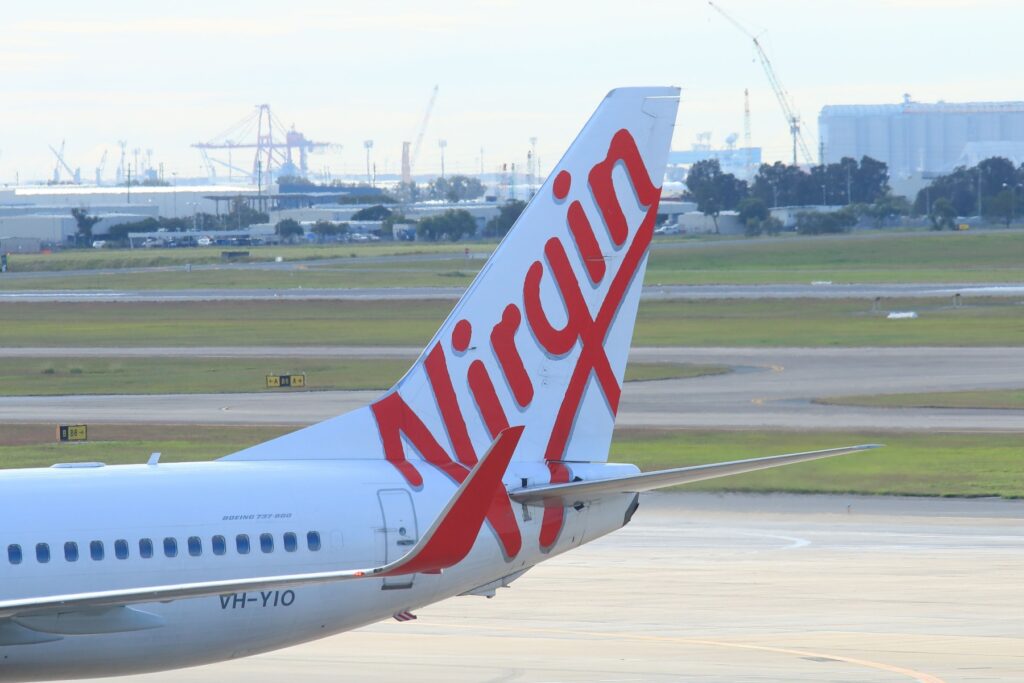
WA Government and Virgin Australia Partner to Bring Discounted Flights for Italian Football Series in Perth

The Western Australian Government has partnered with Virgin Australia to offer discounted airfares to Perth ahead of a three-match series featuring AC Milan, Inter Milan, Juventus and Palermo, in a move that reflects how state governments are increasingly using major sporting fixtures as tools of tourism and economic strategy.

Subsidising travel costs rather than simply promoting the matches signals a shift in how state governments are approaching major sporting events. WA Tourism Minister Reece Whitby positioned the series within the state’s broader Winter of Unmissable Sport strategy, framing the partnership as a way to fill hotels, support local businesses and generate visible economic activity across a single week of programming. That logic places football alongside other major events states have used to justify public investment in visitor attraction, where the return is measured in tourism spend rather than ticket revenue alone.

A bet on Australia’s appetite for European football

Touring Italian clubs is not a routine occurrence in Australia, and Sport and Recreation Minister Rita Saffioti’s comments point to an underlying assumption behind the investment: that the existing fan base for European football in Australia is substantial enough to justify a state government underwriting travel costs to fill a stadium on the other side of the country.

Australian audiences for international football have grown considerably over the past decade, driven by streaming access, diaspora communities and the rising visibility of leagues once difficult to follow locally. State governments positioning themselves to capture economic value from that growth, rather than leaving it to broadcasters and travel operators, marks a change in how football’s commercial footprint in Australia is being treated by policymakers.

It also raises a question likely to recur as more international club fixtures are scheduled in Australian cities: whether public subsidy for travel around marquee football events delivers economic value beyond the host city, or whether the benefit is concentrated narrowly within the host state’s tourism and hospitality sectors. Virgin Australia’s involvement reflects the commercial logic on the airline side, with the partnership forming part of a broader push to connect Australians with major domestic and international destinations.

For the domestic football industry, the series is a reminder that international club football is competing for the same audience attention as the A-Leagues and grassroots competitions. Whether that competition proves complementary or extractive, in terms of where football-related spending in Australia ultimately lands, is a question state and national football bodies are likely to watch closely as similar fixtures become more frequent.

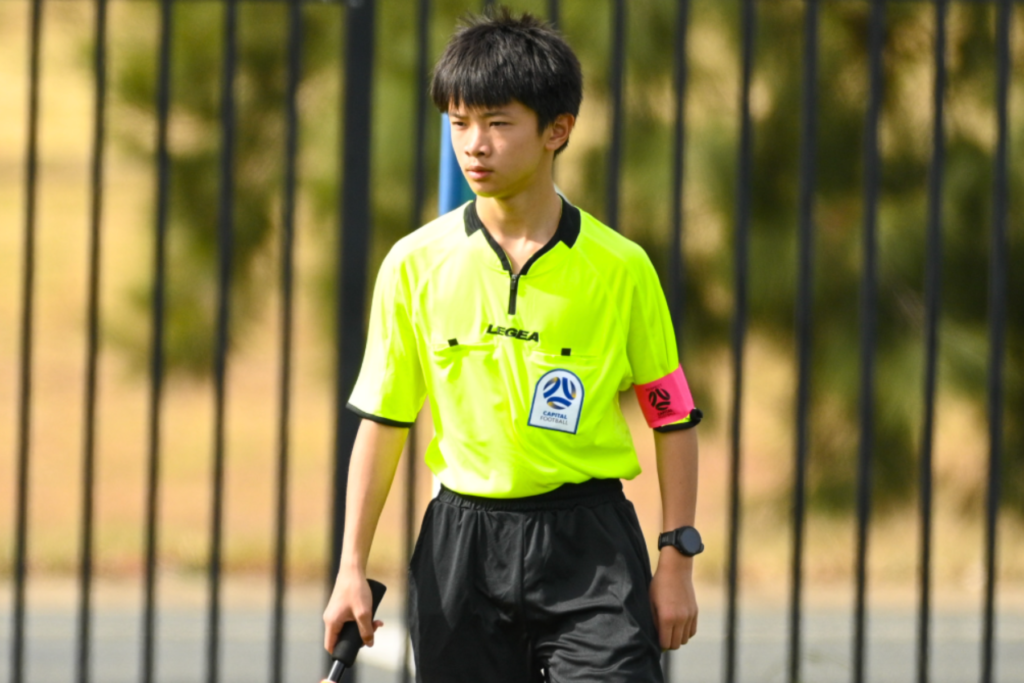
Capital Football Introduces Pink Armband to Protect Junior Referees

Capital Football has launched a visible identification program for referees under 18, requiring them to wear a pink armband during matches. It’s intended to build awareness surrounding the concern across Australian football about the abuse driving young officials out of the game.

The Pink Armband Initiative, effective immediately across Capital Football’s competitions in the ACT and surrounding region, makes junior referees identifiable to players, coaches and spectators. The federation says the marker is designed to set clear behavioural expectations and signal that many match officials are minors still developing their skills.

Capital Football acknowledged a referee crisis as far back as 2022, at which point it restructured its entire referee department in partnership with Football Australia. The pink armband program is the latest layer of that response; this time by targeting the cultural conditions on match day rather than systems of recruitment and pay.

A problem that spans codes and states

Research has consistently linked referee abuse to declining retention rates, with officials quitting in growing numbers due to sustained mistreatment, a trend researchers warn will reduce the pool of skilled match officials available at all levels of the game. Studies also show that young, less experienced referees are disproportionately likely to be subject to abuse.

Capital Football is not alone in reaching for a visible solution. Similar programs operate across Football Queensland, Football South Australia, Football South Coast and several other federations, while Basketball Victoria and Basketball South Australia have adopted comparable measures through the Green Whistle initiative. The spread of these programs across codes and states reflects a shared administrative problem: many grassroots referees are teenagers and volunteers who do not officiate for money but because they love the game, and abuse is eroding that foundation.

For a federation overseeing nearly 29,000 registered players, fewer referees means fewer matches. Fewer matches means reduced participation. The pink armband is a low-cost intervention with structural consequences if it works.

Most Popular Topics

Editor Picks

Send this to a friend