




Melbourne Victory launch women’s and girls’ development fund to improve pathways for female footballers

Melbourne Victory women’s and girls’ development fund

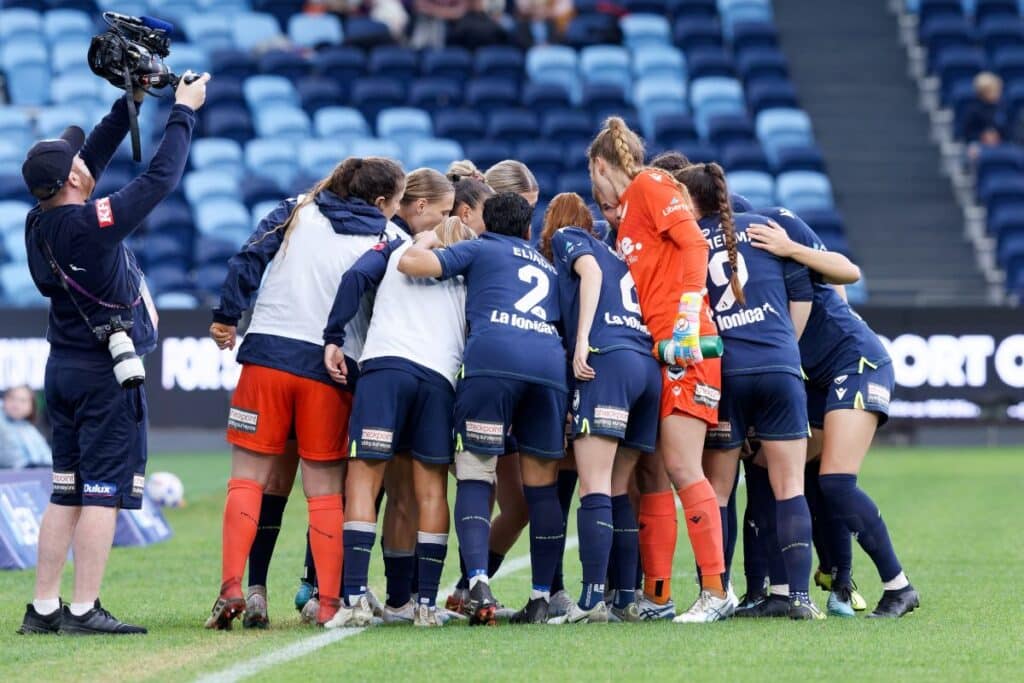
Melbourne Victory have announced the launch of a women’s and girls’ development fund to contribute to the growth of female football in all aspects of the game.

Victory are supporting this fund through female-specific projects that run across all levels of football, which is in line with the club’s key values of prioritising community participation and pushing towards gender equity in the sport.

The fund will help improve the pathways for female footballers within the club, provide educational opportunities for female coaches and administrators, and improve female football infrastructure and activation projects.

Former Melbourne Victory player Marco Rojas donated in May earlier this year, in support of women’s football for the club and this initiative comes off the back of it.

Melbourne Victory Managing Director Caroline Carnegie stated the Club’s goal is to lead, unite, connect, and inspire through football and the Female Development Fund is an important step in delivering the Club’s vision for the women’s game.

“Melbourne Victory wants to contribute to growing and enhancing the women’s game and supporting the growth and development of females in football, wherever they sit in the football community,” Carnegie said via Victory press release.

“Part of this is ensuring accessibility to the women’s game off the back of the Women’s World Cup and supporting the development of women to make the greatest impact on our game.

“This is the reason we decided to make our home games at the Home of the Matildas free for patrons to experience and support the A-League Women’s (ALW) team for the 2023/24 season and why the fund will be important to our success in the women’s space.

“We’ve worked to remove the financial barriers for anyone who was inspired by WWC23 to continue to enjoy watching elite domestic football and to give our young boys and girls every opportunity to see their stars in action week in, week out.

“The other factor that we know is key to growing the women’s game is investment which is needed at all levels of the game to develop the next generation of talent and to continue to grow and build participation levels in football.

“We see our strategy around making the ALW accessible, along with the launch of our Female Development Fund as the beginning of the journey and we’re encouraging others to contribute in a meaningful way through our Fund.

“We would love to see anyone attending our games to consider making a contribution to the fund in lieu of purchasing a ticket and also anyone passionate about women’s football to help us bridge the gap and build the future of the women’s game together.”

Melbourne Victory have ensured that all donations and any collaborations with partners and sponsors in the women’s space will be invested back into women and girls’ projects. A clear sign that they are trying to drive momentum into further growing that side of the game.

Eventually, the wider football community will be able to apply for specific grants in order to help improve their own female football situation.

The initiative to improve women’s and girl’s football is a brilliant one, off the back of record-breaking Liberty A-League membership numbers and the Matildas’ success in front of the entire nation.

Creating that foundation is absolutely vital is ensuring that the model is sustainable, and that Victory can continue to produce fantastic talents like they did with World Cup star Kyra Cooney-Cross.
Previous ArticleNext Article

Football NSW releases $600,000 towards Grassroots Grants to meet Participation Pressure

The Victorian State Government has announced new grants and funding for 11 new community infrastructure projects for local football clubs, totalling $3.8 million.

Sixty-five football clubs across New South Wales have secured a combined total of nearly $600,000 in funding through the NSW Office of Sport’s Local Sports Grant Program. It follows as a result of Football NSW’s scale of demand for community sport support and the growing pressure on clubs struggling to keep pace with surging participation.

The grants, covering 69 individual projects across the Football NSW footprint, will fund facility upgrades, equipment purchases, participation programs and accessibility improvements: the unglamorous but essential infrastructure that determines whether community clubs can function at the level their members require.

The Local Sports Grant Program made up to $4.65 million available statewide in 2025, with $50,000 allocated to each electoral district and individual grants capped at $20,000. Football’s share of nearly $600,000 reflects the sport’s status as the largest participation code in NSW, and the degree to which that status has not always been matched by corresponding investment in the facilities and resources required to sustain it.

Volunteers carrying an unsustainable load

The announcement arrives against a backdrop of mounting pressure on the volunteer workforce that keeps community football operational. Across NSW, thousands of volunteers dedicate significant unpaid time each week to administration, ground preparation, canteen operation and the logistical demands of running competitive junior and senior programs. As participation numbers climb, driven in part by the sustained visibility of the AFC Women’s Asian Cup and the legacy of the 2023 FIFA Women’s World Cup, those demands have intensified without a corresponding increase in the resources available to meet them.

“As the largest participation sport in NSW it is pleasing to see almost $600,000 will be reinvested back into supporting our players, coaches, referees and volunteers to improve the football experience across our community clubs,” said Helen Armson, Football NSW’s Group Head of Strategic Partnerships and Corporate Affairs.

The equity dimension

The distribution of the grants across 65 clubs and 69 projects also speaks to the geographic breadth of football’s footprint in NSW, and to the uneven distribution of resources that has historically characterised community sport in this country. Clubs in outer metropolitan and regional areas tend to operate with smaller budgets, older facilities and thinner volunteer bases than their inner-city counterparts. Grant programs structured around electoral allocation, rather than club size or existing resource base, provide a degree of equity that market-driven funding cannot.

The kinds of projects funded under this program disproportionately benefit clubs serving communities where the barriers to participation are highest. A club that cannot offer adequate facilities or equipment is a club that turns players away, often without intending to.

Football NSW has used the announcement to call on the NSW Government to maintain and extend its investment in the sport. “We urge the government to continue to invest in football,” Armson said, in the midst for a nation-wide push for a $343 million decade-long infrastructure fund to address the facilities gap across the state.

The nearly $600,000 secured through this round is meaningful. Against the scale of what is needed, it is also a measure of how far the investment still has to go.

LaLiga and RFEF launch RefCam in latest innovation drive

The technology made its debut in Saturday’s clash between Atlético de Madrid and Real Sociedad in the Copa del Rey final, marking the start a new era for fan experiences.

Giving the game a new perspective

With RefCam, LALIGA and the Royal Spanish Football Federation (RFEF) will provide an entirely new way to see, and experience, live football.

Javier Alberola, the referee in charge of Saturday’s final, wore a headset-mounted camera and microphone, allowing spectators a unique look into the action of elite-level football.

Furthermore, the integrated audio provides fans with better transparency over in-game decisions, a move which strengthens the connection and understanding between fans and match officials while the game unfolds.

This is not just a step forward for officiating in Spain, but the beginning of a future where innovation and technology combine to provide fans with a new way to enjoy the game.


The plan moving forward

With the technology taking centre stage for the first time this weekend, RefCam will continue to feature in the coming matchweeks in Spain’s top-flight division.

The current vision is for RefCam to feature in one match per matchday, including the ultimate showdown between European giants FC Barcelona and Real Madrid on Matchday 35. The best technology, for the best match-up in Spanish football.

As LALIGA begins the rollout of RefCam in the coming weeks, the potential is endless for new content and insights during live matches.

“The introduction of RefCam forms part of LALIGA’s broader strategy to keep transforming the way football is experienced, with a focus on making coverage more immersive, engaging and distinctive,” explained LALIGA via official press release.

“As well as enriching the live broadcast, RefCam opens up new opportunities across digital platforms by enabling the creation of innovative content and highlights from a truly unique viewpoint: that of the referee.”


Connection to the game

Indeed, the viewpoint of a referee is one which we often overlook as spectators.

As our attention is on the players, managers or on post-match highlights, we forget about the one person who sees the game closer than anyone else in the stadium.

That is what makes RefCam special. It gives us a point of view that we have never seen before.

And a new level of proximity and connection to the game we love.

Most Popular Topics

Editor Picks

Send this to a friend