


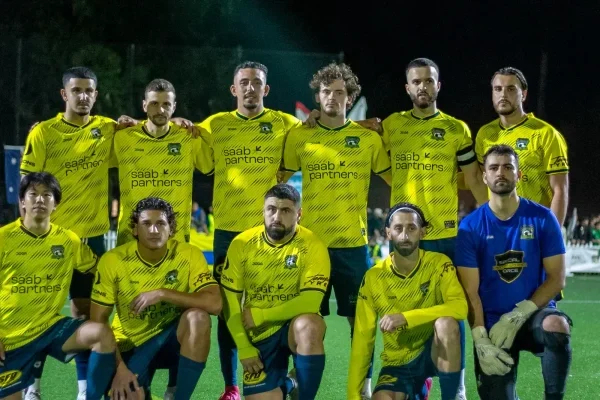


Narrabeen FC rewarded for female participation initiatives

Narrabeen FC, in conjunction with the Northern Beaches Council, is the latest club to be awarded funds from the NSW Football Legacy Fund – receiving $150,000 to improve amenities at Boondah Reserve.

The grant is a part of the $10 million NSW Football Legacy Fund, led by Football NSW (FNSW) and the NSW Government.

86 FNSW-affiliated clubs submitted proposals alongside their local council area for round 2 of the “infrastructure funding stream” in June last year.

31 applicants across the state, including Narrabeen FC and Northern Beaches Council, were successful.

In addition to providing their future plans, clubs were required to demonstrate their current output, particularly in terms of participation and community initiatives.

In 2023, Narrabeen FC recorded a female participation rate of 32%, sitting above the state average of 25%.

It is little surprise, then, that the club has been awarded funds to provide brand-new gender-neutral change rooms and female-friendly amenities for its rising female ranks.

FNSW released promising statistics last Friday, reporting a 23% increase in female registrations for football in 2024.

With demand surging, the Legacy Fund enables clubs to provide the best experience possible for participants, whether it be for improvements to infrastructure or greater access to football resources.

Narrabeen FC Club President, Rocky Giles, says the $150,000 grant is just reward for its efforts in building female participation.

“We take immense pride in the increasing participation of females in our club,” he said via press release.

“We are pleased to have projects such as this one to ensure a secure and inclusive environment, enabling all participants to relish their football experience with us.”

Further benefits from the grant include the reconstruction of its canteen facility for greater functionality, and fully accessible public toilets around the ground.

FNSW asserts that the Legacy Fund is a part of its current Football Infrastructure Strategy that aims to recognise and address gaps in football facilities.

In particular, it wants to partner with clubs and councils who are committed to their community and are eager to provide spaces that build inclusivity.

“The NSW Football infrastructure priorities are crucial as they provide a shared understanding and guide for all clubs in addressing the present and future demands, ensuring they have what is necessary,” the Fund’s Facilities and Grants Officer, James Spanoudakis, added via media release.

As the start of community football competitions nears, many spaces across New South Wales will be undergoing changes that promise to deliver users a long-lasting, positive football experience.

Some projects are already underway as of January this year, with all projects aiming to be completed by January 2025.
Previous ArticleNext Article

South Canberra FC Breaks the Mold: Equity-Driven Model Earns ‘Club Changer’ Honour

South Canberra Football Club has been named Club Changer of the Month for April, in a recognition that reflects a broader shift across Australian football toward rewarding clubs that are actively dismantling the structural barriers limiting women’s access to the game.

The AFC Women’s Asian Cup has just delivered record crowds and unprecedented visibility for women’s football in Australia, and the Club Changer program is now asking what comes next. Its decision to name South Canberra Football Club as Club Changer of the Month for April signals a clear shift in how the program defines contribution: away from participation numbers alone, and toward the equity frameworks that determine whether women stay in the game once they arrive.

South Canberra FC built that framework from the ground up. Established in 2021, the club set out to give women and female-identifying players a safe, inclusive environment to play football at any level. It runs entirely on volunteers, operates as a not-for-profit, and is governed by an all-female committee with 13 of its 14 coaches identifying as female.


Building the infrastructure of inclusion

In 2026, the club secured grant funding and put it to work immediately. Two coaches are completing their C Licence qualification, and ten coaches, players and community members have undertaken the Foundations of Football course, which directly tackles the cost and accessibility barriers that exclude women out of coaching pathways.

The club also commissioned a female-specific strength and conditioning program with sports physiotherapists ahead of the 2026 season, targeting injury prevention and explicitly supporting players returning after childbirth.

SCFC’s leadership team draws from LGBTIQ+ individuals, First Nations people and veterans, strengthening the club’s connection to the communities it was built to represent.

The Club Changer program is backing clubs that do this work- clubs that treat equity as infrastructure rather than aspiration. At a moment when Australian football is under pressure to turn its biggest-ever surge of women’s interest into something lasting, SCFC’s model offers a clear answer to the question of how.

Football NSW announces 2026 First Nations Scholarships as pathway access program enters new phase

Football NSW has announced the recipients of its 2026 First Nations Scholarships, with ten emerging Aboriginal and Torres Strait Islander players from metropolitan and regional NSW receiving support designed to reduce the financial and structural barriers that have historically limited First Nations participation across the football pathway.

The scholarship program, developed and assessed in collaboration with the Football NSW Indigenous Advisory Group, targets players across both elite and development environments – recognising that talent identification alone is insufficient without the resources to support progression once players are identified.

Co-Chair of the Indigenous Advisory Group Bianca Dufty said the calibre of this year’s recipients reflected the depth of First Nations football talent across the state, and the importance of structured support in converting that talent into long-term participation.

“Their dedication to football and the desire to be role models for younger Aboriginal footballers in their communities is to be celebrated,” Dufty said. “I’m confident we will see some of these talented footballers in the A-League and national teams in the future.”


Beyond the pitch and into the pipeline

The 2026 cohort spans both metropolitan clubs and regional associations, an intentional distribution that acknowledges the particular barriers facing First Nations players outside major population centres, where access to development programs, qualified coaching and pathway competitions is more limited and the cost of participation more prohibitive.

The next phase of the program will introduce First Nations coaching scholarships, extending the initiative’s reach beyond playing pathways and into the coaching and administration pipeline – areas where Indigenous representation remains among the lowest in the game.

The structural logic is clear. Scholarships that reduce financial barriers at the entry point of elite pathways matter most when they are part of a sustained ecosystem of support rather than isolated gestures. Football NSW’s collaboration with the Indigenous Advisory Group provides that continuity, ensuring the program is shaped by the communities it is designed to serve.

Most Popular Topics

Editor Picks

Send this to a friend