

New A-Leagues, work still to be done

Australia’s top-flight football competition is back and whilst much has changed it is clear that there is still a lot of work ahead.

The clubs are no longer driving from the back seat, and they have wasted no time and spared little expense in committing to a major makeover to Australia’s top-flight competitions, A-Leagues Men and Women.

A glossy new look, an inclusive new name that bundles the premier men’s and women’s competition, sleek new graphics, a bumper free-to-air deal as well as a new streaming service and dedicated football news platforms all represent solid wins for the Australian Professional Leagues ahead of their debut season on the back of a mountain of preparation that has gone into the promotion of the competition.

Whilst only the most naïve will have expected the efforts to deliver an instant return, the sobering numbers from the opening round of the 2021/22 A-Leagues Men season demonstrate just how much work lies ahead.

Not even the gloss of all the stellar exertion put into revamping the look and feel of the A-Leagues and the fantastic efforts that went into broadcasting the competition to Australia’s audience could completely deflect from the real issues that football continues to face in Australia.

Put simply, they are the same issues that have plagued the sport in Australia for decades, including infrastructure and failing to connect with every part of the Australian football fraternity.

The embarrassing relocation of Macarthur FC’s opening round clash with Wellington Phoenix due to the dire state of the pitch at Campbelltown Stadium will have resonated with hundreds, if not thousands of football administrators all over the country who rely on third parties to maintain their playing surfaces.

It’s one thing for a third-tier state league team to have to relocate a game due to a bad pitch.

It’s another thing for it to happen in the top-flight. Put bluntly, it’s completely unacceptable.

The issue serves as an urgent reminder for the needs of football owned and operated infrastructure.

The sub-10,000 attendance figures at four out of six games highlight the top-flight’s ongoing struggles to get bums in seats and build genuine support for expansion sides.

Off the back of a championship-winning season, Melbourne City would have to be disappointed with a crowd of 7,213, whilst the 8,210 who turned out for Western United’s home game against Melbourne Victory were largely supporters of the away team.

The relocated 1-1 draw between Macarthur and Wellington attracted a touch over 1,000 people, with a contingent of the people in the ground having stuck around following the earlier F3 Derby between Central Coast Mariners and Newcastle Jets – a fixture which was attended by less than 7,000 people.

They are numbers that must concern the clubs involved, regardless of the various mitigating circumstances that have been offered as explanations.

Macarthur’s relocation to Newcastle for the weekend was undoubtedly a major issue. However, excuses in Melbourne that with lockdown over, people have other priorities will not hold up in the long run.

The reality is that the pool of ‘new fans’ without attachment to an A-Leagues team or another club is dwindling in an extremely competitive market and this is not something that the APL will be able to expand its way out of.

For football and economic reasons, there is no denying that the A-Leagues needs more teams – as Adelaide United coach Carl Veart passionately advocated for last week. The methods for adding those teams is a critical component of the discussion moving forward.

There are clubs that exist today all over Australia that bring comparable, if not larger, crowds to Macarthur FC, Western United and at times Melbourne City.

Surely, at some point, these clubs deserve an opportunity. One of the biggest obstacles to making this happen is undoubtedly football’s first big problem – infrastructure.

Encouraging further investment in existing football infrastructure through the carrot of opportunities to access the top-flight could be a turnkey solution that will help solve both of football’s biggest issues.

The main short-term issue that was highlighted in round one was the varying quality of stream quality on Paramount+.

Personally, this was not something I experienced watching at least parts of every game via the Apple TV app on my television.

I did notice what seemed like a slightly reduced quality when simulcasting the Western United v Melbourne Victory game on my phone whilst watching the Sydney Derby on TV, but the second half seemed to be an improvement on the first.

Of course, it’s not all bad.

Technical streaming issues are nothing new when it comes to new services launching their live products.

We all remember the hugely frustrating buffering issues many users experienced when the Premier League first arrived on Optus Sport and the issues faced with the 2018 World Cup in times of peak demand.

Optus Sport rose to the challenges remarkably well and at this point, there’s no reason to doubt Paramount’s ability to do the same.

Elsewhere, a sell-out crowd packed into HBF Park to watch Perth Glory’s entertaining 1-1 draw against Adelaide United.

No doubt many of the 17,198 who attended the fixture were attracted to the game for the chance to get a glimpse of former Chelsea, Manchester City and Liverpool star Daniel Sturridge, highlighting the power of genuine marquees in attracting a crowd in Australia.

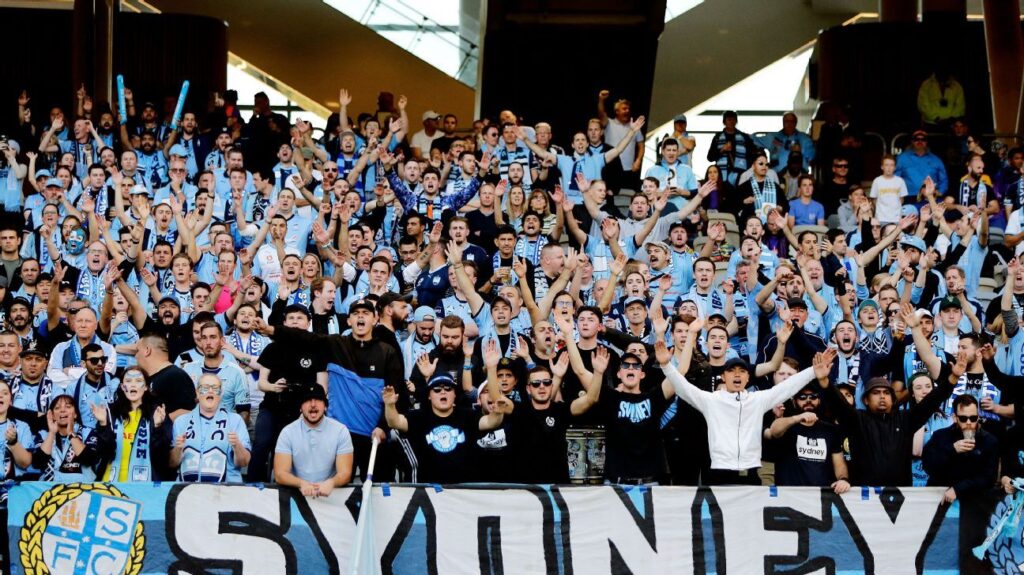
A healthy 23,118 at the Sydney derby at Commonwealth Bank stadium bodes well for two of the competition’s big teams in a crucial market, too.

The derby also attracted a free-to-air audience of 146,000. On face value alone, that’s not a hugely impressive number, but it is a number that bodes well for the competition according to industry experts, with well-known sports industry commentator @footyindustryAU suggesting that the number was “almost certainly” the highest-rated non-final A-League game in the last five years.

Like most things in life, the marketing gloss will never hide every flaw and the flaws don’t necessarily mean the world is coming to an end.

Round one 2021/22 represents progress and steps forward for Australian football.

The steps forward, however, are on a journey that still has miles to be walked.

Previous ArticleNext Article

Inter Academy expands operations into two major Australian cities

FC Internazionale Milano announced last week that their academy network has expanded into Sydney and Adelaide. The projects will be implemented alongside Christian Brothers High School (CBHS) in Lewisham, NSW and with semi-professional club, Adelaide Blue Eagles. 


A milestone for all parties

The announcement marks another impressive development for Inter Academy, which continues to expand its global network of elite training academies across the globe. 

With bases already established in Canada, Chile, Turkey, Italy and more, the club has now extended its operations and expertise to Australia. With activities set to commence in April in Sydney and Adelaide, the new partnerships will seek to embolden and progress football development across New South Wales and South Australia.

 The organisation expressed their pride at the newly-forged partnerships, outlining several factors which the project will bring. 

“FC Internazionale Milano is pleased to announce the opening of Inter Academy Sydney and Inter Academy Adelaide, extending the Nerrazzuri project to Australia,” the club said via social media announcement. 

“The two new Inter Academies in Australia will offer a football development programme based on Inter Academy’s training methodology, while also focusing on the personal growth of the players.” 

The alliance indicates an exciting future for the rising stars looking to link up with the academy programmes, as well as for the coaches and local clubs eager to gain insight into how this European powerhouse operates. 

It is an immense milestone for all involved. On one hand, Inter can help develop a nation of passionate and eager young footballers looking for a quality football education. On the other, coaches and professionals across Sydney and Adelaide now have access to the expertise and training methods of the most decorated football academy in Italy. 


Who will partner with Inter Academy? 

Inter Academy Sydney and Inter Academy Adelaide will both collaborate with local organisations, with whom their values and passion for the game are shared. 

Christian Brothers High School Lewisham

Inter Academy Sydney will receive the backing of Christian Brothers High School (CBHS) Lewisham, an educational institution with over 100 years of history in Sydney’s western suburbs.

While academic excellence is highly valued, the school strives to provide its students with an experience built on meaningful relationships, discovering passions, and building confidence. 

Adelaide Blue Eagles

On the other hand, Inter Academy Adelaide will work in conjunction with semi-professional club, Adelaide Blue Eagles (Azzurri Sports Club). 

Founded in 1958 (with inaugural members hailing from Italy), the club has grown into both a successful sporting organisation and a cornerstone of the community. The club is committed to nurturing talented boys and girls in the area through the Elite Eagles Academy. 


Balancing the player and the person

It is evident why Inter Milan wanted to strike up partnerships with CBHS and the Adelaide Blue Eagles. Whether on the pitch or in the classroom, these institutions dedicate themselves to achieving excellence. 

All three parties refuse to compromise on providing an environment in which players and students can develop as people. Brand and Marketing Director of Inter Milan, Luca Adornato, also emphasised the importance of building such partnerships on common values. 

“Opening these two academies in Australia represents an important step in the global growth of our project,” Adornato said via official press release.

“There is huge potential in collaboration with CBHS Lewisham in Sydney and Adelaide Blue Eagles in Adelaide. Both partners share our commitment to the development of youth sports and we are pleased to embark on this journey together.”

Although Inter Academy holds an outstanding reputation in the football world for its elite sporting standards and achievements, it refuses to compromise on developing the person behind the player. This holistic approach, in which footballing excellence comes hand-in-hand with personal growth, will be of immense value to the future generations across Sydney and Adeliade seeking to join the programmes. 


Connecting Australian talent with European pathways

Inter Academy joins an extensive list of European clubs including Juventus, Olympiacos and CF Villarreal who have established academies and football programs in Australia. Primarily operating in major cities like Sydney and Melbourne, these programs help connect coaches and young players in Australia with the expertise and training methods of Europe’s elite.

By forging partnerships of this nature and bringing their expertise into local communities, we can bridge the gap between Australian talent and the world stage.

When given the opportunities to perform, Aussies continue to receive the plaudits. Whether we look at Antonio Arena scoring on his debut for AS Roma at just 16 years-old, or Mo Touré scoring a hatrick on his first start for Norwich City FC in the English Championship, Australia is clearly able to produce players of the highest quality.

Therefore, as Inter Milan begins to implement academy programs in Sydney and Adelaide, the future looks bright for players and coaches seeking elite footballing educations.

The passion and talent is here in abundance. All it needs is the leadership and environment to grow.


The Participation Boom Councils Didn’t Plan For Is Hitting Football Hard

Football in Australia isn’t being held back by passion, participation, or community support. It’s being held back by local government failure. From a CEO perspective, the warning signs are no longer subtle — they’re screaming. Confidence towards councils is collapsing, clubs are done believing the rhetoric, and the people carrying the game every weekend are telling us the same thing: councils don’t understand football, don’t consult properly, and don’t plan for growth. This isn’t opinion anymore. It’s measurable. And it should embarrass every policymaker in the country.

Football in Australia isn’t struggling because of a lack of passion. It isn’t struggling because communities don’t care. And it certainly isn’t struggling because participation is declining.

Football is struggling because, at the local government level, confidence is collapsing. What is more, the people closest to the game can feel it.

Soccerscene’s latest survey on council readiness and football planning shows something deeply confronting: trust in councils is at its lowest point, and clubs no longer believe the rhetoric. Councils frequently speak about “supporting the world game” and “investing in community sport,” but the data tells a different story.

The people building the game every weekend, people such as presidents, coaches, volunteers and administrators, are telling us councils do not understand football demand, do not consult effectively, and do not plan for long-term growth. And that’s not an emotional opinion. It’s now measurable.

In our survey, over 61% of respondents said their council has limited or no understanding of football participation demand. Consultation outcomes were even worse: 74% said council consultation is inconsistent or ineffective. And when asked if facilities are being planned with long-term growth in mind, the answer should stop every policymaker in their tracks: more than 71% said planning is short-term or non-existent.

Results graphic from Soccerscene’s January industry survey:

This is not a small problem. This is a national warning sign.

Football is not a niche sport. It’s the world’s sport

Councils across Australia are making decisions as if football is still an emerging code, competing for scraps. That thinking is decades out of date.

Football is not only Australia’s largest participation sport in many communities – it is also part of the global economy of sport, the largest sport market on earth, and a cultural engine that connects Australia to Asia, Europe, Africa and the Americas.

When councils underinvest in football infrastructure, they’re not just failing local clubs. They’re failing an entire economic pipeline: participation growth, player development, coaching pathways, community engagement, multicultural integration, women’s sport, health outcomes, events, tourism, and commercial opportunity.

And yet, football is still treated as the code that should “make do”.

The Glenferrie Oval case: a perfect example of the imbalance.

Take the redevelopment of Glenferrie Oval and the historic Michael Tuck Stand in Hawthorn.

This is a major project with a total estimated investment of approximately $30 million, with the City of Boroondara allocating $29.47 million over four years to transform the site into a premier hub for women’s and junior AFL.

Let’s be clear: there is nothing wrong with investing in women’s sport. In fact, it’s essential.

But this investment is also a symbol of something football people have been saying quietly for years: councils understand AFL. Councils prioritise AFL. Councils know how to justify AFL.

They don’t do the same for football, despite its participation scale, multicultural reach, and global relevance.

Across the country, football clubs are being told there is “no funding,” that “planning takes time,” or that facilities “can’t be upgraded yet.” Meanwhile, we see multi-million-dollar grandstands, boutique ovals, and legacy infrastructure funded and delivered for other codes.

Football isn’t asking for special treatment.

Football is asking for fair treatment based on reality.

Councils are stuck in a domestic mindset – while football is global.

Here is the core issue: local councils are making decisions through a domestic sporting lens, while football operates in a global one.

Football isn’t just a Saturday sport. It’s a worldwide industry with elite pathways, commercial frameworks, international investment, and an ecosystem that Australia must compete within.

If councils don’t understand this, they will keep making decisions that shrink our competitiveness.

And this is where the stakes become real.

Australia is not only competing against itself. We are competing against countries like Japan and South Korea, who treat football as a national asset. They don’t leave football infrastructure to fragmented local decision-making without a clear national framework. They invest strategically, align education with delivery, and build systems that create long-term advantage.

We cannot keep pretending we are in the same conversation globally while our local facilities remain stuck in the past.

Clubs are carrying the burden – and it’s breaking the system.

The survey results point to a harsh reality: football clubs feel like they are carrying the weight of growth alone.

When asked what the biggest council-related challenge is, nearly 49% said funding is not prioritised, while others pointed to poor facility design, limited engagement, and slow planning processes.

This isn’t just an inconvenience.

It is creating volunteer burnout, club debt, stagnation in women’s participation, and barriers to junior growth. It is forcing clubs into survival mode – patching up grounds, sharing overcrowded facilities, and trying to grow in spaces that were never designed for modern football demand.

And when planning is short-term, the problem compounds. Councils aren’t just falling behind- they’re building the wrong solutions.

So what do we do? We stop reacting and start leading.

Football cannot keep waiting for councils to “get it” organically. That approach has failed.

What we need now is a national strategic response that is structured, intelligent, and relentless.

This is where football must learn from high-performing football nations  not just on the pitch, but in governance, philosophy, and decision-making.

A powerful example is Korea’s “Made in Korea” project, which was built to identify structural gaps, align stakeholders, and create a unified development philosophy. It wasn’t just a technical framework, it was a national alignment strategy.

Australia needs the off-field equivalent.

A National Football Facilities & Readiness Taskforce.

I believe the time has come to establish a National Football Facilities & Readiness Taskforce, made up of the most capable minds across the game and beyond it.

Not another committee. Not another meeting group.

A taskforce.

It should include leaders from football, infrastructure, urban planning, commercial strategy, government relations, and corporate Australia. We should be selecting the most intelligent and effective people in the country, not based on titles, but based on outcomes.

This taskforce should have one clear mission:

Educate, influence, and reshape how councils plan, consult, and invest in football infrastructure.

Alongside a taskforce, we need long-term strategic working groups embedded across the states, designed to:

educate councils on football participation demand and growth forecasting

standardise best-practice facility design and future-proofing

create consistent consultation frameworks

align football investment with economic, health and multicultural outcomes

build a national narrative that football is an asset rather than a cost

Because right now, the survey shows councils aren’t prioritising football for economic reasons. In fact, only 2.56% of respondents said councils should prioritise football due to economic benefits. This is not because it isn’t true, but because councils haven’t been educated to see football that way.

That is a failure of strategy, not a failure of the game.

This is bigger than facilities – it’s about Australia’s place in the world game.

If we want to be taken seriously as a football nation, we must build a country that treats football seriously.

Not just at elite level.

At local level – where the entire pyramid begins.

The message from the survey is blunt: football’s confidence in councils is collapsing. But within that truth is also an opportunity.

Because when trust hits its lowest point, change becomes possible.

The next step is ours.

We either continue accepting a system that doesn’t understand the world game – or we build one that does.

Most Popular Topics

Editor Picks

Send this to a friend