


New grandstand to complement Preston Lions FC in National Second Tier push

As announced by Football Australia, 26 clubs had progressed to the Request for Proposal (RFP) phase of the National Second Tier competition.

The RFP phase will involve the distribution of comprehensive Bid Documents to the shortlisted clubs, including an information memorandum, NST related data, financial forecasts, key terms of a Club Participation Agreement, and draft transaction documents.

This phase will be conducted confidentially, running from May to July 2023.

One of the clubs that have progressed through to this stage, and one considered to be one of the premium clubs outside of the A-League, is Preston Lions FC.

Preston’s President, David Cvetkovski, is confident that the National Second Tier will be good for Australian football and doesn’t foresee too many issues in regards to the cost of transition to a professional league for his own club.

“We have five key revenue pillars for Preston that I believe every club should have,” he said.

“You need to be strong in the key pillars of sponsorship, gameday (ticketing, food + drink), merchandise, membership and events.

“When you put the five elements together, they are five critical revenue streams for every club in the world, regardless of scale.

“If we get that right, we will succeed.”

Preston average some of the largest crowds in the NPL at their home of BT Connor Reserve, outdrawing some A-League teams on a consistent basis.

Cvetkovski highlighted facility upgrades and the relationship the club has with the local council as important measures for clubs hoping to transition into a National Second Division.

“We are constantly in touch with council, we have an incredible relationship with the City of Darebin and they are aware of our aspirations,” he said.

“We’ve strategically put a lot of work into the facility in the last few years, resurfacing, drainage and lighting and we recently announced two weeks ago our plans to build a new grandstand on the far side.

“Our aim is to have a boutique inner city stadium capable of comfortably sitting 5,000 people as required over time. We are a club with aspirations for our community and supporters, as we continue to navigate our own Preston journey,” he said.

The grandstand, to be located on the western side of BT Connor Reserve, looms as a key ingredient to cater for Preston’s ever-growing fanbase.

The design process is in an ongoing discussion, but Cvetkovski is excited at the prospect of being a destination club in years to come.

“This is an exciting project that will be done over multiple stages, with our own Preston people leading the way,” he said.

“As a starting point, we’d like to at least put the concreting down so people have a place to stand or sit that isn’t on mud, especially on a cold or wet night.

“We need to be a club that provides a premium venue that can comfortably hold around 5,000 plus people regularly.

“Our ultimate goal is to build a welcoming and inclusive ground that allows more people to be undercover or have readily available resources.”

Hypothetically, Cvetkovski knows the importance of assigning improved clear roles for his team of executives and advisors (alongside players who would be on professional contracts), if they were to be selected for the second division.

“I think for this to work properly we are going to need to articulate specific roles, for example, everything from a general manger, a sponsorship manager, a marketing manager etc.,” he said.

Cvetkovski was insistent that despite his club doing quite well quite on a number of fronts, it was of upmost importance that all clubs selected in a national second division will need to contribute effectively in their own way.

“The key to this division is we need 12-14 clubs to bring something strong and contribute – so every club can be successful,” he said.

“It’s no use if four or five clubs to become powerhouses in this league and beat everyone else, it’s about our game creating a competitive division, a thriving football ecosystem, with good rivalries, in a way which is economically viable for all the teams.

“We can’t get to the point where the FA needs to prop up these teams like what we see in in other codes, they have to be strong.”

Secure sponsorships to offset costs at a league level will be fundamental to the health of the National Second Tier. Cvetkovski was looking forward to see how that would eventuate through the governing body.

“Commercial arrangements will be critical, it’s another other element that will need to be factored in (which I’m sure the FA is working on) – we obviously don’t know too much about the commercial arrangements which will come in due course,” he said.

“We’ve been in all the meetings from day dot – as we were early members of the AAFC and have continued to participate in conversations with the FA. The FA did a really good roll out last year and gave us a lot of clarity at that time as to what would be involved.

“In those early discussions, we were all made aware of the astute modelling that was being considered such as travel, flights, corporate sponsors across the league and it will be interesting to see how that turns out.”

While increased financial costs will need to be offset for a national second division, Cvetkovski highlighted attitudes of the aspiring clubs would be critical to the success of the new tier.

“We want football to prosper, we need to work together to create healthy rivalries and a football ecosystem that is sustainable longer term,” he said.

“These aspiring clubs, like South Melbourne for example, are big clubs and we need them, we need the healthy rivalry. All clubs will need to make a contribution and bring something to the table so we can all be successful.

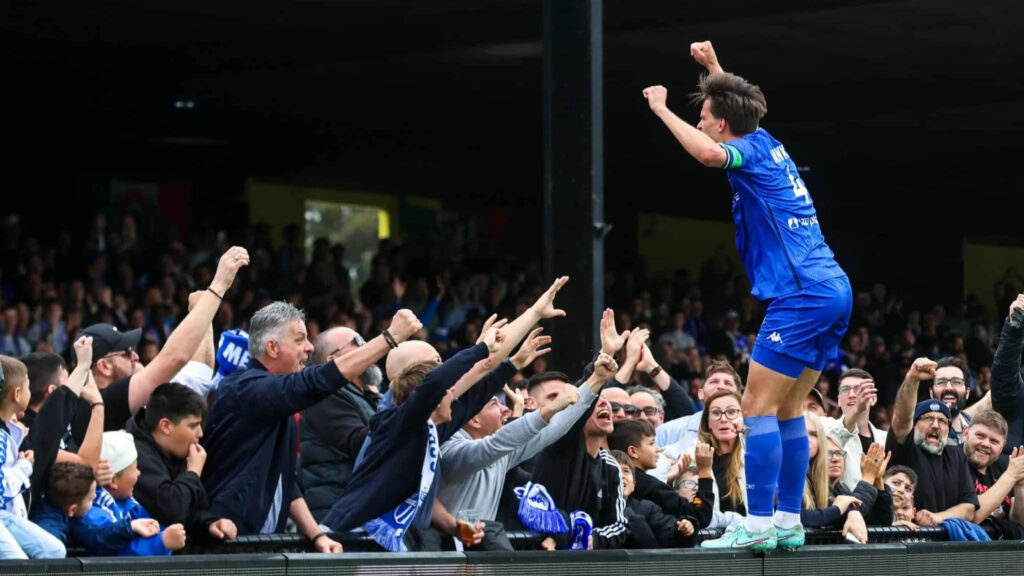
“I want to see 8,000 – 10,000 people at BT Connor when we host South Melbourne, I want to see 2000-3000 of our NSW based supporters attend games in Sydney and Wollongong, that’s beautiful, that’s football, that’s our aspiration.”

Previous ArticleNext Article

Beyond the Pitch: Miyuki Kobayashi on the Real Challenges Facing Japan’s Women’s Game

Last week, Soccerscene spoke to pioneer of women’s football in Japan, Miyuki Kobayashi, about the game’s development in Japan and the intersection between sporting and social change in the country.


Talent, quality and recent silverware

After Japan’s recent AFC Women’s Asian Cup victory in the final against Australia, the women’s national team solidified its standing as the No.1 team in Asia.

Throughout the last 15 years, Japan’s women’s national team has grown into a formidable opponent, boasting a World Cup trophy, an Olympic silver medal, as well as three AFC Women’s Asian Cups.

The talent is undeniable. The quality is unwavering. And the team shows no signs of slowing down.

But these victories and trophies on the world stage wouldn’t be possible without the leaders behind the scenes – none more so than Miyuki Kobayashi, former WE League Board Member and current JEF United Ladies Scout and Academy Chief.


Laying the foundations

Kobayashi has led the charge for women’s football in Japan, promoting not only a sport which values success, but one which empowers female footballers across the nation.

“At university, not many girls were playing and we didn’t have an official team. I went to the US and the environment was so different,” Kobayashi explained.

“That opened my eyes – women can play. That’s how I started the women’s soccer league when I came back: to make an environment for girls to play.”

Thus, accessibility and opportunity became driving factors behind Kobayashi’s work, not only for those on the pitch, but for those in the dugout.

“I got involved at the JFA (Japanese Football Association) to promote women’s football. We wanted to create the opportunity for women to be coaches.”

“They are coached by men all the time, so even when the top players leave the football world, they never think to be involved.”

Furthermore, as a former coach of JEF United Ladies Youth and General Manager, Kobayashi was intent on employing as many female coaches as possible. It was not merely a personel change, but a challenge to widespread social attitudes.

“When I started to employ female coaches, the girls’ parents asked why the coach wasn’t a man. But gradually, we started to make it equal – they didn’t talk about the gender, but about the quality of the coach.”


The mission to empower

In 2011, the same year Japan’s women won the World Cup, the domestic league was yet to become professional. Known as the Nadeshiko League, players would work during the day and train in the evenings.

The transition from an amateur to the current professional league required time, resilience and a change in perspective.

“The sports world in Japan is more traditional – it is dominated by men,” said Kobayashi.

“If you want to make the environment even, or (want) more women to come into the (football) world, you can change the mind of the players.”

Since 2021, the WE League has embodied a sense of growth and positive change for the women’s game. In name and nature, it looks to empower players, coaches and all involved in the industry.

“I was in charge of mission achievement for women’s empowerment. We wanted to educate the players, to inspire girls and women who watch the game.”

However, the drive to empower women in football was not without backlash and challenges.

“Some people don’t like that word: ’empowerment’. It’s too strong for them. Some women really appreciate it, but it’s not easy to change the mind of society through football,” Kobayashi admitted.


Growing and attracting talent

Although WE League clubs are accelerating youth development and expanding pathways across U15, U18 and first team football, Kobayashi acknowledged that the overall product must improve to bring foreign players to Japan and entice homegrown talent to stay.

“Most of the national team players go to Europe or North America. I don’t say it’s a problem, but from a young age, girls who can play in the WE League want to go abroad,” Kobayashi outlined.

Indeed, when looking at the starting XI in last month’s AFC Women’s Asian Cup final, only one player – Hana Takahashi – plays in the WE League.

But the key to attracting domestic and international players to the WE League, is aligning financial investment and industry attitudes.

“The reason why women’s football has developed in European countries is the social thinking – you have to be equal and have the same opportunities as men in football. The Japanese way of thinking, especially in the football world, is not that at all,” Kobayashi continued.

“When I speak to people at Spanish clubs, women’s football is not a charity, but an investment.”

“We have assets. We have good, young players, but we’re exporting them, so we need to import too.”

Indeed, Spain is a perfect example of what can happen when investment becomes intentional, not optional. Back-to-back UEFA Women’s Nations League titles, 90% television viewership increase since 2016, and record-breaking crowd numbers reflect what can happen when the industry aligns in vision and commitment.

Japan has the players to compete against any nation in the world. Purposeful investment, combined with its overall quality of players and style, could transform the WE League into a true, global powerhouse.


The vision for the future

Moving forward, Kobayashi hopes that girls progressing through JEF United’s academies develop confidence and resilience, whether as players or people.

“We want to make the girls – even if they aren’t in JEF United – continue playing football and continue to be leaders,” Kobayashi said.

“Some of them have a dream to be a coach or a leader off the field too, so that’s one of the attributes we want to develop.”

This resilience, reflected by the club’s ‘never give up’ philosophy, is testament to the vision of empowerment championed by Kobayashi across the women’s game.

Even in the face of social obstacles and a lack of financial investment, perseverance and hard work is at the bedrock of women’s football in Japan. It is not just that these values exist, but that they are consistently manifested on and off the pitch, which can show future generations that football is a sport for all – men and women alike.


Final thoughts

There is no limit to what the WE League and the national team can achieve if given the resources it deserves. All the ingredients are there: individual quality, a distinct playing style, football philosophy and ambitions to grow.

By following the example of industry leaders like Kobayashi, women’s football in Japan can hopefully continue to make waves of impact – in the sporting landscape and society as a whole.

How Sunbury United Is Defying the Odds to Keep Grassroots Football Alive

Sunbury United stands as a cornerstone of the local community in Melbourne’s outer northwest. But for all the hard work given by local families and volunteers, the lack of funding continues to prohibit a level of growth which matches both ambition and potential.


Consolidating growth across the club

Soccerscene recently spoke to Club President, Sherridan Long, about the club’s ambitions going forward, the family-oriented culture, and the challenges of operating at grassroots level in Australia.

“It’s gone really well in retention of players from 2025, [and] recruiting some players who have been really keen to come to the club and are really contending over just a small handful of spots,” explained Long.

“That’s been really rewarding to see the popularity of our programme and what the team is trying to develop in terms of culture and performance, to be somewhere that people want to go to.”

Furthermore, Sunbury United’s reputation in the community continues to inspire waves of prospective junior players, who are lining up for squad vacancies.

“We’ve got waitlists for almost every age group,” Long continued.

“We’ve seen a growth in interest coming into the club and girls wanting to play football, but also lots of families wanting to move to Sunbury and join our club, or move from other clubs.”

Sunbury United is ensuring that its culture and matchday atmosphere remains a safe, welcoming place for those who matter most in grassroots football: families, players and volunteers who sustain it every week.

Planning for success on and off the pitch

Despite solidifying a successful culture off the pitch, Sunbury United are refusing to slow down. From the senior men’s team to junior age groups, high-performance remains a key objective.

“Everyone is trying to win leagues – this is something we’ve been working towards for a few years,” said Long.

“Each little milestone across the year means we’re getting closer to a senior men’s promotion or championship – it’s been over ten years since a promotion or championship at the club.”

Although several years have passed since Sunbury United saw success in the form of silverware, the club’s progress in recent seasons may yet lead to a trophy in the very near future.

But reaching this goal requires not only a cohesive effort from players and coaches, but from all stakeholders and participants within the club space. To this end, Sunbury United underwent a strategic plan set-up to align their operations with the ambitions and thoughts of everyone involved.

“We undertook some survey and stakeholder analysis through our members to understand what it is they love about Sunbury United, why they participate, where they see the club going and how they can be a part of that.”

“It was nice to hear exactly what they wanted, what they thought of and what they felt by being part of United. So that shaped our strategic plan in terms of performance, community and working together as a team.”

Ultimately, it is this balance of performance, teamwork and trust in the community which can set clubs up for success. Whether at grassroots or professional level, if everyone involved operates under shared values and vision, the silverware becomes a question of when, not if.


Challenges of the grassroots game

As with any club or organisation in sport, progress inevitably encounters barriers, hiccups and challenges along the way. Facility access, infrastructure quality and investment are common issues not just for Sunbury, but for all in the grassroots space.

“Most places share winter and summer sports so you can only use your space a certain amount of months a year before it turns to the summer sport,” Long outlined.

“It means that there’s no space for juniors to conduct a proper pre-season, so they’re doing it at other reserves in Hume Council and not actually at our home.”

Indeed, we have seen already the lack of investment directed towards the football community. Soccerscene recently looked into The City of Hume’s current budget, which revealed a 10:1 funding imbalance between AFL and the beautiful game. For Sunbury United, and many other clubs, the impact is undeniable.

“We can’t fill the second or third women’s team because there’s no infrastructure to facilitate changing between boys and girls changing room on the flick of a dime. You’re not only balancing access between two squads and gendered safe spaces, but also junior and senior spaces,” Long explained.

“We’re limited by aspirations being within the lines and being within the physical building that we have. Investment in football infrastructure would be a game-changer.”

It’s a common theme in Australia’s grassroots landscape. Clubs with loyal supporters, interested players and a desire to develop, continue to be restricted by the boundaries of their facilities.

It is not about demand. It’s about necessity. If clubs like Sunbury United are to continue working towards player development and squad expansion, external investment is a must-have.


Fighting for the future

As Sunbury United continues to strengthen bonds with the surrounding community and within the club, the foundations are ready for the seasons to come. From youth teams to seniors, the club continues to emphasise connection as a fundamental principle.

“We sit under one umbrella. We’re not two separate committees or two clubs,” Long revealed, expressing the idea behind a connected senior’s and junior’s set-up.

“It’s important to the long-term sustainability and longevity of our club, not just to the performance side, that everyone’s invested and feels a part of something, and that they can be involved.”

One club, one philosophy and one family. Grassroots football will continue to throw its challenges for years to come, but Sunbury are, and will be, more united than ever.

Most Popular Topics

Editor Picks

Send this to a friend