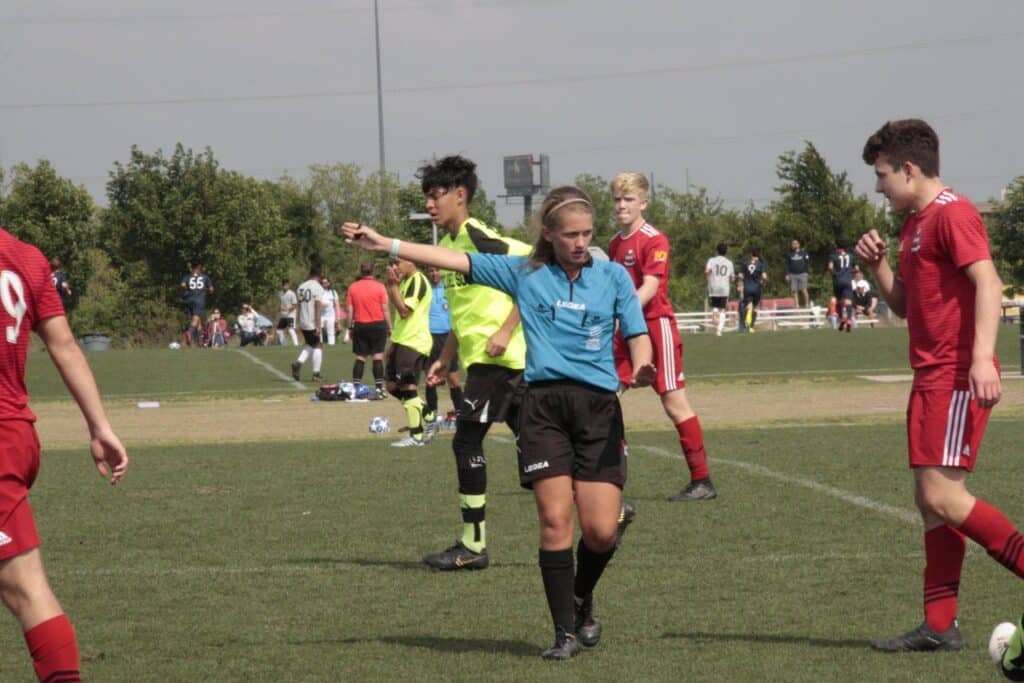
Nominations open for the 2021 NSW Community Sports Awards

Local football

Sport NSW has announced that nominations are now open for 2021’s NSW Community Sports Awards.

The 2021 NSW Community Sports Awards are devoted to recognising the outstanding achievements and contributions to community and grassroots sport by people across NSW. Community and grassroots sport is essential to the thriving of local communities, with much of the work carried out by volunteers.

With more than 500,000 people state-wide dedicating their time to volunteering year in, year out across all sports, the NSW Community Sports Awards exist as a way to acknowledge and pay tribute to the extensive efforts of these volunteers. Without these people, sport would not exist in the current form it does.

In addition, the NSW Community Sports Awards ensure that State Sporting Organisations and State Sporting Organisations for people with a Disability are recognised for the continual effort and for the accomplishments of their volunteers.

The nominations are open to the public to put forward the names of those who contribute immensely to the behind-the-scenes and day-to-day running of sporting clubs, organisations and events.

The 2021 edition of the NSW Community Sports Awards will see nominations invited for a total of 10 categories, including the Distinguished Long Service Awards for those that have provided an unending and extraordinary dedication to their respective sport for over 25 years. This year’s awards categories include;

  1. Community Official of the Year
  2. Young Official of the Year
  3. Community Coach of the Year
  4. Young Coach of the Year
  5. Community Sport Administrator of the Year
  6. Volunteer Director of the Year
  7. Community Team of the Year
  8. Community Club of the Year
  9. Local Council of the Year
  10. Community Event of the Year
  11. Distinguished Long Service Awards

Nominations are only considered for achievements and contributions from May 1st 2020 to April 30th 2021.

Pending the COVID-19 restrictions on events at the time, winners will be announced at a special event on June 17th at NSW Parliament House.

The nominations will be closing on Sunday the 2nd of May, 2021 at midnight. Nominations forms can be completed by clicking here.

Previous ArticleNext Article

Western Strikers Nominated FSA Club of the Month for Equity Outcomes

Western Strikers SC has been nominated for Club of the Month after a period of deliberate structural investment in its female program that is already producing measurable outcomes, and offering a model for how community clubs can drive participation growth through equity-focused planning rather than passive goodwill.

The nomination recognises a program that has moved beyond surface-level commitment to women’s football and into the kind of structural change that determines whether female players actually stay. Improved lighting across training and match pitches, equitable scheduling, extended training hours and dedicated pitch allocation have addressed the practical barriers that clubs often overlook. It’s conditions that tell players, implicitly or otherwise, whether the game was built for them.


Leadership as Infrastructure

Central to Western Strikers’ approach is a leadership structure that takes female football seriously as a technical and administrative priority. Women’s Coordinator Michelle Loprete and Technical Director Georgia Iannella, a former Matilda, provide the program with both organisational direction and the kind of visible role modelling that shapes whether younger players can picture themselves progressing through the game.

The presence of a former international player in a technical leadership role at a community level isn’t incidental. It signals to junior players that the pathway from their Friday night training session to elite football is real and navigable, and it gives the club’s coaching staff access to experience and credibility that most community programs cannot offer.

That pipeline is already functioning. Western Strikers’ Under-13 to Under-16 girls teams all qualified for finals in the Youth Premier League this season. Under-15 goalkeeper Sian Schopfer made her debut in the Women’s State League team which is a direct product of a club environment designed to move players upward.


The Friday-night model

One of the more quietly significant initiatives at Western Strikers is the scheduling of Friday night women’s matches, with junior girls training beforehand encouraged to stay and watch senior football. The structure is straightforward but its implications are meaningful. Aspiration in sport is not abstract. It’s built through proximity, through watching players a few years older doing what you want to do, in the same kit, at the same club.

The absence of that experience is one of the more consistent reasons girls disengage from football in their mid-teens. When junior female players cannot see where the game goes after their age group, the logical conclusion is that it goes nowhere. Western Strikers’ scheduling decision addresses that directly, at minimal cost, and whose effects are starting to manifest.


The Club Changer framework

The club’s participation in Football South Australia’s Club Changer Program has provided a structured framework for identifying and addressing barriers that might otherwise go unexamined. Pitch allocation, training structures and safety conditions are the kinds of issues that accumulate quietly in club environments; not because of deliberate exclusion but because the default systems were built around male participation and have never been comprehensively reviewed.

The Club Changer Program creates accountability for that review. Western Strikers’ ability to project an additional 146 female players over the next three years is a product of planning rather than optimism.


Industry implications

Western Strikers’ model matters beyond its own membership. At a time when women’s football in Australia is navigating the challenge of converting a participation surge into sustainable long-term growth, the question of what community clubs actually do with increased interest is among the most consequential in the sport.

Record crowds at the AFC Women’s Asian Cup and sustained national visibility have opened the door. Whether players walk through it and stay depends on whether the club on the other side looks anything like Western Strikers

Melbourne City expand youth program with Hallam Secondary College

The school will join the City Futures Program in its mission to consolidate pathways and community bonds for students.

From pupils to players

Hallam is the latest school in Melbourne’s South-East to join the City Futures Program. Also backing the program’s ambitions are Narre Warren South P-12 College, Gleneagles Secondary College and Timbarra P-9 School.

Partnerships between professional clubs like Melbourne City and local schools help to promote community connection, as well as providing pathways from the classroom to the stadium.

“City Futures is about creating genuine opportunities for young people to stay engaged in their education while feeling connected to something bigger,” said Head of Community, Sunil Melon, via press release.

“By bringing the Club into schools and providing access to our environment, we’re helping students build confidence, explore future pathways and see what’s possible both within football and beyond.”

Gone are the days when young players must choose between football and education. Through the City Futures Program, they can enjoy both worlds and still have the opportunities to develop.


What City Futures provides

Hallam sudents will be at the centre of the benefits provided by the connection to Melbourne City.

For example, high-quality coaching sessions delivered twice a week will instill confidence and teamwork skills into young participants. And as Melbourne City coaches are set to deliver the sessions, the students will truly learn from the best in Australia’s footbal landscape.

Furthermore, participants can visit Casey Fields, home to the City Football Academy, where they can experience the ins and outs of how an A-League club operates and trains.

“We’re proud to be part of the City Futures Program,” outlined Acting Principal at Hallam Secondary College, Shelly Haughey.

“Seeing our students come together and commit to their training is setting them up for success both on and off the pitch, and we look forward to building a strong and lasting partnership with Melbourne City FC.”


The future of football pathways

This isn’t the first – nor will it be the last – partnership to connect football and education in Australia.

Earlier this year, Queensland-based John Paul College embarked on an exciting journey with Spanish outfit, RCD Espanyol, to provide unique coaching support, player education, and pathway opportunities.

But these partnerships aren’t merely about giving young talents a place in the starting XI.

They are designed to ensure all participants develop into confident young people – whether their future lies on the pitch, in the dugout or in the boardroom.

Most Popular Topics

Editor Picks

Send this to a friend