




Northern NSW Football opens applications for NNSWF Facilities Fund

NNSWF

Applications are now open for the fourth round of Northern NSW Football’s Facilities Fund.

Northern NSW Football’s Facilities Fund was established in 2019 and aligns with the NSW Football Infrastructure Strategy.

The fund has seen NNSWF invest $714,928 in community football infrastructure projects since its inception, with partner funding of $848,199 taking the total project value to $1,563,127.

These 14 projects have supported more than 6,500 players, referees, coaches and volunteers, and have included lighting, amenities and field upgrades.

The Facilities Fund was established in order to assist football clubs to partner with local stakeholders such as Local Government Authorities, state government, schools, other sports and relevant landowners to improve the football experience for players, referees, coaches and volunteers and to provide opportunities for more participants to play more football more often.

In addition, the Facilities Fund seeks to improve the safety of community facilities, provide inclusive football opportunities within clubs and improve security at community football facilities.

Northern NSW Football Community Football Manager Ross Hicks says funding came from a portion of player registration fees, with football money going back into helping football clubs.

“The Facilities Fund provides clubs another avenue to seek significant funding for facility projects and in turn increase participation, improve safety and security, assist in building stronger communities through football and improve the overall football experience for their members and stakeholders,” Hicks told Northern NSW Football.

“We would particularly encourage clubs from the Football Far North Coast and North Coast Football regions that have been impacted by the devastating flood disaster earlier this year to make an application.

“We have seen the positive impacts the fund has already had on clubs and their facilities. This is a wonderful opportunity for clubs. Please don’t miss out.”

Applications opened on Wednesday June 1, with applications to close on Friday, July 15.

Successful applications will be announced in August to coincide with the Future of Football roadshow.

NNSWF is committed to improving places to play, a focus area set out in its Play On Strategic Plan. NNSWF’s goal is to increase the number of football facilities that are fit for purpose, welcoming and support the growth of the game.

Interested clubs can read the Facilities Fund Guidelines and apply HERE.

For more information or help in making an application contact NNSWF Community Football Manager Ross Hicks (4941 7200 or rhicks@northernnswfootball.com.au).
Previous ArticleNext Article

Barnsley FC’s under-17s pathway delivers six Zone League debuts in 2026

Barnsley FC has integrated six of its under-17s players into first and reserve grade football during the 2026 Zone League season, the Hunter Valley club has confirmed.

The elevations include a debut in goal at first grade level and a goal scored by another player promoted to third grade, as the club continues to formalise the pathway connecting its junior and senior programs across the 2026 season.

Team Operations Coordinator Josh Boote said the movement of players between grades had been a deliberate focus through the season.

“We have had six boys from the under-17s come up and play Zone League, with one making his debut in goals in first grade,” Boote said.

Barnsley FC head coach Jacob Avellis said the under-17s squad had trained and competed alongside senior sides throughout 2026.

“The under-17s have been a part of our season all season. We support them, they support us,” Avellis said.

Zone League is the third tier of competition within Northern NSW Football, administered jointly by Newcastle Football, Macquarie Football and Hunter Valley Football, the three sub-federations covering the region. The competition spans three divisions and around 35 clubs across more than 10 local government areas.

Clubs can be promoted from Zone League into Northern League One, the tier above, while individual players who progress through zone competition remain eligible for representative selection at state level.

Midfielder Oliver Cousin was handed the reserve grade captain’s armband late in a recent match, a decision the club attributed to his consistency and development through the season. Barnsley FC described the appointment as an example of the club’s junior-to-senior structure in practice.

Avellis said the club’s junior programs continued to depend on volunteer coaches and administrators to function alongside its representative pathway.

“They are all keen to get up in Zone League and be a part of the squad. The potential within those teams is unreal,” Avellis said.

Barnsley FC positioned the approach as part of a broader aim to retain local talent as players progress through age groups, a persistent challenge for clubs operating across the Hunter region’s geographic spread.

The club said its focus for the remainder of the season and into 2027 would be on formalising the pathway further, including clearer criteria for movement between grades and continued integration of junior training with senior programs.

Part of a wider strategic push

Northern NSW Football oversees development across the Hunter, Central Coast, Mid North Coast and New England regions, with Zone League forming part of a broader structure that includes representative and state pathways feeding into national systems.

The club-level movement aligns with a priority set out in NNSWF’s 2024 to 2026 Strategic Plan, which includes Talent Development for All as one of four core pillars alongside participation, facilities and governance.

NNSWF has previously stated the plan has driven measurable growth in registrations and competition strength across the region, including in women’s and girls’ football, since it was introduced.

A new strategic plan covering 2027 to 2029 is in development, with NNSWF engaging Sports Advisory Partners Australia to lead consultation with clubs, zones, volunteers and staff across the coming months.

Barnsley FC positioned its own pathway work at under-17s level as consistent with that broader direction, with junior and senior programs run under a single club structure rather than managed as separate entities.

The club’s first and reserve grade Zone League sides are scheduled to continue through the competition’s regular season before finals, with the under-17s squad remaining integrated into senior training in the interim.

Football NSW builds life‑saving network as cardiac safety push expands

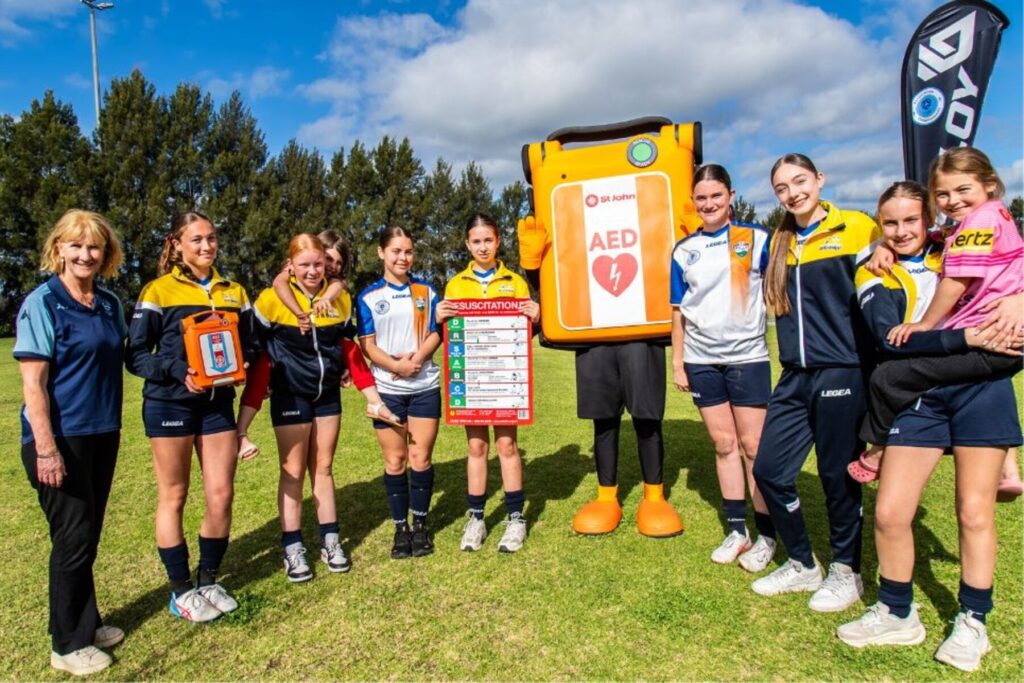
Football NSW has distributed 20 defibrillators to associations and regional clubs through its Every Beat Matters campaign, part of a broader push to improve cardiac emergency preparedness across the state’s football network.

Sixteen of the devices were presented to participating associations at the inaugural Football NSW Association Championships in Mudgee. A further four went to regional clubs: Cowra and District Soccer Club, Westside Panthers, Yerrinbool Bargo Soccer Club and Narooma Football Club.

The rollout builds on the Heartbeat of Sport AED Mapping Project, which is mapping defibrillator placement at sporting facilities across NSW with funding from the Minns Labor Government. Twelve football associations have joined the effort, including Eastern Suburbs, Manly Warringah, Granville, Southern Districts, Nepean, Northern Suburbs, Football Canterbury, Bankstown, Hills, Sutherland Shire, North West Sydney Football and Football South Coast.

Data collected through the mapping project is being fed into NSW Ambulance’s GoodSAM emergency response system and NSW Health’s public AED map, enabling first responders to locate nearby defibrillators in real time.

The initiative responds to a gap that had gone largely unexamined. More than 2,400 defibrillators have been deployed across NSW sports facilities through the Local Sport Defibrillator Grant Program, which offers grants of up to $3,000 to eligible organisations. But a device not registered in emergency response systems provides significantly less value than one that is accurately mapped and immediately locatable.

The urgency is not abstract. At Doyalson Wyee Football Club, a 70‑year‑old player survived a sudden on‑field cardiac arrest because an AED was available on site. Survival rates drop by about 10 per cent for every minute without defibrillation.

Football NSW is also establishing a long‑term defibrillator register to track equipment distribution, access and maintenance across all 636 clubs and 31 associations. The Every Beat Matters campaign, supported by Toyota and St John Ambulance, aims to raise about $240,000 through a raffle to fund an initial rollout of 65 defibrillators to clubs currently without access, prioritising regional and lower socio‑economic areas.

The #HeartHealthMatters Program is delivering CPR and AED familiarisation training to sporting organisations, with a particular focus on regional communities where ambulance response times are often longer and volunteer bases smaller.

The ambition, in the words of project organisers, is straightforward: that no preventable death occurs on a football ground because the right equipment was not there, or could not be found.

Most Popular Topics

Editor Picks

Send this to a friend