



NYCFC ink exciting new deal for stadium in Queens

NYCFC

2021 MLS Cup Champions New York City FC commenced a new partnership with local Mayor Eric Adams, Council Member Francisco Moya, labour unions and Queens Development Group, for the first-ever soccer-specific stadium.

This partnership will bring a variety of new innovations to the club and community around New York.

The plans being proposed include construction of a 25,000 seat stadium that is be all privately funded also there will be assistance provided by union labour in the construction of 2,500 units that are 100% affordable with 2027 projected as the target date for completion.

MLS Commissioner Dan Garber was thrilled to see the project come to life.

“When we founded our league 27 years ago, we had a theme that we wanted to be a league for a New America a country that’s diverse, that’s young, that’s connected with passion, with a global game, the Beautiful game,” he said via press release.

Originally an expansion club joining The MLS in 2015, the club played matches at variety of different venues such as Yankee Stadium and other venues throughout the Tri-State Arena where scheduling conflict arose during this period.

“Now here we are today. The personification of that dream, of that vision, has been living in cities across America and throughout Canada. Today is one of the most momentous days in the history of our great league,” Garber added via press release.

“Our fans were itinerant spectators who needed new GPS coordinates to attend games week to week in different locations, “But that incomplete condition ends today. We have come home to Queens, to Willets Point.”

The newly implemented project will retain New York’s status in the five boroughs, located close to other notable venues such as Citi Field and USTA Billie Jean King National Tennis Centre.

For the public’s convenience, the stadium will be situated within walking distance of public transport, such as Willets Point station and Long Island Railroad. Parking is expected to be shared with NY Mets.

The added perks of the newly built stadium include 40,000 square feet of public open space, and 250 key hotel and ground retail shops. The project is expected to generate $ 6.1 billion of economic impact over the next 30 years.

Previous ArticleNext Article

South Canberra FC Breaks the Mold: Equity-Driven Model Earns ‘Club Changer’ Honour

South Canberra Football Club has been named Club Changer of the Month for April, in a recognition that reflects a broader shift across Australian football toward rewarding clubs that are actively dismantling the structural barriers limiting women’s access to the game.

The AFC Women’s Asian Cup has just delivered record crowds and unprecedented visibility for women’s football in Australia, and the Club Changer program is now asking what comes next. Its decision to name South Canberra Football Club as Club Changer of the Month for April signals a clear shift in how the program defines contribution: away from participation numbers alone, and toward the equity frameworks that determine whether women stay in the game once they arrive.

South Canberra FC built that framework from the ground up. Established in 2021, the club set out to give women and female-identifying players a safe, inclusive environment to play football at any level. It runs entirely on volunteers, operates as a not-for-profit, and is governed by an all-female committee with 13 of its 14 coaches identifying as female.


Building the infrastructure of inclusion

In 2026, the club secured grant funding and put it to work immediately. Two coaches are completing their C Licence qualification, and ten coaches, players and community members have undertaken the Foundations of Football course, which directly tackles the cost and accessibility barriers that exclude women out of coaching pathways.

The club also commissioned a female-specific strength and conditioning program with sports physiotherapists ahead of the 2026 season, targeting injury prevention and explicitly supporting players returning after childbirth.

SCFC’s leadership team draws from LGBTIQ+ individuals, First Nations people and veterans, strengthening the club’s connection to the communities it was built to represent.

The Club Changer program is backing clubs that do this work- clubs that treat equity as infrastructure rather than aspiration. At a moment when Australian football is under pressure to turn its biggest-ever surge of women’s interest into something lasting, SCFC’s model offers a clear answer to the question of how.

How Husqvarna Is Helping Stadiums Cut Costs Without Cutting Quality

At a time when operational costs are rising across global sport, stadiums and football clubs are being forced to rethink one of their most overlooked expenses: turf maintenance.

From diesel consumption to labour hours, maintaining elite playing surfaces has traditionally been both resource-intensive and environmentally taxing. But new data emerging from venues like CBUS Super Stadium suggests a smarter, more sustainable model is already taking hold.

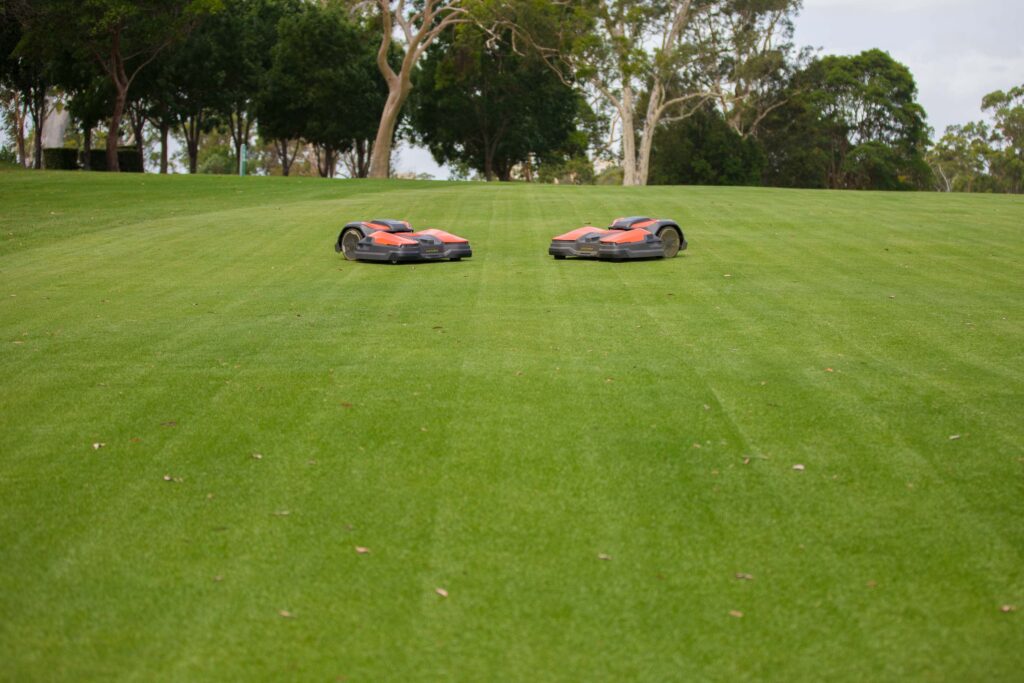
Leading that shift is Husqvarna, whose autonomous turf technology is quietly reshaping how professional venues manage their playing surfaces. Their product delivers measurable cost savings without compromising quality.

Cutting fuel consumption costs

At CBUS Super Stadium, the introduction of Husqvarna’s CEORA™ robotic mowing system has reduced diesel usage by approximately 20–30 litres per week. Over the course of a season, those savings compound into a significant reduction in both fuel spend and carbon emissions. This is particularly efficient for stadiums hosting regular fixtures and large-scale events.

CBUS Super Stadium General Manager Kristian Blundell said the robotic mower was a game-changer for the venue:

“This technology is not replacing staff but rather giving our grounds team the ability to do what they do best by helping to improve turf management processes, better manage fatigue and decrease our environmental footprint”

But the impact goes beyond fuel.


Time efficiency

By automating routine mowing, Husqvarna’s technology enables grounds teams to focus on higher-value maintenance tasks, from pitch recovery to detailed surface management. The result is not only greater operational efficiency but also improved turf consistency, which is an increasingly critical factor in elite football performance.

The benefits are being mirrored beyond stadium environments. At Oatlands Golf Club, Husqvarna’s autonomous mowing has delivered savings of up to 60 litres of fuel per week while freeing up staff for precision work. Quiet, round-the-clock operation also ensures surfaces are maintained without disrupting play—an advantage that translates directly to multi-use stadium settings.

Image Credit: Husqvarna

Importantly, Husqvarna’s lightweight robotic systems reduce the wear and tear typically caused by traditional heavy machinery. This not only protects the integrity of the playing surface but also reduces the need for costly repairs over time.

Football clubs navigating tight budgets at grassroots and semi-professional levels could benefit from such cost savings.

With rising energy prices, increasing sustainability expectations, and limited staffing resources, the ability to cut costs while improving performance is no longer optional. Solutions like Husqvarna’s CEORA™ are positioning clubs to operate more efficiently today, while preparing for a more environmentally accountable future.

As the sports industry continues to evolve, one thing is becoming clear: the next competitive edge may not just come from what happens on the pitch—but how it’s maintained.

Most Popular Topics

Editor Picks

Send this to a friend