Omnigon’s Corebine software brings fan engagement benefits

Corebine is a fan engagement platform that focuses on capturing and engaging audiences with mobile technology.

Corebine is a fan engagement platform that focuses on capturing and engaging audiences with mobile technology.

Omnigon has used Corebine for content delivery to keep up with the technological advancements we see rapidly. For customers, they are getting increasingly more tech savvy and digital consumption habits are changing with most content available on mobile devices. 

Corebine has been part of Omnigon for a few years now, which as a content management and fan engagement platform, is specifically tailored to meet the demands of sport’s growing mobile-first audience.  

As customer needs lend more to the digital side, Corebine is the direct response to any trends we still see today. 

“The desktop is not being used as much; it’s less than a majority of the time,” vice-president of products at Omnigon, Nick Arcuri said. 

“People are, especially in sport, getting their news, information and following their teams on their mobile devices. 

“We wanted to make sure we were optimising and creating an experience for the way most people are going to engage these days.” 

The development of Corebine centured around addressing the gap that exists in traditional content publishing platforms. They were not originally designed for fan engagement purposes or mobile devices. 

Corebine was built specifically with fan engagement in mind, including several features that help brands and rightholders to engage and reach their fans in a meaningful way. 

Corebine’s three ProSuite products, BracketProPollPro and MVP Vote, looks to deliver unique, compelling and customisable experiences. 

“We try to engage fans and make them interact with the content and make them feel like a part of all the experiences,” Arcuri said. 

Omnigon has worked with the German Football Association on the DFB Pokal app, developing a ‘Man of the Match’ polling product that gave fans the opportunity to vote for their favourite player in real time. 

“We put together the Man of the Match vote for every single match of the DFB Pokal,” Arcuri said. 

“Voting opened in the 60th minute of each of the 63 matches – all sponsored by Volkswagen. 

“As soon as the final whistle went, they had the Man of the Match decided via our engagement platform. The winner was eventually presented with the trophy by Volkswagen on the pitch.” 

It was a highly successful implementation, as 5,000 to 10,000 votes were generated per match in a 30-minute period. It was essential to manage the influx of activity, so Omnigon built a backend voting engine that could withstand the huge voting numbers. 

“We can pull in 100,000 to 500,000 votes in a single 10 second period – Corebine is a 100% scalable solution,” Arcuri said. 

“It doesn’t matter if we’re talking about the final of the World Cup where millions around the world are watching, down to a match in the Championship where far fewer, but no less engaged people are watching. 

“We’ve built this system to scale at a very high level, taking into account activity peaks, whether by call to action in a broadcast or during a marquee event.” 

Organisations can then look to take value from these interactions where data capture allows clubs, brands and sponsors to get a better gauge on who is interacting through the platform. 

Omnigon can then bridge that gap on how brands can gain more by knowing who interacts with their content, while there can also be more to learn about fan engagement activity where editorial decisions can be made about types of marketing. 

“You’re figuring out where your fans’ allegiances lie and you can start personalising the experience so they get value as well as the brand, club and sponsors for providing that information,” Arcuri said. 

Clubs and associations are putting considerable investment to data capture technology and analysis capability. Corebine offers a simple Customer Relationship Management (CRM) system to both store data and integrate with another CRM platform. 

Corebine is also a point of difference with its speed to market. They are able to launch sites in 2-3 months compared to other projects that may take more than six months. Sports clubs can get a major head start with the shorter timeframes. 

“The longer it takes to develop something, the more costly it is and the less time you have to react to changes in the marketplace,” Arcuri said. 

“If you want to launch a site in two months because the new season is right around the corner and you don’t want to launch mid-season, speed to market is important. 

“The quicker you can develop something, the less it costs and saving money is important from any business perspective.” 

You can find out more about Corebine’s products and fan engagement features here. 

Previous ArticleNext Article

Referees to improve consistency with new UEFA guidelines

In a meeting between Chief Refereeing Officers within UEFA and its 55 national associations, enhancing consistency and clarity underpinned the principle goals for the upcoming season.

Improving officiating

Referees – and particularly the usage of VAR – are often at the centre of post-match debates.

As the introduction of new technology into match officiating increases year-on-year, referees are in the spotlight more than ever before. The expectation was that more technology would decrease errors and controversy, but the opposite has proven to be the case.

Which is why the agreement and alignment between European nations marks a key step in the future of match officiating; the meeting between UEFA, its national associations and a representative of the International Football Association Board (IFAB) displays intention and commitment to ensuring future in-game decisions are clear, not controversial.

Meeting chair and UEFA Director for Refereeing, Roberto Rosetti, outlined why the agreement will have a vital impact on the future of European football, both domestically and internationally.

“The fact that all 55 national associations and UEFA have agreed on guidelines towards a more consistent approach to the application of the Laws of the Game marks a significant milestone,” Rosetti said.

“It will help improve the understanding of refereeing decisions among players, clubs and supporters and all stakeholders in the game.”

“For the popularity of football it is essential to remove all doubt from the game and ensure that the laws are applied with clarity.”


Limiting technology use

A widespread criticism of match officiating in recent years is the regularity with which VAR intervenes and interrupts match tempo.

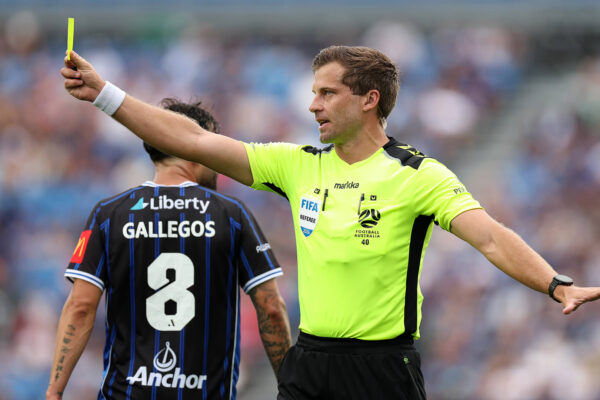
The issue, however, is not that VAR can review decisions – in fact, this summer’s FIFA World Cup displayed an effective use of VAR during a case of mistaken identity, in which a player received a yellow card offence for a foul committed by an opposition player. In this regard, VAR was a vital part of ensuring a simulation offence did not go unpunished.

Frustration, however, grows when the use of VAR goes beyond checking “clear and obvious” errors. Lengthy replays, a multitude of angle-checking clips and the disruption of game flow all contribute to feelings of frustration among fans.

But recent amdendments aim to limit this in the upcoming season. VAR is an essential part of fair officiating, but responsibility must lie with the referee.

The new rules introduced by the IFAB are available here, with further initiatives to follow from UEFA in the coming weeks.

FIFA sparks widespread backlash with private investment proposal

In a shock announcement made on Tuesday this week, FIFA revealed plans to create a subsidiary known as FIFA Forward Enterprise (FFE) to manage commercial and event operations for major competitions, including the World Cup. FIFA promises to reinvest all benefits back into the game, but the plan is receiving widespread criticism from governing bodies and governments around the world.


“Unleashing” football’s commercial power

Following the huge financial success of this summer’s FIFA World Cup, FIFA President Gianni Infantino indicated plans to “unleash the commercial potential and opportunity” at FIFA’s disposal.

Indeed, it appears Infantino is wasting no time in capitalising on the tournament’s success, which generated AUD 21 billion (USD 15 billion) for FIFA.

An eye-watering number. A tournament record. And, apparently, still not enough.

Tuesday’s announcement made clear the intention to bring commercial rights under a new subsidiary, FIFA Forward Enterprise (FFE). This, according to FIFA, could generate AUD 6 billion (USD 4.2 billion) of initial capital with all net benefits going back into grassroots and infrastructure development for Member Associations (MA) through the FIFA Forward programme.

The money would be raised by selling minority stakes in FFE to private third-party investors, although FIFA has outlined that it will retain “sole control of FFE”.

The venture has a reported valuation of AUD 29 billion (USD 20 billion), prompting questions and backlash from around the world over who will actually benefit from the finances – and whether anyone should benefit at all.


What are critics saying?

On the surface, the principle of generating more money for MAs and investing into grassroots, coaching, women’s and youth football is a worthwhile ambition.

Currently, each MA receives AUD 11.5 million (USD 8 million) per year from FIFA Forward. FIFA affirms that, should the proposal go through, this funding would increase to AUD 29 million (USD 20 million) between 2027-2030.

However, several governing bodies, including UEFA, Concacaf and the English FA, are adamantly fighting the plans.

“This crosses a line that football’s governing institutions should never cross,” UEFA said via an official statement on social media.

“The soul and governance of football are not assets to trade especially with zero transparency as to who gains financially,” UEFA continued.

“None of us are the owners of football. It is not FIFA’s to sell.”

Concacaf also expressed deep concern over the reports, citing a distinct lack of warning and due process from FIFA prior to the announcement.

“We share the disappointment of many within our region and the game that this level of detail has been designed and shared publicly before any discussion with the relevant governance bodies and stakeholders has taken place,” Concacaf said via official statement.

“As leaders within football, we are custodians of the game. Collectively, FIFA, the Confederations and every Member Association have a responsibility to always act in the best interests of the sport.”

Further concerns also centre around the company set to lead the proposed investor group – Thrive Eternal. Founded by Joshua Kushner, the brother of US President Donald Trump’s son-in-law, Jared Kushner, Thrive Eternal’s role in the venture opens the door to potential conflicts of interests – and emboldens criticisms that Infantino’s relationship with the US President is compromising his leading role in football’s international governing body.


Football was never about the money

Investing into the game is vital to football’s sustained future, especially for nations without the financial power to fund it independent of football’s governing body.

Nobody will argue that supporting the entire football pyramid – from grassroots to professional, men’s and women’s, youth and para, playing and coaching – should benefit from the financial might of the sport’s elite.

And FIFA is promising such benefits for all – arriving in the form of tens of millions of dollars – and stemming from third-party investors intrigued by the commercial value of the beautiful game.

But this is exactly where the venture’s flaws start to appear.

Rhetoric about increasing football’s commercial power following the 2026 World Cup leads the governing body down a slippery slope to a sport which prioritises money over integrity, due process and the fans who uphold it week-in week-out.

Football – from its very first beginnings as a working class sport – was never about the money.

Although modern commercialisation has turned clubs into businesses and players into tradable assets, everyone within the pyramid is a custodian of the game.

The game is not a product to sell – especially by those entrusted to uphold its integrity.


What happens now?

FIFA stated its intentions to only proceed with the venture if it receives support from the majority of MAs. While many are already uniting in opposition to the proposal, there are national governing bodies who have vocalised their support, including the Czech FA.

UEFA, on the other hand, is set to hold an emergency meeting with its 55 members to discuss a potential boycott of future tournaments.

But with a deadline of September 19 for MAs to accept the proposal, and the promise of a payment worth AUD 57.5 million (USD 40 million) if they do, the next eight weeks will reveal the future of the game and the nature of its global governance.

FIFA’s plan, although laced with promises of investment, development and growth for all, has instead kicked off a contest to save the game’s soul – or change it forever.

Most Popular Topics

Editor Picks

Send this to a friend