


OneFootball secures deal with Sportradar

Berlin-based football media company OneFootball will be able to bring live games of South Korea's K League to selected countries.

Berlin-based football media company OneFootball will be able to bring live games of South Korea’s K League to selected countries.

OneFootball will broadcast live coverage of the K League to users in France, Italy, Spain, United Kingdom and Brazil as part of the deal with Sportradar – who were appointed to sell the K League’s international rights from 2020 to 2024.

On OneFootball’s app, there will be two or three K League matches available for the remainder of the 2020 season, which will then continue for the entirety of the 2021 season.

“With more than 44 million active users per season globally, OneFootball is the most popular digital media platform for the new generation of football fans,” OneFootball said in a statement.

“This distribution partnership will allow the K League to tap into a vast userbase of young and highly engaged ‘mobile-first’ football enthusiasts in some of OneFootball’s core markets.

“OneFootball will work closely with the K League and Sportradar in developing a bespoke in-app marketing strategy to enhance visibility of the offer and maximize engagement.”

OneFootball specialises in providing live scores, statistics and news from 200 leagues and covers 12 languages as a leading source of news for football fans.

“Our flexible and convenient approach to in-app live streaming in combination with our very engaged userbase of football fanatics, will benefit the K League’s growth in international markets,” Lucas von Cranach, chief executive and founder of OneFootball, said.

Sportradar has previously arranged broadcast deals in countries such as China, Hong Kong and Croatia. They also partnered up with digital platforms including Dugout (in Singapore), 433 (in the Netherlands) and Copa90 (in the UK).

“Partnering with OneFootball who, like us, are leaders in the digital field, is a tremendous opportunity to expand the audience and brand of the K League beyond its current reach of over forty countries, Lutz Tigges, senior director, media rights at Sportradar, said.

“Be it live coverage, highlights or short form clips, visual moving images still capture the raw emotion which is football and to have one of Asia’s best leagues reach a global audience is nothing but a win-win for all of us.”


Previous ArticleNext Article

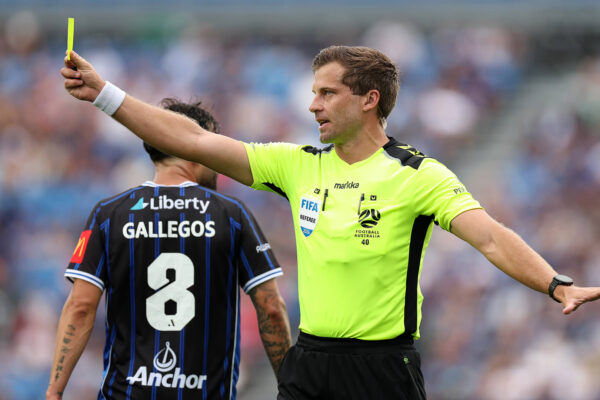
Capital Football Introduces Pink Armband to Protect Junior Referees

Capital Football has launched a visible identification program for referees under 18, requiring them to wear a pink armband during matches. It’s intended to build awareness surrounding the concern across Australian football about the abuse driving young officials out of the game.

The Pink Armband Initiative, effective immediately across Capital Football’s competitions in the ACT and surrounding region, makes junior referees identifiable to players, coaches and spectators. The federation says the marker is designed to set clear behavioural expectations and signal that many match officials are minors still developing their skills.

Capital Football acknowledged a referee crisis as far back as 2022, at which point it restructured its entire referee department in partnership with Football Australia. The pink armband program is the latest layer of that response; this time by targeting the cultural conditions on match day rather than systems of recruitment and pay.

A problem that spans codes and states

Research has consistently linked referee abuse to declining retention rates, with officials quitting in growing numbers due to sustained mistreatment, a trend researchers warn will reduce the pool of skilled match officials available at all levels of the game. Studies also show that young, less experienced referees are disproportionately likely to be subject to abuse.

Capital Football is not alone in reaching for a visible solution. Similar programs operate across Football Queensland, Football South Australia, Football South Coast and several other federations, while Basketball Victoria and Basketball South Australia have adopted comparable measures through the Green Whistle initiative. The spread of these programs across codes and states reflects a shared administrative problem: many grassroots referees are teenagers and volunteers who do not officiate for money but because they love the game, and abuse is eroding that foundation.

For a federation overseeing nearly 29,000 registered players, fewer referees means fewer matches. Fewer matches means reduced participation. The pink armband is a low-cost intervention with structural consequences if it works.

Football Victoria Backs Campaign to Shield Junior Players from Gambling Harm

More than 600 sporting clubs across Victoria have enrolled in a state government program designed to limit young players’ exposure to gambling, with Football Victoria now urging its community clubs to join before a late-July registration deadline.

The Love the Game initiative asks clubs to formally commit to a set of principles: refusing sports betting sponsorships, developing internal harm prevention policies, and building environments where coaches, parents and players are equipped to discuss gambling risks with children.

The program’s public health rationale has a sharper statistical edge than its community-facing materials suggest. A 2025 study of Victorian secondary school students aged 12 to 17 found that nearly 30% had gambled at some point, and among those who had gambled in the past year, 7.5% met the criteria for problem-gambling and a further 26.8% were classified as ‘at-risk’. The research, commissioned by the state government and published earlier this year, also found that students exposed to gambling venues and advertising were more likely to gamble or to do so in a risky manner.

The most recent Victorian Population Gambling Study found that Victorians aged 18 to 24 are the group least likely to gamble overall, yet carry the highest rates of harmful gambling across all age groups. Young people aged 18 to 34 are around five times more likely to bet on sports than older cohorts.

When the data lands at the clubhouse door

Football Victoria’s support for the program reflects a broader recognition within community sport that participation rates and club culture are connected. The environments clubs create shape whether young people stay in sport and what norms they carry with them into adulthood. For football specifically, which draws participants across a wide range of socioeconomic backgrounds, that responsibility is not evenly distributed. Approximately 440,000 Victorians, or 8.5 per cent of the state’s population, are classified as being at some risk of experiencing problem gambling.

The Victorian Government’s program gives clubs more than symbolic membership. Registered clubs receive practical tools to develop governance frameworks around gambling harm, resources for coaching staff and volunteers, and standing as part of a growing network of clubs taking a formal position on the issue.

Researchers have described the current framing of gambling harm as a matter of personal responsibility as inadequate, arguing it is a public health issue requiring a systemic response. Community football clubs, with their reach into households across the state, are one of the institutional levers available to make that response visible.

Most Popular Topics

Editor Picks

Send this to a friend