
Queensland features an abundance of Matildas

New figures show that Queensland’s female development has been incredibly successful in finding talent, who have represented the Westfield Matildas.

As part of Football Queensland’s latest findings, 40 homegrown players have gone on to represent the Australian Women’s National Team at major senior and youth tournaments since July 2012.

Katrina Gorry, Mackenzie Arnold and Hayley Raso (pictured) are a few examples of local talents working their way up the ranks during the last eight years and will be key contributors in the next Women’s World Cup hosted by Australia and New Zealand in 2023.

Gorry, Arnold and Raso spent time at the Queensland Academy of Sport (QAS) before accomplishing themselves in the Westfield W-League and internationally.

Football Queensland and the QAS combined to launch a full-time training and playing program for upcoming talents in 2018.

“Our pathway is now the envy of every female footballer in the country,” Rae Dower said, a former Matilda and current Junior Matildas Head Coach.

“We’re fully committed to evolving the program and to helping as many female players in Queensland reach their full potential on and off the field through the creation of our high-performance environment.

“We’d love to help make dreams come true for Queensland players wanting to play for the Matildas in a home FIFA Women’s World Cup in 2023 and beyond.”

Football Federation Australia revealed more than 18,000 women and girls from Queensland played football in 2019, as part of the latest census findings – a three per cent increase on 2018.

“The numbers we have are very encouraging and we look forward to seeing Queensland produce many more Westfield Matildas,” FQ Technical Director Gabor Ganczer said.

“Having the FIFA Women’s World Cup on home soil will be a big moment and objective for aspirational players and we are putting a lot of resources into helping them achieve their goals, not just now but permanently.”

Football Queensland provided every local player who has represented Australia at Olympic Games, World Cups or Continental Championships since the beginning of July in 2012:

Laura Alleway, Mackenzie Arnold, Mia Bailey, Angela Beard, Georgia Beaumont, Savannah Boller, Eliza Campbell, Kim Carroll, Kyra Cooney-Cross, Larissa Crummer, Isobel Dalton, Casey Dumont, Charlotte Farmer, Ciara Fowler, Mary Fowler, Sunny Franco, Shekinah Friske, Emily Gielnik, Brooke Goodrich, Katrina Gorry, Winonah Heatley, Elise Kellond-Knight, India Kubin, Aivi Luik, Afrikah McGladrigan, Teagan Micah, Ayesha Norrie (Kirby), Hollie Palmer, Clare Polkinghorne, Kezia Pritchard, Hayley Raso, Jamilla Rankin, Taylor Ray, Indiah-Paige Riley, Arina Tokunaga, Kaitlyn Torpey, Cortnee Vine, Natasha Wheeler, Brittany Whitfield, Tameka Yallop (Butt).

Previous ArticleNext Article

FIFA lose court ruling to UEFA over scuppered FFE plan

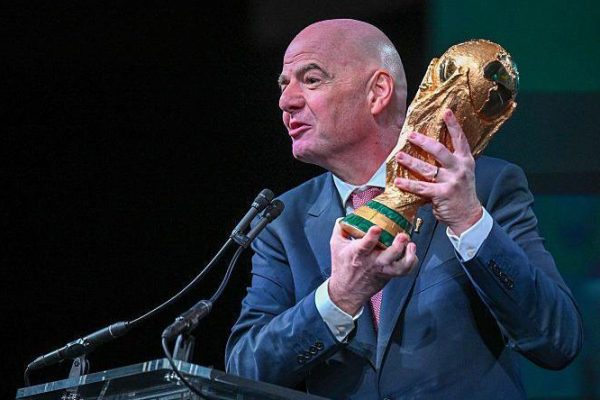
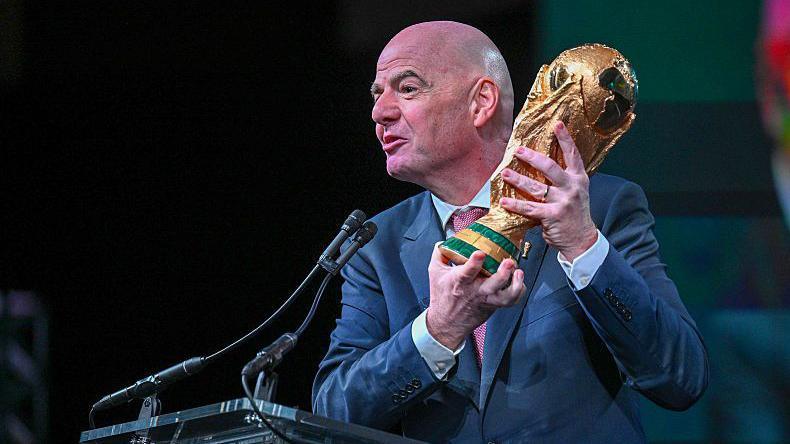
Last Thursday (Nov 12), a New York City judge denied requests made by FIFA subsidiaries to block a move by UEFA, who filed court documents in August pursuing information relating to FIFA President Gianni Infantino’s failed World Cup private investor plan.

Nine days after the 2026 World Cup, FIFA and Infantino officially put forward the FIFA Forward Enterprise proposal (FFE) which shook the football world to its core.

The plan was to sell a minority stake (roughly 20%) in the governing body’s competitions to private investors, but was cancelled in the following days due to intense backlash and boycott threats from UEFA and CONMEBOL, and varying levels of distaste from other confederations.

Lawyers representing UEFA are seeking evidence from Joshua Kushner’s New York investment firm Thrive and FIFA advisors JP Morgan surrounding the FIFA backed investment plan.

In an eight-page document written by the judge, they said the attempted block by two FIFA subsidiaries failed because they “do not have a direct, substantial and legal protectable interest” in the proceedings. 

‘Nothing in this record indicates that the U.S. FIFA parties, or even FIFA itself, will be parties in the contemplated criminal proceedings,’ the ruling stated.

After the immense fallout between FIFA and UEFA, Infantino said the project had ‘created divisions’ and become ‘no longer in the interest’ of its original objective.

The FIFA President had offered its 211 member associations $40 million USD ($59 million AUD) if they supported the proposal which would see all FIFA competitions privately invested in, including the men’s and women’s World Cups.

The investment would have seen the younger brother of U.S. President Donald Trump’s son-in-law, Jared Kushner, be the financial anchor of the venture. 

The fallout of FFE was undeniably the biggest crisis Infantino has faced during his near-eleven-year stint as FIFA president, although he remains the favourite to win reelection for another term in March.

Football Victoria campaign for upgrade to Baranduda Fields

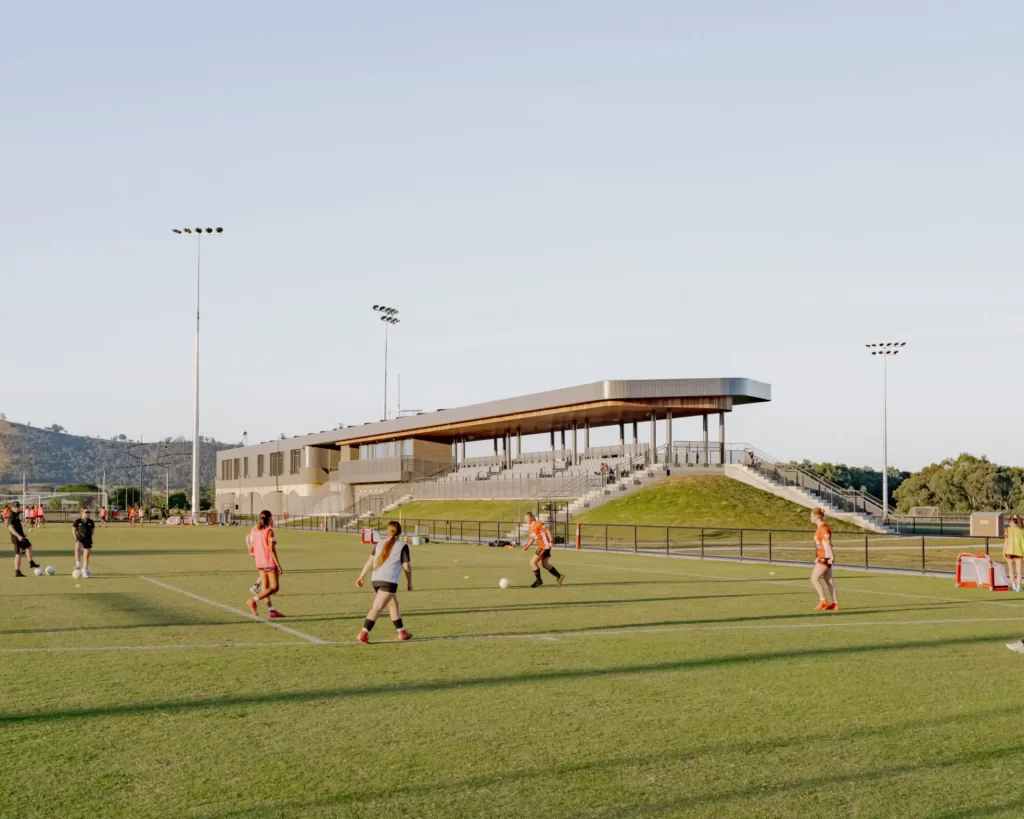
Football Victoria is partnering with the local community of Wodonga in advocating for a significant expansion of Baranduda Fields to help accommodate the rapid growth of football participation in the region.

Wodonga, a growing regional city south of the Victoria/New South Wales border, has seen involvement in football increase by over 130% in just six years.

A massive part of that is the growth of women’s & girl’s football, with participation increasing by almost 300% in the last six years alone.

With such a dramatic rise, the current facilities are not able to meet the demand. 

Alongside the local community, Football Victoria is campaigning for a synthetic pitch and lighting infrastructure to be provided for Baranduda Fields. This would provide players the chance to play year round, including at times when the weather may preclude use of traditional pitches.

It would not only help Murray United FC, who play and train there, but create a regional football hub capable of supporting the increase in activity within the local area.

Football Victoria’s Head of Government Relations & Facilities, Lachlan Cole, said in a press release, ‘The growth of football across this part of Victoria has been extraordinary, and the numbers tell only part of the story.’

‘Football Victoria has a strategic commitment to regional football, and Baranduda Fields gives us the opportunity to think beyond one club for the benefit of a whole region,’ he said.

Whilst the demand for football continues to grow across the country, areas like Wodonga are feeling the exponential rise more than others. Particularly highlighted by the dramatic increase in female participation, the need for upgraded accommodation is no longer a future consideration.

Speaking to Football Victoria, Murray United FC Chairman Pedro Afonso said, ‘A synthetic pitch and lighting would unlock much-needed access to the regions first synthetic football pitch, which provides major benefits to all year round participation and provides access in all weather conditions.’

‘More space and capacity gives Murray United and the sport in the region ability to keep growing. The demand is here – we need the infrastructure to match it.’

Whilst the games grows, the facilities need to be available to sustain it. Football Victoria’s pledge to help maintain that is exactly what the next generation requires.

Most Popular Topics

Editor Picks

Send this to a friend