




Rainbow Laces campaign supported by Premier League

The Premier League is currently celebrating Stonewall’s Rainbow Laces campaign, as part of a partnership with the lesbian, gay, bi and trans (LGBT+) charity.

A new two-year strategic partnership was announced between the Premier League and Stonewall last week. The league has been partners with the charity since 2017 as it looks to improve inclusivity in the sport.

The partnership will focus on education, LGBT+ acceptance will be encouraged in football programmes for children and young people.

Stonewall’s Rainbow Laces campaign will be in focus across two match weeks from the 4-13 December in the Premier League.

“The Premier League is committed to promoting equality in all we do and we are pleased to extend our relationship with Stonewall through this new strategic partnership,” Premier League Chief Executive, Richard Masters said.

“There is no place for discrimination of any kind in football or wider society.

“Our new partnership focuses on developing the positive LGBT+ inclusion projects we have carried out with Stonewall in recent years.

“A great deal of work has taken place to make football as welcoming as possible, promoting diversity on and off the pitch, and within our clubs’ communities.

“However, we know there is more to do and we look forward to making further progress.”

The campaign has seen Rainbow Laces themed ball plinths, handshake boards and substitute boards – players have been able to show their support through rainbow armbands for captains and rainbow laces.

The Premier League’s digital channels have been changed to feature a rainbow Premier League logo in support of the campaign.

Clubs have also launched initiatives to show their support – ahead of the Tottenham vs Arsenal match yesterday, Tottenham Hotspur Stadium was lit up in rainbow colours.

“We’re immensely proud to announce the next phase of our strategic partnership with the Premier League during this year’s Rainbow Laces campaign,” Stonewall’s Chief Executive, Nancy Kelley said.

“The Premier League’s early support was a huge catalyst for driving change across football and sport more widely.”

“We look forward to continue building on our partnership and working ever more closely with the Premier League to create a game where all LGBT+ people are welcome and able to fulfil their potential in football.”

Previous ArticleNext Article

Thornaby FC’s community commitment leads the way, but football fans continue to suffer

The cost of living crisis has impacted people and businesses worldwide and football is no different.

Football fans globally – and especially top flight British supporters – are being priced out of the game they created, and by the teams they have supported their whole lives.

In the 2024/25 season, 19 of 20 Premier League clubs raised their ticket prices. The highest single jump was a 28% increase, and additionally an 11% hike on tickets for children. Between 1990-2025, football fans in the UK have seen their ticket prices increase by an immense 800%. 

The fan reaction has been continually damning. Via the UK-based Football Supporters’ Association, over one hundred supporter groups campaigned for Premier League clubs to freeze ticket prices at home games for two seasons, as part of the Stop Exploiting Loyalty Campaign.

An FSA statement reads: ‘Football is for everyone. Rising prices are making it harder for regular fans, especially younger generations and working-class communities to attend matches.’ 

With fans of clubs from right across the country united on the matter, their position was clear: stop taking football from the people.

One club that did heed the message were North Yorkshire non-league side, Thornaby FC. This season, they are offering free season tickets to local residents for both men’s and women’s games.

Over 20,000 people are eligible thanks to the partnership between the club and the local council. With the club awarded AUD 12,000 (GBP 6,500), the initiative aims to bring the community together and drive locals to games.

This is not seen as a final solution, but certainly a major step in gaining support and interest for the team; in turn it will hopefully drive local investment, revenue and growth via the community that supports it, as opposed to investment groups that potentially hold less interest in the health of the club and its community. 

The Stop Exploiting Loyalty Campaign has also gained the support of MPs in Parliament. In March, they recognised the problem and as part of an Early Day Motion stated: ‘working-class and young supporters are being priced out; squeezing out local and dedicated fans poses an existential threat to the culture and community of football.’

While those words may be encouraging, what they can change in their current systematic position feels minimal.


The World Cup is another example of football fans suffering greatly at the hands of commercial interests.

On the grandest stage, where fans from around the world gather en masse to support their nations and the spirit of the game should in theory be at its most authentic, fans are deliberately exploited by FIFA.

According to Forbes Middle East, the 2026 edition in the USA, Canada and Mexico saw a rise in ticket prices for 90 of the 104 matches compared to the previous edition in Qatar.

Football is being held up by investors and governing bodies like a puppet on strings. They deem growth to be the only measure of success.

Growth is of course a key requirement of success, but what good is that when it sees the interests of local communities, including loyal football fans, pushed to the side? When it comes to modern day football, good deeds – such as those committed by Thornaby FC – are rarely seen as time well spent.

The pursuit for growth is also not just financial. Human attention is a newly monetised market; from streaming views to social-media engagement to email sign-ups. As football continues its global push into lounge rooms and onto smartphones, it is at major risk of overlooking those who commit their time and resources to stand in the terraces or sit in the stands.

FIFA lose court ruling to UEFA over scuppered FFE plan

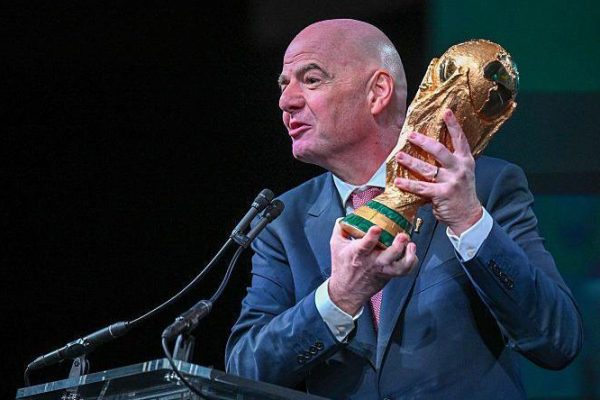
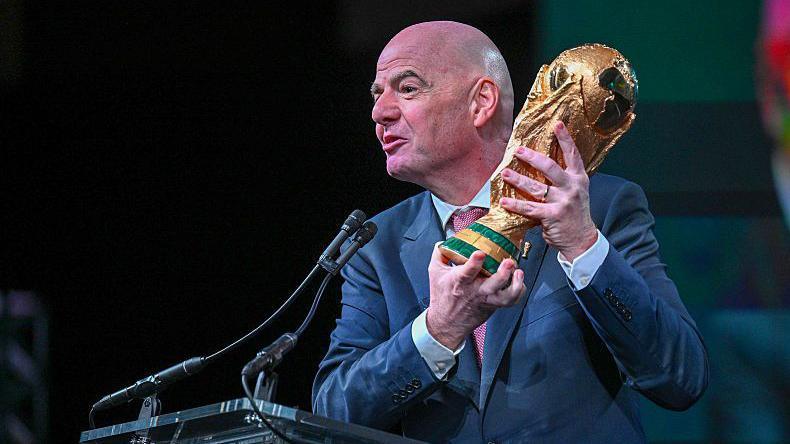
Last Thursday (Nov 12), a New York City judge denied requests made by FIFA subsidiaries to block a move by UEFA, who filed court documents in August pursuing information relating to FIFA President Gianni Infantino’s failed World Cup private investor plan.

Nine days after the 2026 World Cup, FIFA and Infantino officially put forward the FIFA Forward Enterprise proposal (FFE) which shook the football world to its core.

The plan was to sell a minority stake (roughly 20%) in the governing body’s competitions to private investors, but was cancelled in the following days due to intense backlash and boycott threats from UEFA and CONCACAF, and varying levels of distaste from other confederations.

Lawyers representing UEFA are seeking evidence from Joshua Kushner’s New York investment firm Thrive and FIFA advisors JP Morgan surrounding the FIFA backed investment plan.

In an eight-page document written by the judge, they said the attempted block by two FIFA subsidiaries failed because they “do not have a direct, substantial and legal protectable interest” in the proceedings. 

‘Nothing in this record indicates that the U.S. FIFA parties, or even FIFA itself, will be parties in the contemplated criminal proceedings,’ the ruling stated.

After the immense fallout between FIFA and UEFA, Infantino said the project had ‘created divisions’ and become ‘no longer in the interest’ of its original objective.

The FIFA President had offered its 211 member associations $40 million USD ($59 million AUD) if they supported the proposal which would see all FIFA competitions privately invested in, including the men’s and women’s World Cups.

The investment would have seen the younger brother of U.S. President Donald Trump’s son-in-law, Jared Kushner, be the financial anchor of the venture. 

The fallout of FFE was undeniably the biggest crisis Infantino has faced during his near-eleven-year stint as FIFA president, although he remains the favourite to win reelection for another term in March.

Most Popular Topics

Editor Picks

Send this to a friend