Professional football in the nation’s capital has entered a new era with Australian Sports Group (ASG) officially taking over Canberra United ahead of the 2026/27 season.
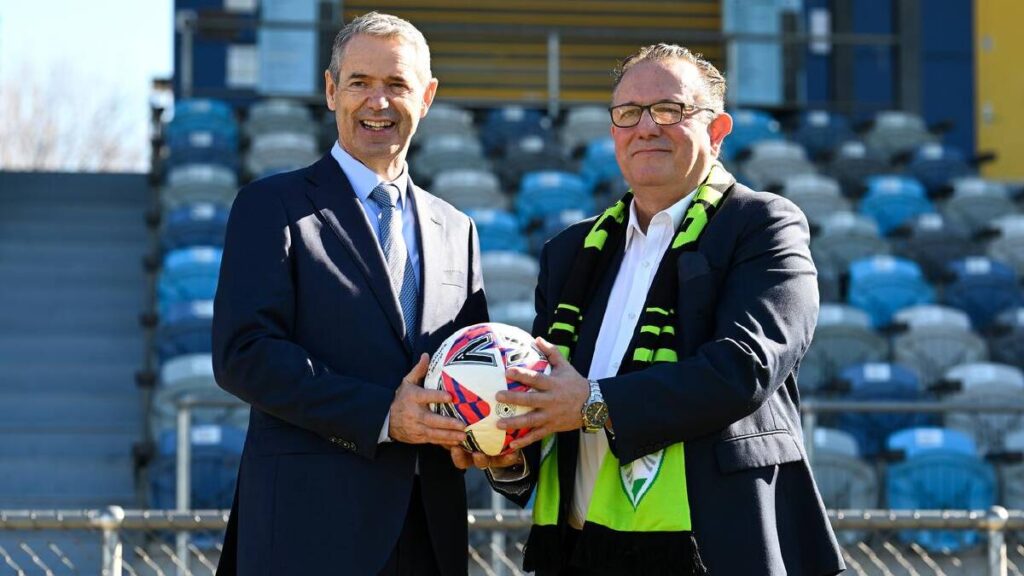
Led by Chairman Morris McAllister and CEO Theo Fotopoulos, ASG takes over a club whose future has been uncertain in recent years. Now, the focus has shifted from survival to building a sustainable future for football in Canberra.
Speaking to Soccerscene, Fotopoulos discussed why ASG chose to invest in Canberra United, the importance of preserving the club’s identity, and the roadmap for the chapter ahead for football in the nation’s capital.
Why Canberra?
The investment in Canberra United comes at an important time for the club. The beginning of the 2026/27 A-League Women season is just around the corner, and the prospect of an A-League Men side is drawing closer. Asked why ASG chose to invest in Canberra United and Canberra itself, Fotopoulos’ answer was simple.
“Canberra has stacks of football culture. It is a football city,” Fotopoulos said.
Speaking on the decision to retain the name Canberra United and not undertake a rebrand, Fotopoulos pointed to the club’s history and connection to the community.
“We retained the name, Canberra United, because of the history and the association. We felt there were more positives to retain the name,” Fotopoulos said.
The new ownership also wants supporters to play an active role in shaping the club’s future.
“The fans will be involved in making decisions,” Fotopoulos said.
Fotopoulos revealed that the club is already consulting with fans on the introduction of a nickname and is looking at developing a playing kit that is designed by the fans.
While Canberra offers a unique opportunity for professional football, Fotopoulos acknowledged the club will still compete for supporters’ attention alongside established sporting organisations such as the Canberra Raiders and ACT Brumbies.
Rather than viewing that as a disadvantage, he believes Canberra’s appetite for sport presents an opportunity to grow the club’s presence in the capital.
“It is something that allows us to accelerate the building of the brand in Canberra, Canberrans really love their sports,” Fotopoulos said.
The road ahead
The 2026/27 Ninja A-League season kicks off in October, and the priority for Fotopoulos and ASG at Canberra United is to ensure that Canberra is ready to compete not only next season, but sustainably for the years ahead.
“For us, it’s really stabilisation for the women’s. Build that and build the infrastructure around the women then translate that into an additional structure for the men’s program,” Fotopoulos said.
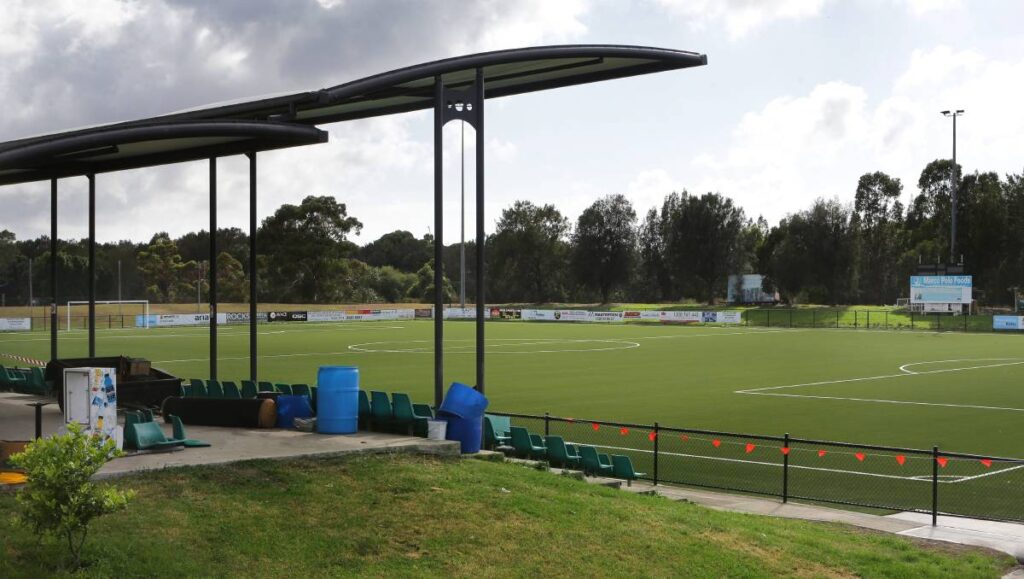
Infrastructure also forms a key pillar of ASG’s long-term vision. Fotopoulos said securing a long-term home at McKellar Park and improving football facilities across Canberra would play an important role in supporting future growth.
He believes better facilities will benefit not only Canberra United but football throughout the ACT and surrounding region.
Importantly, the takeover of the club included an option to introduce a team into the A-League Men’s competition from the 2028/29 season, which is something that ASG intends to pursue.
When speaking about the future of the proposed senior men’s side, Fotopoulos pointed to the quality within and around the organisation that will ensure its introduction.
“We’re quietly confident, the football department is very positive. There are a lot of quality people, both in Canberra and outside of Canberra, that have indicated interest in being part of the elite pathways academy structures that will be the foundation for a new A-League men’s team,” Fotopoulos said.
More than a football club
For Fotopoulos and ASG, this investment is about more than just owning and running a football club. The focus extends beyond results on the field to developing an integrated football structure and greater cohesion across the game.
In order to support a strong senior men’s and women’s side, Fotopoulos outlined the importance of establishing strong junior pathways for young players growing up in Canberra.
“One of the other big picture objectives is to finally get to establishing a permanent pathway,” Fotopoulos said.
Fotopoulos believes that these pathways will ensure long-term stability for Canberra United and help form the foundation of both senior playing groups for years to come.
However, it wasn’t just an investment in football in Canberra. It was a vote of confidence for women’s football in Canberra in particular.
While excitement is building around a potential expansion into the A-League Men, Fotopoulos believes that the current moment represents an even greater opportunity for the women’s game.
“If I was to look at any other time in history, this is probably the strongest time to invest in women’s football,” Fotopoulos said.