
Signify technology lights up sporting clubs safely 

Signify is the world leader in lighting innovation for professionals, customers and lighting for the Internet of Things. 

Signify is the world leader in lighting innovation, providing their service for professionals, customers and lighting for the Internet of Things. 

Holding a strong presence worldwide, Signify can be found in over 70 countries, featuring approximately 38,000 employees.  

Their energy efficient lighting products, systems and services gives customers a more superior quality of light, which makes theirs and other people’s lives safer and more comfortable, leading onto businesses becoming more productive and cities more liveable. 

As parts of the world still continue to deal with the COVID-19 pandemic, Signify can help reduce the risk of viruses and bacteria spreading, especially in large indoor gatherings. It’s their Ultraviolet-C disinfection lighting that has been implemented for the first time at a UK professional sporting club. 

This technology can be found at The Stoop, home to English Gallagher Premiership Rugby Union Club Harlequins. The possibilities as endless for Signify, who can expand to the top four tiers of English football as more clubs can come on board. 

As a case study for how UV-C can be implemented at any team, Signify’s UV-C partner Powercor installed 11 UV-C disinfection upper air units in the Honours Bar of The Stoop. 

In an area that is normally reserved for Season Ticket Members, that section is currently utilised by the home team as their player’s dressing room. As the players are currently the ones to benefit from safety features due to restrictions in the UK, it is thought that once the fans do return to sporting venues, they will be within a more hygienic and safer atmosphere which will become the way forward. 

“Signify is a highly trusted partner and a leader in their field,” Harlequins Chief Executive Officer Laurie Dalrymple said. 

“We are proud to be the first professional sports team in the UK to use UV-C disinfection lighting technology, and we expect to see it widely utilised in future across the sports and events industry.”

Signify have added another layer of analysis for medical purposes as doctors look at ways to manage their players.

Signify’s UV-C disinfection lighting adds an additional layer of protection to the stringent testing and operational processes we have in place to protect the squad,” Harlequins’ Head of Medical Mike Lancaster said. 

“From a medical perspective, I am very satisfied with the way the technology has been tested in depth and fully proven.” 

UV-C is the proven disinfection method that prevents the spread of diseases by disinfecting air, water and surfaces. It breaks down the DNA or RNA of microorganisms to make viruses and bacteria become harmless. Laboratory testing showed that the virus could be clamped down in as little as nine seconds.  

Signify’s partner Powercor have already installed 11 units for Harlequins that are suspended by brackets 800mm from the ceiling. The high position, combined with the luminaires’ design, allows the system to disinfect air as it circulates in the room, even when there are people present. 

Applicable to all sports and venues, this is just the start of the reach that Signify can have with sporting organisations. 

“As a long-term partner of Signify, we are very pleased to extend our professional expertise to UV-C disinfection lighting, which will become increasingly important to our customers in the years ahead,” Powercor Managing Director Richard Grace said. 

“We are proud to play our part in getting the Quins safely to the pitch and creating hygienic spaces for supporters to enjoy the legendary atmosphere of The Stoop once it is considered safe to re-open.” 

Natural convection moves the disinfected air back into the lower part of the room. Shielding and optics in the luminaire’s design will additionally prevent accidental exposure to UV-C radiation.

“Harlequins have a long history at the pinnacle of English rugby. Top athletes work hard to keep their health at an absolute peak, which extends to managing the risks we all now face in crowded public places,” Andy Gowen said, Director Public and Sports Lighting at Signify in the UK & Ireland. 

“We’re very proud to support the Club’s objective to offer players and supporters the very best protection.”

Signify has led the way for UV technology, where they’ve added plenty of innovation and expertise related to UV-C lighting. The way that this lighting is designed, installed and use is treated with care so that safety requirements are made and improves hygiene in a climate where it has never been more important. 

To find out more on Signify and what they can offer sport clubs, you can find it here. 

Previous ArticleNext Article

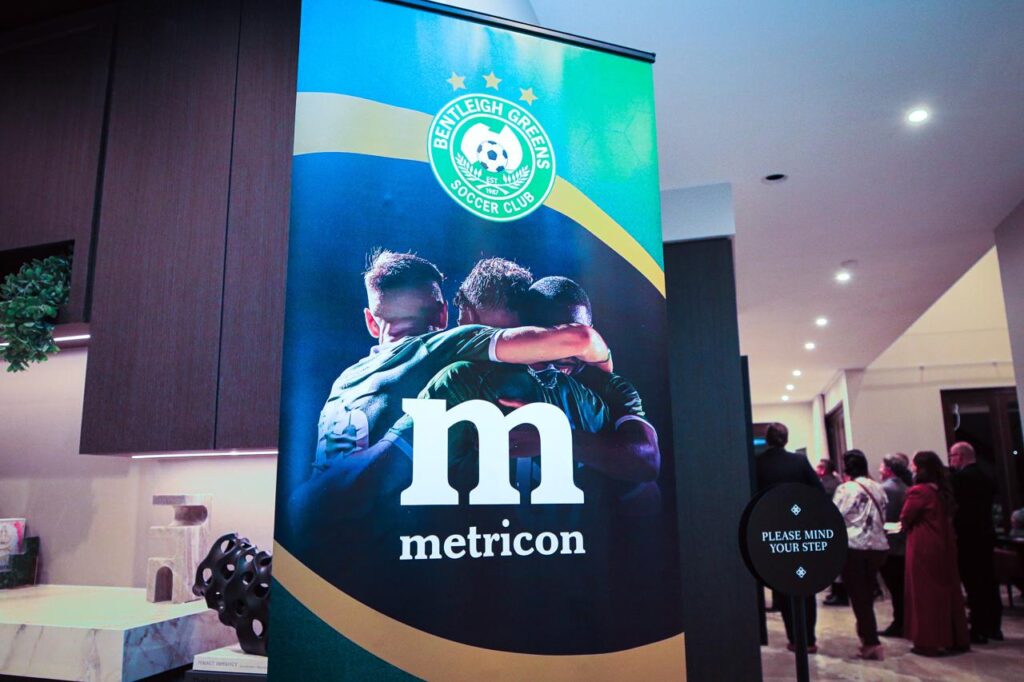
Bentleigh Greens and Metricon Bring Local Business Community Together Through Networking Initiative

Bentleigh Greens FC has reinforced its commitment to supporting its community beyond football, partnering with Metricon Homes to host a business networking evening designed to strengthen relationships between local businesses, sponsors and club stakeholders.


A unique setting for meaningful connections

Held inside one of Metricon’s display homes, the Bentleigh Greens Business Networking Night welcomed around 60 local business owners, club partners and community leaders for an evening focused on connection, collaboration and knowledge sharing.

Rather than a traditional function space, Metricon opened the doors of one of its display homes, creating a unique networking environment that highlighted how the space could be transformed into a premium venue while providing guests with a relaxed setting to build professional relationships.

The event reflects a growing trend across community football, where clubs are increasingly positioning themselves as platforms for business engagement and local economic development, alongside their role in delivering participation opportunities on the pitch.

Guests also heard from strategic futurist Marcus Barber, who delivered a presentation examining the growing influence of artificial intelligence on modern business. His insights encouraged attendees to consider how emerging technologies are reshaping industries and the importance of preparing for future change.


Creating value beyond sponsorship

While commercial outcomes were never the primary objective, the evening was designed to create long-term value by fostering meaningful relationships between businesses connected to the Bentleigh Greens community.

Early feedback has been overwhelmingly positive, with several attendees already establishing new contacts and beginning discussions around potential collaborations.

The initiative also highlights Metricon’s broader commitment to supporting local communities beyond residential construction. By partnering with Bentleigh Greens and providing the venue, the company helped facilitate an event that encouraged learning, networking and stronger community connections.


Football clubs as community business hubs

For community football clubs, initiatives such as these demonstrate how partnerships can extend beyond traditional sponsorship models. By creating opportunities for local businesses to engage with one another, clubs can strengthen their commercial networks while delivering tangible value to sponsors and the wider community.

As football clubs continue to explore new ways of engaging stakeholders off the field, events like the Bentleigh Greens Business Networking Night illustrate how sport can serve as a catalyst for meaningful business relationships and long-term community growth.

What Football Queensland’s link with Green Room Futures Means as Pathway Strategy Broadens

Football Queensland has signed a multi-year extension and expansion of its partnership with Green Room Futures, formalising the private provider as the state body’s “Official US College & Tour Partner” and adding an annual United States tour for Football Queensland Academy players to the existing college-placement program.

From advisory model to integrated pathway

The agreement marks a substantive evolution in the governing body’s pathway architecture rather than a standalone sponsorship announcement. The two organisations have worked together since at least 2024, when Football Queensland first appointed Green Room Futures as its preferred US college partner and began rolling out athlete information sessions across metropolitan and regional centres. The new arrangement embeds that relationship more deeply into the academy ecosystem by linking advisory services with an international touring product.

In its announcement, Football Queensland said the expanded partnership would offer academy players exposure to US college environments, international competition and broader education-and-sport decision-making support. Chief executive Robert Cavallucci said the relationship had already assisted Queensland athletes to pursue opportunities overseas and that the introduction of an annual tour would strengthen development outcomes for players across the state’s regional footprint. Green Room Futures director Matt Wade said the expansion reflected strong demand for structured US pathways and would provide athletes with more direct insight into student-athlete systems.

A constrained domestic market

For Football Queensland, the strategic rationale means a collegiate model is now an established part of the global football labour market, particularly for players seeking a dual track in education and high-performance sport. In an Australian landscape where professional opportunities remain selective and uneven, college pathways provide a parallel route with different risk settings for families. That logic has been gaining institutional acceptance across the country, and Football Queensland’s move suggests it sees formal international exposure as a competitive differentiator within domestic talent development.

The policy and governance questions are equally clear. The public announcement outlines ambition, but provides limited operational detail on affordability, cohort selection and support settings for regional participants. In practical terms, these details will determine whether the program functions as a broad-based development mechanism or as a premium pathway accessed primarily by households able to absorb compounding costs.

International youth tours involve direct and indirect expenses that typically include flights, insurance, accommodation, tournament costs, travel preparation and time-off-work burdens for families, with regional players often carrying additional domestic travel requirements before departure. Green Room Futures’ publicly available materials also indicate paid service structures within broader college-placement support. None of that is unusual in this market segment; it is, however, central to any serious assessment of access and equity outcomes.

The expanded partnership therefore sits at the intersection of football development strategy and distributional policy. If the tour becomes an informal gatekeeper to college-facing visibility, then financial design features move from administrative detail to core pathway governance. Without those mechanisms, even merit-led programs can produce systematically narrow outcomes because the input conditions are unequal.

For Football Queensland, the outcomes are likely to turn on implementation transparency over the next one to two intake cycles. A cohort profile that is geographically concentrated or socioeconomically narrow would invite predictable criticism, particularly given repeated statewide positioning in Football Queensland’s academy communications. Conversely, early publication of eligibility frameworks, financial assistance settings and regional participation targets would strengthen claims that the program is designed as a genuine statewide pipeline rather than a metropolitan premium add-on.

There is also a broader sector trend at play. Australian sporting bodies increasingly rely on specialist private partners to deliver pathway components once managed internally or left to informal networks. The model can improve expertise and execution speed, but it also shifts part of the development interface into commercial structures. In that context, governing bodies carry a heightened obligation to disclose how partner-delivered opportunities align with public-facing participation commitments, especially where youth athletes and family finances are involved.

What comes next

Well-structured US pathway programs can materially improve athlete decision quality, reduce information asymmetry, and create legitimate post-school options in a constrained professional market. Exposure to college environments can help families evaluate trade-offs around education, migration and sporting progression with greater clarity. For some players, that can be decisive.

The question for Football Queensland is whether the benefits are distributed in a way consistent with its statewide mandate. The announcement establishes intent and strategic direction; the next phase requires publication-grade detail. For a program framed around opportunity, credibility will depend less on partnership language and more on measurable participation design: who is selected, who is supported, and who is priced out.

Most Popular Topics

Editor Picks

Send this to a friend