



Skye Cloud are changing the game for website traffic and security

West Ham & Skye Cloud

As London’s fastest-growing cloud services provider, Skye Cloud ensure businesses receive an agile IT platform that is easy to manage and budget for.

With head offices situated in London and Kent, Skye Cloud has seen an average growth rate of 40% year-on-year since its establishment in 2012.

In the cloud computing sector, the service offerings of Skye Cloud, the specific terminology and concept used can be somewhat tricky to understand unless you are involved in the industry. However, the general person is highly likely to use a variety of cloud-based applications during day-to-day activities unknowingly.

Cloud computing involves delivering a variety of IT services over the internet, ranging from networking, computer and storage resources to software and application. Therefore, when an individual streams their favourite tv shows on Netflix, opens an app on their phone, or shares files over the internet, they are directly interacting with cloud services.

Through its services, Skye Cloud provides companies with access to the core infrastructure, features, functionality and files of a cloud network, without having to purchase, store or maintain the system on their own devices or premises.

The benefits for organisations to jump on board with Skye Cloud include:

  • Centralised storage location – Cloud storage is instrumental for organisations whose staff require access to the same information and data to do their work. Enabling new means of collaboration and efficiency amongst colleagues. Users can rent cloud storage at a low price rather than using expensive external hard drives.
  • Cloud backup resiliency – The reliability inherent with cloud backup solutions comes from holding multiple copies of files and storing data in alternative locations. This layer of resiliency ensures that data will not be misplaced in the event of an unexpected outage or at a provider’s data centre.
  • Disaster recovery solutions – The cloud provides a fast, cost-effective disaster recovery solution, to protect a company’s data in the case of an unplanned catastrophic event.
  • Cost saving – Companies can save as much as 40% annually by migrating virtualised workload instances in the cloud, as costs are directly in line with usage.
  • Consistent updates – The software is continuously being improved and evolving to increase things like speed, capability, security, efficiency, and reliability.
  • Business continuity and business intelligence – an organisation can rely on the cloud to keep its data and applications active even if a disaster physically impacts the business.
  • Improved collaboration – Cloud collaboration tools offer benefits to employees, such as file versioning or real-time editing at any time. They can access data, applications, and services remotely from any device.
  • Increased capability – The cloud can increase or decrease, depending on what the business needs.
  • Performance and speed – Organisations can access high-performance hardware and software to improve their operations.
  • Data security – All clouds offer some degree of encryption, deterrent, and compliance, but private clouds remain the most secure from outsiders.

As a relatively recent collaboration, Skye Cloud has been West Ham United Football Club’s Official Virtual Private Server Network partner since 2020. This partnership has been extraordinarily valuable for the football club, with the organisation having a large following base demanding always-on access to live content, online merchandise and ticketing 24/7.

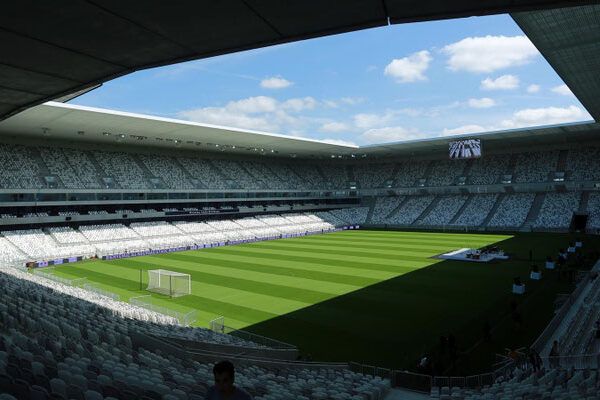
The Club’s fanbase banks on the website providing live updates and club news throughout the year. During a regular season, West Ham brings in an average of 58,000 home fans, with every match demanding a 10x spike in website visitor traffic, meaning the website needs to be able to perform as efficiently and effectively as possible.

Skye Cloud has enhanced the way the Club’s website operates, covering everything from organisational cyber security to software updates. Ensuring no lapses in website performance, Skye Cloud has partnered with Cloudflare, providing a secure and highly responsive match-day website experience.

As a result of the collaboration between Skye Cloud, Cloudflare and West Ham United, not only has the partnership eliminated lost merchandise and ticket revenue due to site outages and poor load times, but it has also significantly cut cloud hosting costs, with 93% of match-day requests offloaded to Cloudflare, coping with 10X traffic surges absorbed and crucially maintaining 100% uptime.

By bringing Cloudflare on board and managing the website traffic so efficiently, Skye Cloud has been able to pass savings on to West Ham United as reduced hosting fees. Thus being beneficial to all parties.

A recent addition to Skye Cloud is their new 321 service wraparound.

This new service has been specifically designed to allow the creation of a bespoke cloud solution to run on public, private or hybrid cloud, whichever suits consumer and business needs more conveniently.

Skye Cloud promises a bespoke cloud solutions strategy for the customer, followed by the company’s tried and tested migration process. The customer will be introduced to a commercial and technical account manager from day one and can expect face-to-face support, every time.

In addition to West Ham United, for the past 10 years, Skye Cloud has assisted over 30 charities and companies, saving them up to 25% on their annual IT budget.
Previous ArticleNext Article

Mizuno’s Australian gamble: can a 120-year-old brand break through?

When Mizuno unveiled a mural of Socceroos captain Harry Souttar on a Richmond wall during the 2026 World Cup, the company’s name did not appear on the artwork. The artist, Rory Ledge, painted Souttar as the “Minister of Defence” behind a brick wall. Channel 7 and Channel 9 turned up. The Herald Sun ran it in their Saturday edition. Mizuno’s brand director called it “mainstream awareness” without paid media.

The mural sat within a broader push by the Osaka-based company to expand in Oceania. For the fiscal year ending March 2026, Mizuno reported sales of ¥259 billion, up 7.8 per cent year-on-year, with net income of ¥18.4 billion representing 20.5 per cent growth . Operating profit rose to ¥22.6 billion. The Asia and Oceania segment is central to the company’s medium-term plan, which targets net sales of ¥290 billion by fiscal 2027.

The growth imperative

Australian football has not historically been kind to specialist boot brands. Nike, Adidas and Puma dominate retail shelves. A-Leagues collective bargaining agreements and club deals have locked in incumbents. For a brand without the marketing budgets of its competitors, the path to relevance runs through the players.

Mizuno has grown its Australian ambassador base from one athlete to around 20 across the A-Leagues in recent seasons. Melbourne City’s Tolgay Arslan, who played in the Bundesliga and Serie A before arriving in Australia, told Front Page Football: “If I discovered these boots ten years ago, I would wear these boots overseas in my career.” Western United midfielder Angus Thurgate called them “the comfiest boots I’ve ever worn”.

The mural moment

Richmond was chosen for the mural because of its location. The suburb sits at the centre of Melbourne’s sporting precinct, five minutes’ walk from the MCG and AAMI Park. It is already home to murals of AFL players. Rowena Corner Store owner Con, who agreed to host the artwork, had previously welcomed murals of Dusty Martin and an AFLW player.

“We didn’t have access to Harry because he was in the US competing,” brand director Rishi said. “We couldn’t do a photoshoot. So we had to be clever. The best ideas come from real time, aligned with what the public discourse looks like. Once we saw his Wikipedia page updated to refer to him as the Minister of Defence, we knew we could play into this.”

Ledge incorporated an existing window into the design to create a net behind Souttar’s figure. The mural appeared the morning of the Paraguay match, when Australia’s clean sheet sent them into the knockout phase.

The World Cup provided a massive backdrop. The Socceroos’ run captivated the nation: 4.84 million Australians tuned in to the Paraguay match, making it the most-watched World Cup match in SBS history at the time, with an average audience of 3.086 million . The final reached 5.26 million viewers, and cumulative tournament reach hit 18.04 million— 64 per cent of Australia’s population. SBS director of sport Ken Shipp said: “We’ve never seen engagement at this level.” Mizuno spent comparatively little and had Channel 7 and Channel 9 on site.

The commercial question

For a brand with limited marketing firepower, organic PR coverage is the prize. The question for the company’s Oceania division, still in growth mode, is whether a mural and a handful of player endorsements can convert into sustained commercial traction. Retail partnerships with Ultra Football, which has created a dedicated Mizuno space at its Melbourne store, suggest the company is thinking beyond campaigns.

Mizuno’s European expansion has taken a different path. The company signed a five-year deal to become AS Monaco’s technical equipment partner from the 2025-26 season, its first entry into Ligue 1. It already has a presence in Germany’s Bundesliga and Italy’s Serie A. In Australia, institutional partnerships are harder to secure. The approach has been slower: build through athletes, then through community, then through culture.

The Queensland government signed a Memorandum of Understanding with Mizuno in March 2026 to explore the Japan-Australia Sports & Health Innovation Exchange (JASHIE), a two-year partnership focused on sport and health innovation . The agreement supports Queensland’s preparations for the 2032 Olympic and Paralympic Games.

The mural campaign reflected a broader trend in sporting brand marketing, where IP restrictions and athlete availability increasingly demand creative solutions. “I love what Levi’s did because they were able to lean into their brand codes and tell what I believe to be the most memorable advertising story from the World Cup,” Rishi said. “This is a different page out of fundamentally the same playbook.”

Mizuno’s boots are not cheap. The Made-in-Japan models retail well above competitors’ offerings. The brand’s pitch rests on quality and heritage, not price or volume. That is a harder sell in a country where discounting dominates and cost-of-living pressures are squeezing households.

The Souttar mural will eventually fade or be painted over. Mizuno is betting that by the time it does, enough Australian football fans will have noticed the three stripes’ quieter rival.

What Football Queensland’s link with Green Room Futures Means as Pathway Strategy Broadens

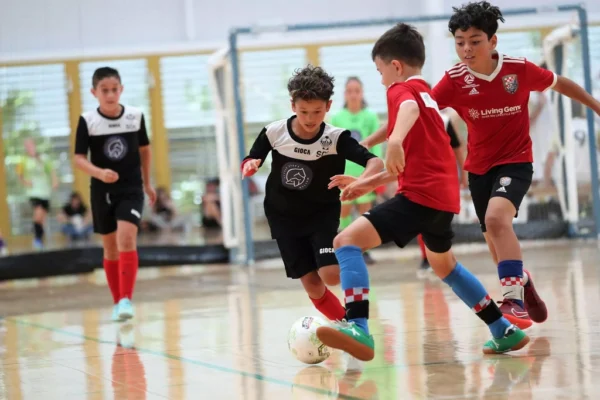
Football Queensland has signed a multi-year extension and expansion of its partnership with Green Room Futures, formalising the private provider as the state body’s “Official US College & Tour Partner” and adding an annual United States tour for Football Queensland Academy players to the existing college-placement program.

From advisory model to integrated pathway

The agreement marks a substantive evolution in the governing body’s pathway architecture rather than a standalone sponsorship announcement. The two organisations have worked together since at least 2024, when Football Queensland first appointed Green Room Futures as its preferred US college partner and began rolling out athlete information sessions across metropolitan and regional centres. The new arrangement embeds that relationship more deeply into the academy ecosystem by linking advisory services with an international touring product.

In its announcement, Football Queensland said the expanded partnership would offer academy players exposure to US college environments, international competition and broader education-and-sport decision-making support. Chief executive Robert Cavallucci said the relationship had already assisted Queensland athletes to pursue opportunities overseas and that the introduction of an annual tour would strengthen development outcomes for players across the state’s regional footprint. Green Room Futures director Matt Wade said the expansion reflected strong demand for structured US pathways and would provide athletes with more direct insight into student-athlete systems.

A constrained domestic market

For Football Queensland, the strategic rationale means a collegiate model is now an established part of the global football labour market, particularly for players seeking a dual track in education and high-performance sport. In an Australian landscape where professional opportunities remain selective and uneven, college pathways provide a parallel route with different risk settings for families. That logic has been gaining institutional acceptance across the country, and Football Queensland’s move suggests it sees formal international exposure as a competitive differentiator within domestic talent development.

The policy and governance questions are equally clear. The public announcement outlines ambition, but provides limited operational detail on affordability, cohort selection and support settings for regional participants. In practical terms, these details will determine whether the program functions as a broad-based development mechanism or as a premium pathway accessed primarily by households able to absorb compounding costs.

International youth tours involve direct and indirect expenses that typically include flights, insurance, accommodation, tournament costs, travel preparation and time-off-work burdens for families, with regional players often carrying additional domestic travel requirements before departure. Green Room Futures’ publicly available materials also indicate paid service structures within broader college-placement support. None of that is unusual in this market segment; it is, however, central to any serious assessment of access and equity outcomes.

The expanded partnership therefore sits at the intersection of football development strategy and distributional policy. If the tour becomes an informal gatekeeper to college-facing visibility, then financial design features move from administrative detail to core pathway governance. Without those mechanisms, even merit-led programs can produce systematically narrow outcomes because the input conditions are unequal.

For Football Queensland, the outcomes are likely to turn on implementation transparency over the next one to two intake cycles. A cohort profile that is geographically concentrated or socioeconomically narrow would invite predictable criticism, particularly given repeated statewide positioning in Football Queensland’s academy communications. Conversely, early publication of eligibility frameworks, financial assistance settings and regional participation targets would strengthen claims that the program is designed as a genuine statewide pipeline rather than a metropolitan premium add-on.

There is also a broader sector trend at play. Australian sporting bodies increasingly rely on specialist private partners to deliver pathway components once managed internally or left to informal networks. The model can improve expertise and execution speed, but it also shifts part of the development interface into commercial structures. In that context, governing bodies carry a heightened obligation to disclose how partner-delivered opportunities align with public-facing participation commitments, especially where youth athletes and family finances are involved.

What comes next

Well-structured US pathway programs can materially improve athlete decision quality, reduce information asymmetry, and create legitimate post-school options in a constrained professional market. Exposure to college environments can help families evaluate trade-offs around education, migration and sporting progression with greater clarity. For some players, that can be decisive.

The question for Football Queensland is whether the benefits are distributed in a way consistent with its statewide mandate. The announcement establishes intent and strategic direction; the next phase requires publication-grade detail. For a program framed around opportunity, credibility will depend less on partnership language and more on measurable participation design: who is selected, who is supported, and who is priced out.

Most Popular Topics

Editor Picks

Send this to a friend