

Strategic Plan 2023-2026 launched by Football West

Football West Strategic Plan

Football West recently announced the launch of their 2023-2026 Strategic Plan, a documentation affiliated with Football Australia’s One Football Strategy that will set the direction for football in Western Australia for the coming years.

The plan will see Football West improve the game under five essential departments:

  • Participants and Clubs
  • Elite Teams and Pathways
  • Fans
  • Unifying Football
  • Asia and the Sam Kerr Football Centre

Participants and Clubs

The first pillar has the aim to make Football the most accessible sport in Western Australia where everyone can play anytime, anywhere.

There are key targets set such as: Increase registrations by 5% per annum, increase participation by 3% per annum and have 95% of clubs and associations with a completed affiliation agreement (presently 82%).

Another key focus is the development of women and girls football which isn’t surprising after the recent Women’s World Cup success. Football West set a goal of 42,500 additional women & girls playing football across the three year plan.

Elite Teams and Pathways

This pillar focuses simply on the development of talent at all ages in a bid to improve the quality of the game in Western Australia.

The focus areas are Delivery of a state-wide Football West Academy program, Frequent and consistent talent identification opportunities and High quality coach development pathway

Fans

Football West is focusing on optimising the fan experience and grassroots to improve attendance numbers and social media engagement.

Unifying Football

They will develop a resourcing model that allows for the servicing of responsibilities between Football Australia and Football West, formalised in a Service Agreement

Asia and the Sam Kerr Football Centre

Football West will look to improve international exchanges with Asian countries and use the Sam Kerr Football Centre to secure sponsorships and play big matches there by 2026.

Football West Chairman Sherif Andrawes mentioned the vision that the federation has for the future of football across all levels.

“We are excited to present the Strategic Plan to the WA football community. This is a vision that will see football move forward in tandem with Football Australia but with a strong WA focus,” Andrawes said in a statement.

“Football is in a great position across the state. We saw during the FIFA Women’s World Cup and, more recently, when the CommBank Matildas played in Perth, that our sport is unique in its widespread appeal. This passion can be felt across all areas of the game.

“We want to be bold and ambitious, and the Strategic Plan gives us a strong base from which to deliver on that.”

Football West CEO Jamie Harnwell was excited to announce how the Strategic Plan would be implemented successfully.

“This Strategic Plan is a real statement of intent and one we are proud to deliver. Harnwell mentioned in a Football West statement.

“Football is more popular than it has ever been in Western Australia, in terms of participation, inclusivity and popularity, and we should all be proud of this. However, we cannot rest on our laurels.

“As a governing body, we want to make our game even more accessible, so we can inspire a new generation to love football. That comes through hard work, consultation and direction, all of which are key to the Strategic Plan.”

The Strategic Plan is well set out and focuses on the current struggles the federation is having at grassroots level. Partnering closely with Football Australia will help them achieve the ambitious goals set out to improve both the state and national foundation.

Previous ArticleNext Article

If Australia Wants to Be a Football Nation, We Need to Stop Scheduling Against the Socceroos

Jake Stringer isn’t a football analyst, a broadcaster or a football administrator.

Yet this week, he articulated a frustration many Australian football fans have felt for decades.

Following Australia’s opening match at the FIFA World Cup, the former AFL star labelled it a “disgrace” that AFL fixtures were scheduled head-to-head with the Socceroos, questioning why Australian sport would compete with one of the country’s most important sporting events rather than embrace it.

Whether you agree with Stringer or not, his comments touch on a much larger issue.

For all the discussion about football’s growth in Australia, the game still struggles to receive the national recognition afforded to comparable moments in other sports.

The Socceroos are not simply another national team.

They are Australia’s most globally relevant sporting side.

The argument that football remains a niche sport in Australia becomes increasingly difficult to sustain when the Socceroos take the field.

Their opening World Cup victory over Türkiye attracted a total television audience of 4.78 million Australians, with an average audience exceeding three million across SBS and SBS On Demand. SBS confirmed it was the third most-watched free-to-air event of 2026, while World Cup coverage had already reached more than eight million Australians during the tournament.

These are not football numbers.

They are national event numbers.

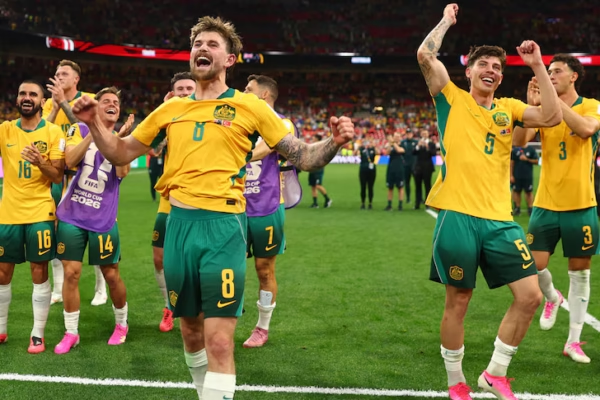
The Socceroos’ 2-0 victory, powered by goals from Nestory Irankunda and Connor Metcalfe, generated nationwide interest that extended far beyond football’s traditional supporter base. It was one of those increasingly rare sporting occasions capable of capturing the attention of millions of Australians simultaneously.

When an event is attracting audiences measured in the millions and commanding national attention, it ceases to be simply a football fixture. It becomes a moment of national significance.

Now the question is why Australian sport still struggles to treat one of its most globally relevant teams as a national asset rather than a competitor.

The argument from competing codes is usually straightforward: schedules are set years in advance, broadcasters have obligations, and domestic competitions cannot simply stop every time the Socceroos play.

That is true.

But there is a significant difference between maintaining a schedule and actively competing against a national moment.

Other sporting nations understand this distinction.

When major national teams compete on the world’s biggest stage, rival sports often find ways to accommodate, promote or at the very least avoid directly undermining the occasion. Not because they are required to, but because there is an understanding that national representation transcends code wars.

In the United States, the NBA adjusted its 2026 Finals schedule to avoid a direct clash with the USMNT’s opening FIFA World Cup match against Paraguay. It was not a charitable act towards football, but a recognition that a home World Cup creates a national sporting moment too significant to ignore.

That is the point Australia still struggles to grasp.

When the Socceroos play on the world stage, it should not be treated as just another football broadcast competing for space. It should be viewed as a national event.

One that rival codes can acknowledge without diminishing themselves.


Missed opportunities

The irony of the current approach is that everyone loses.

Football loses potential viewers and momentum.

Competing codes lose the opportunity to align themselves with a rare moment of national unity.

Most importantly, Australian sport misses the chance to present itself as a collective ecosystem rather than a collection of competing tribes.

This is particularly significant as Australia prepares for one of the most important decades in its sporting history.

Australia’s football rise

The Socceroos have now qualified for six consecutive FIFA World Cups and continue to build on the momentum generated by their remarkable run in Qatar. Under Tony Popovic, expectations are growing that Australia can once again challenge on the world stage.

At the same time, football participation continues to rise nationally, women’s football is experiencing unprecedented growth, and Australia is positioning itself as a major player in the global game.

Yet moments that should be celebrated nationally still feel like they require justification.

Perhaps that is why Stringer’s comments resonated.

They did not come from a football insider defending his own code.

They came from someone outside the game looking in and questioning why Australia would choose competition over collaboration when the Socceroos are representing the nation.

The real conversation is not whether one AFL round should move or whether broadcasters should alter their programming.

The question is much bigger.

If we genuinely believe football has a place at the centre of Australia’s sporting landscape, then our biggest football moments should be treated as national sporting occasions—not just football occasions.

Until that happens, Australian football will continue fighting a battle that most football nations settled long ago.

Futsal receives major boost in NSW through new partnership

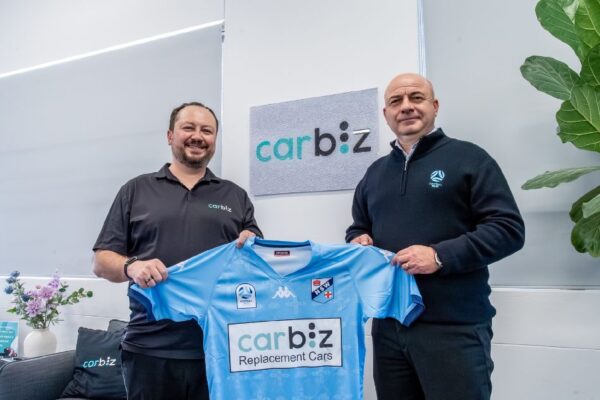
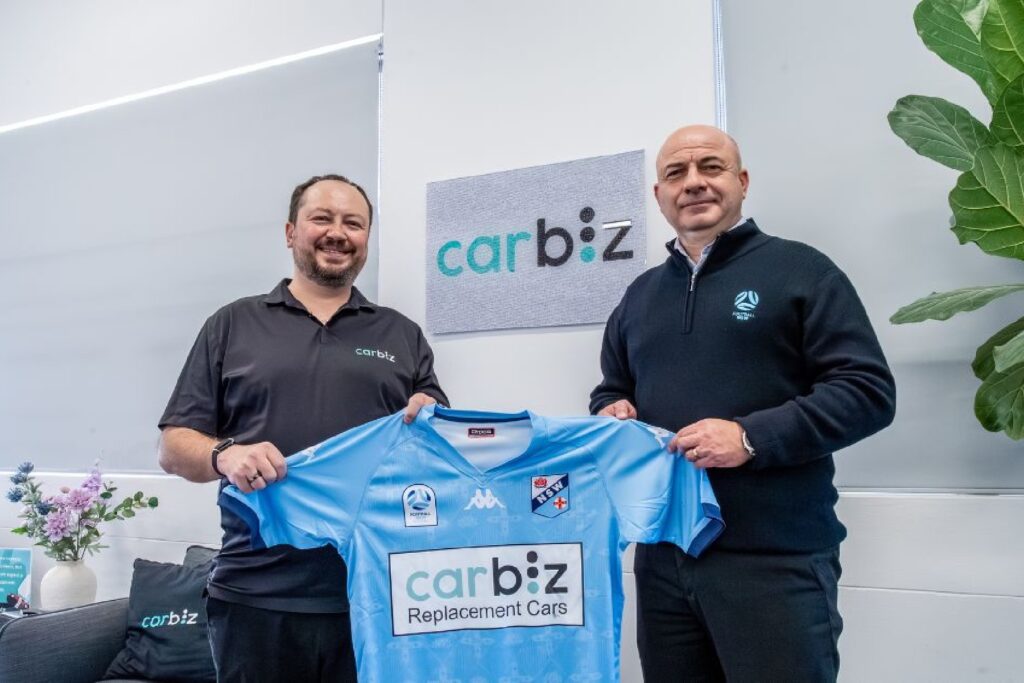
Carbiz will become the new Naming Rights Partner of Football NSW‘s premier futsal competitions in a deal set to run for two years.


Committed to growth

From its beginnings as a second-hand car dealership in 2016, Carbiz has seen incredible growth over the past decade. It now operates as Australia’s leading replacement car provider with over 12 branches, 200 staff and 500 partnerships.

No strangers to progress, hard work and community support, the Carbiz family is now aligning itself with one of Australia’s fastest-growing sports. Through this partnership, Carbiz will support the continued rise of futsal across New South Wales and the broader Australian football landscape.

“This is a fantastic partnership for Football NSW and for futsal in our state,” said Football NSW CEO, John Tsatsimas, via press release.

“Carbiz is a brand built on service, resilience and community values, which strongly aligns with our own vision for football and fustal in New South Wales.”

In 2022, futsal participants across Australia reached 58,453 – an 8% increase on the previous year. In 2025, however, this number rose to 63,425. Numbers in NSW also saw growth in this period, increasing from 4,682 to 5,230.

So with the highly-regarded and community-driven Carbiz backing the game’s development in NSW, futsal will launch into an exciting future.


Community connection

Competition and the desire to win are key aspects of any game – especially football.

But at the heart of the grassroots game is a fundamental wish to unite the local community. Thus, finding partners who understand this commitment – and are eager to match it – is so essential.

Furthermore, Carbiz CEO, Alex Rodov, outlined why the company aligns so well with Football NSW’s futsal future.

“At Carbiz, we’ve always believed that strong communities are built through connection, opportunity and teamwork.”

“Sport plays a vital role in bringing people together, and futsal is one of the fastest growing and most exciting forms of the game.”

“As a proudly Australian owned business, we’re excited to support a competition that creates opportunities for young athletes, strengthens local communities and inspires the next generation.”

The agreements will see the newly-named Carbiz Futsal Premier League and Carbiz Futsal Premier League 2 become key environments which support talent development, local participation and engagement with futsal as a whole.

Most Popular Topics

Editor Picks

Send this to a friend