

Sydney FC links with SEDA to run Sport & Business Program

Sydney FC are now accepting applications for the Sport & Business Program, with a one-year dual-diploma on offer.

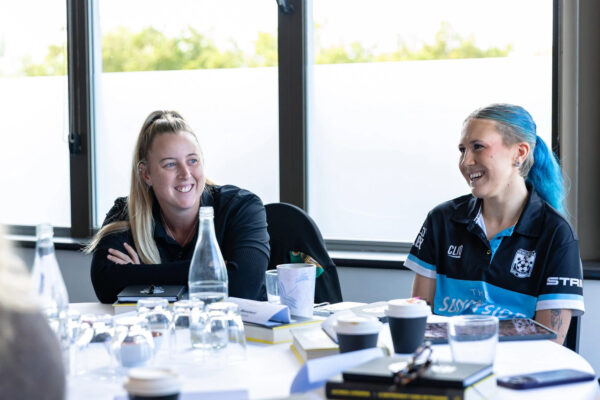
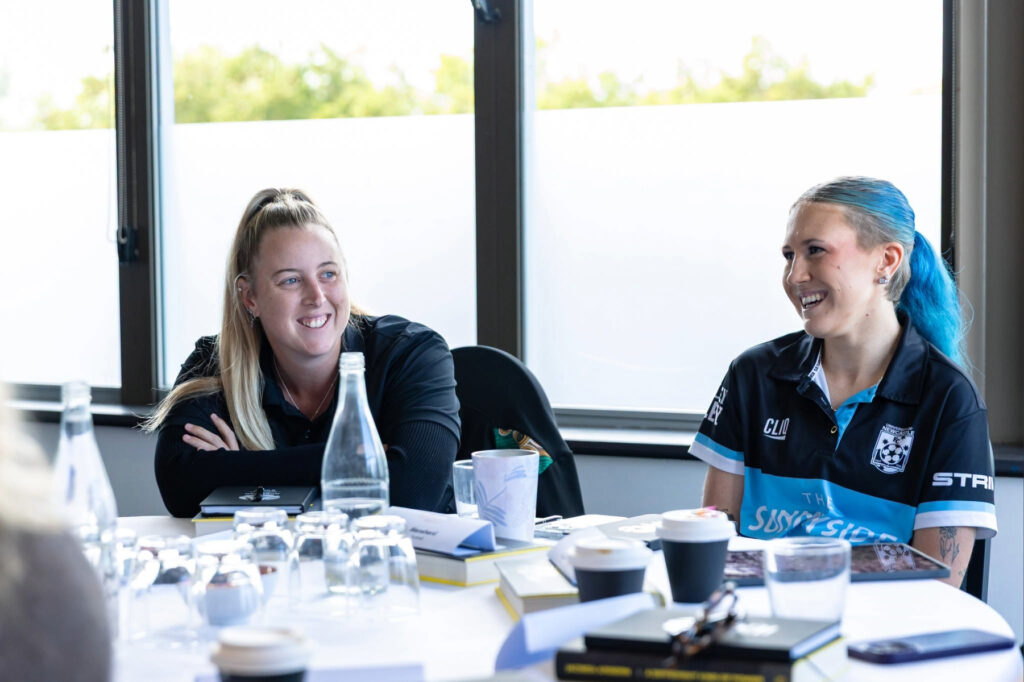
Powered by SEDA Group, the Sydney FC Sport & Business Program will give students a chance to study in a practical and hands-on environment at Sydney FC.

The diploma will cost students around $14,000 for the year, with four face-to-face days of training and assessment set to take place each week, inclusive of facilitated online delivery for some subjects. Students are also required to complete 80 hours of practical placement in the industry.

Among the benefits, students will develop skills and knowledge across a variety of areas including sponsorship, project and event management, talent identification, social media and marketing. They will connect and learn from Sydney FC’s sports industry experts, coaches and elite players, providing a glimpse into the business elements involved in running a football club.

Students can study a curriculum matched to their interests, complete a practical placement, run major projects, and participate in football-specific high-performance activities which are all designed to further develop skills and experience.

Australian Professional Leagues (APL) and Sydney FC Chief Executive Officer Danny Townsend believes the program will open the door for some of the best young business minds in the country to come through.

“We’ve been working with SEDA now for a long time in a secondary school education program, and we felt that providing a tertiary extension to that would allow for more young, aspiring sports people to get into the game,” he said.

“We’re in the process of building our Centre of Excellence at Macquarie Park, and now we are able to utilise that facility to deliver this program in partnership with SEDA.

“We felt that it was the right time to do it, particularly with the Women’s World Cup coming, to also give young females the opportunity to engage in sports business.

Townsend was excited to use the new program as a tool to engage with and identify talent outside of their current way of recruiting stuff which was dependent on volunteers or internships.

“They will come out of that program with an understanding of the club’s inner workings and therefore be able to integrate if we need a role filled,” he said.

“But equally, we see it as a pathway to get some of these students into university.

“We are fortunate that we have a great relationship with the University of New South Wales and we’re working with them to determine how this program can bridge into a full-fledged degree.”

In comparison to what’s already available for sports-business education, Townsend sees more that can be done in specific areas.

“Academic education is great, and it’s important, but equally, having that practical experience goes a long way to really rounding future employees for any sporting landscape.

“Being able to do a course like this gives you exposure to every component of the runnings of a professional sporting club.”

Applications are open to all eligible year 12 graduate students, with the program set to begin in January 2022. You can find all details and register here.
Previous ArticleNext Article

Football NSW releases $600,000 towards Grassroots Grants to meet Participation Pressure

The Victorian State Government has announced new grants and funding for 11 new community infrastructure projects for local football clubs, totalling $3.8 million.

Sixty-five football clubs across New South Wales have secured a combined total of nearly $600,000 in funding through the NSW Office of Sport’s Local Sports Grant Program. It follows as a result of Football NSW’s scale of demand for community sport support and the growing pressure on clubs struggling to keep pace with surging participation.

The grants, covering 69 individual projects across the Football NSW footprint, will fund facility upgrades, equipment purchases, participation programs and accessibility improvements: the unglamorous but essential infrastructure that determines whether community clubs can function at the level their members require.

The Local Sports Grant Program made up to $4.65 million available statewide in 2025, with $50,000 allocated to each electoral district and individual grants capped at $20,000. Football’s share of nearly $600,000 reflects the sport’s status as the largest participation code in NSW, and the degree to which that status has not always been matched by corresponding investment in the facilities and resources required to sustain it.

Volunteers carrying an unsustainable load

The announcement arrives against a backdrop of mounting pressure on the volunteer workforce that keeps community football operational. Across NSW, thousands of volunteers dedicate significant unpaid time each week to administration, ground preparation, canteen operation and the logistical demands of running competitive junior and senior programs. As participation numbers climb, driven in part by the sustained visibility of the AFC Women’s Asian Cup and the legacy of the 2023 FIFA Women’s World Cup, those demands have intensified without a corresponding increase in the resources available to meet them.

“As the largest participation sport in NSW it is pleasing to see almost $600,000 will be reinvested back into supporting our players, coaches, referees and volunteers to improve the football experience across our community clubs,” said Helen Armson, Football NSW’s Group Head of Strategic Partnerships and Corporate Affairs.

The equity dimension

The distribution of the grants across 65 clubs and 69 projects also speaks to the geographic breadth of football’s footprint in NSW, and to the uneven distribution of resources that has historically characterised community sport in this country. Clubs in outer metropolitan and regional areas tend to operate with smaller budgets, older facilities and thinner volunteer bases than their inner-city counterparts. Grant programs structured around electoral allocation, rather than club size or existing resource base, provide a degree of equity that market-driven funding cannot.

The kinds of projects funded under this program disproportionately benefit clubs serving communities where the barriers to participation are highest. A club that cannot offer adequate facilities or equipment is a club that turns players away, often without intending to.

Football NSW has used the announcement to call on the NSW Government to maintain and extend its investment in the sport. “We urge the government to continue to invest in football,” Armson said, in the midst for a nation-wide push for a $343 million decade-long infrastructure fund to address the facilities gap across the state.

The nearly $600,000 secured through this round is meaningful. Against the scale of what is needed, it is also a measure of how far the investment still has to go.

Inside GIS’ New Executive Edge Program Driving Sport’s Future Leaders

A new executive education program designed to shape the next generation of sports industry leaders is set to launch in June 2026, offering participants a rare blend of academic insight and real-world application at the highest level of global sport.

The Executive Edge in Sport, delivered by Global Institute of Sport (GIS) in partnership with Rotman School of Management Executive Programs, will provide current and aspiring leaders with the tools needed to navigate an increasingly complex and fast-evolving sports landscape.

The seven-week program, Sports Leadership Essentials, is delivered primarily online, offering a flexible and immersive learning experience for professionals worldwide. It is tailored for individuals seeking to strengthen their leadership capabilities within sport, as well as those aiming to transition into senior roles. This includes athletes navigating their post-playing careers.

Led by Sharona Friedman, President and CEO of GIS, and Walid Hejazi, Professor of Economic Analysis and Policy at Rotman, the course combines academic rigour with industry relevance. Participants will engage with key topics shaping modern sport, including leadership and strategy, governance and ethics, finance and revenue models, marketing and fan engagement, event operations, and the growing influence of AI and emerging technologies.

The program also features exclusive masterclasses with senior figures from across the global sports industry, alongside sessions led by leading academics and practitioners from the Rotman School.

For those seeking a more hands-on experience, participants can opt into the Sports Leadership Lab. This is a four-day, in-person summit held at BMO Field in Toronto. Delivered in collaboration with Maple Leaf Sports & Entertainment, the lab provides behind-the-scenes access to elite sport operations, bridging theory with practice in a live stadium environment.

As the global sports industry continues to expand and evolve, The Executive Edge in Sport positions itself as a critical pathway for leaders looking to stay ahead. It provides students with the knowledge, network, and perspective required to lead with impact.

Most Popular Topics

Editor Picks

Send this to a friend