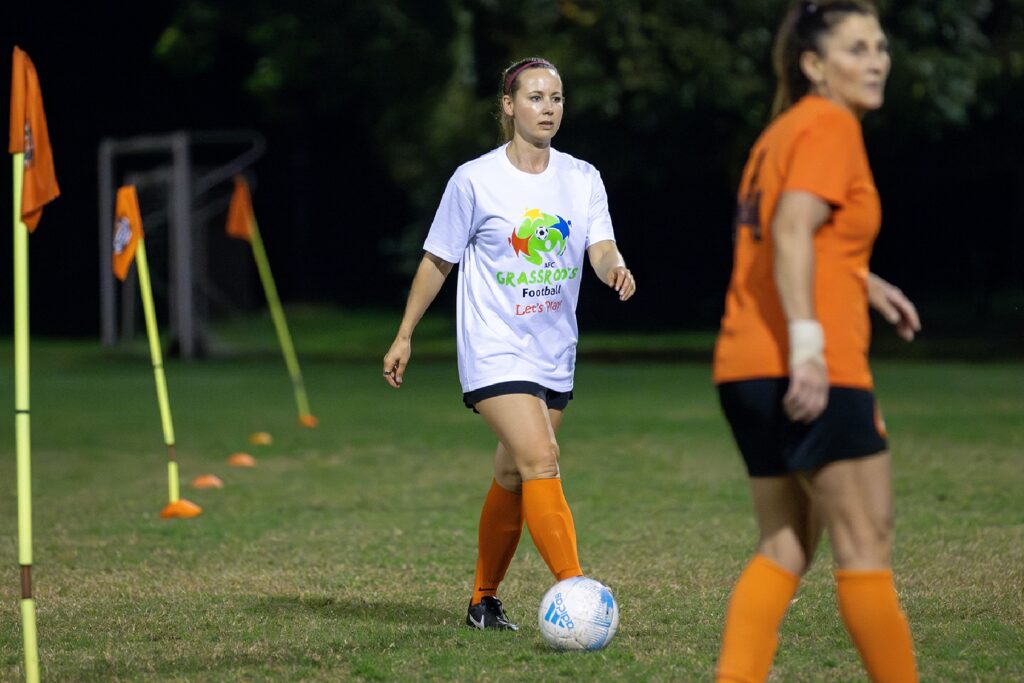




In an event that has been a long time coming, Transplant Australia Football Club will hold the inaugural Transplant Football World Cup in Cervia, Italy on September 8-14, 2024.
Due to COVID-19 being a major roadblock, the tournament has not been able to lift off – however with the dedication and perseverance of Transplant Australia and the World Transplant Games Federation, it is now going to be a reality.
It is headed by Transplant Australia, which is a charity that supports transplant recipients and their families, while also lending support to people on the waiting list, donor families, living donors, healthcare professionals and everyone associated with organ and tissue donation.
Transplant Australia FC is one example of the many sports and activities on offer that encourage physical activity for an increased chance of survival in transplant recipients.
As the Chairman of Transplant Australia FC, Ante Kelic has gone through his own experience and is now the perfect role model for others in a similar position, while also managing the operations ahead of September’s tournament.
In this interview with Soccerscene, Kelic discusses his involvement with Transplant Australia, an update on the World Cup, building a community and looking ahead over the coming months.

Tell us about your background and why you are involved?
Ante Kelic: I started playing in junior competitions for St Albans Dinamo out in Melbourne’s west.
I grew up with the game very much part of my life, however around the age of 18 years I started having a few health issues and was diagnosed with a liver condition called primary sclerosing cholangitis (PSC).
There was not too much trouble apart from the initial onset symptoms and flare ups such as a headache and swelling and for the most part I did not feel the full effect of it for another 3-4 years.
In the year 2000, I also got diagnosed with Crohn’s disease which isn’t uncommon for people who suffer from PSC.
At that time, I broke into the seniors for St Albans, but it all came to a halt when I required surgery for Crohn’s disease at the age of 20. From 80 kilograms being a fit and active player, my weight dropped down to 54kg.
The recovery was slow and through all the medications and treatments, I was hoping to get back to playing Premier League senior football but the side effects such as weight gain as a result of fluid retention lead me to player in the lower divisions.
At the age of 34 I was playing social soccer, however I was told during that time I needed a transplant as cirrhosis was getting to a serious stage of liver failure.
It was in 2014 that I got put on the transplant list and needed to wait seven months before I was offered the lifesaving transplant. At the same time my wife was four months pregnant and thankfully my daughter Iva was born soon after without major hiccups.
How did you find out about Transplant Australia FC?
Ante Kelic: It was in 2018 that I found out about the team through the late Matty Hempstalk who established the team two years prior.
I was introduced to the team by participating in an exhibition match which was known as the Doujon Zammit Shield – this was in honour of Doujon who passed away, but his parents donated his organs to save multiple lives.
A few years later, Matt – along with the CEO of Transplant Australia – came up with the idea to create an inaugural World Cup for transplant recipients and I thought that I could give a helping hand as it was something that involved heaps of work to organise.
With Matt’s passing, coupled with the pandemic, it has taken us a bit of time to recover and get back on our feet but now it is something I will contribute towards.

You had an Expression of Interest period for participants, what are the numbers looking like?
Ante Kelic: We ran a large campaign for a couple months that saw around 50 applications from men and women all around Australia who want to join the club.
In addition, we are going to run a development camp in Sydney on March 16-17 to get people together and support each other based on their transplant journeys.
Our main purpose is to help people with ongoing health issues and encourage active participation.
The underlying reason why we are there is to create awareness and educate people on the life saving gift of organ donation and the donation sign up process.
On your role as Chairman, what are the main priorities?
Ante Kelic: There is no shortage of people who need support before and after transplant.
Peronsally I have had not only with liver transplant recipients, but also those undergoing cancer treatment and that shock of being unwell and going into hospital where your life changes from that point – that is where I am willing to offer support and advice drawn upon my health journey.
To have someone to talk to is super important and I have also reached out to people myself when there were instances I lost energy or motivation during the difficult times.
The wait time for transplants can be mentally challenging – I waited seven months but some other recipients in my support group had to wait for more than two years. If you throw in the fact that hospital call ups do not always guarantee a transplant due to an inadequate match occurring, it is not easy to comprehend – I know of someone that had received the news four times.
Unfortunately, you do not know how far you get through the waiting list in terms of pecking order, so this is a challenge that we offer support and advice for.

How is it juggling your responsibilities?
Ante Kelic: There are some challenges to fit it all in with a young family and running my own business, but we do have some staff at Transplant Australia who do an excellent job supporting the club.
Part of the reason that the development camp in Sydney is going ahead is down to the Transplant Australia team securing a grant to benefit recipients.
Particularly for us, one of the factors is the distance between team members, making it costly to hold events due to travel and accommodation costs.
There is representation Australia-wide, so we offer in some instances where possible to subsidise recipients for travel, accommodation and meals for them to be able to attend these camps and remain active
Even though recipients recover from transplants, they can still have ongoing issues with their health they need to manage which affects their work and earning capacity. As a club, and Translpant Australia, we want to build longevity and sustainability to support the recipients in every way we can.
A lot of recipients reach out stating they want to do something more regularly and having a club in local competitions would be a great milestone.
Our goal is to increase the participation numbers and generate awareness through the amazing stories shared about the life saving donations that people have received.
However, we cannot do that without government, community and corporate sponsorship support.