
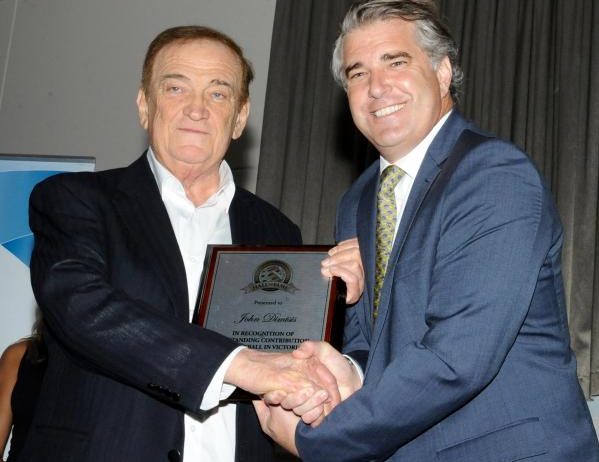
Vale John Dimtsis

Former Heidelberg United Club President John Dimtsis sadly passed away last night after a long battle with illness.   

John became President of HUFC in 2013.  An important juncture in the history of the Club as it was trying to gain promotion from State League 1 back to the Premier League at the same time that the inaugural NPL competition was about to commence in the following season. He realised the important role that promotion would have in Heidelberg being included in the inaugural competition in 2014. 

However, John’s contribution to the Alexander Soccer Club (HUFC) and to football in general dates back to the late 1960’s. 

He quickly established himself as a valued member of the Clubs Board, serving as its Treasurer for a number of years.  

It was not long however before his skills were noticed by the Victorian Soccer Federation (VSF) and he joined their Board in 1972 and became its treasurer in 1973, while still retaining his role as treasurer of Fitzroy United Alexander. 

In 1980, he succeeded Theo Marmaras as President of the VSF and held the position until 1991.

In that time he responded to criticism that the VSF was too Melbourne-centred and among other initiatives commenced ‘state of origin’ matches between Sunraysia and the equivalent region in South Australia. 

He, along with Vito Cilauro and George Wallace, introduced the restructured top tier, the Victorian Premier League in 1991. 

While retaining his role as President of the VSF he became Treasurer of the Australian Soccer Federation (ASF) and Deputy Chairman under John Constantine following the implementation of the Bradley Report. 

At the ASF he had responsibility for referees, juniors, indoor soccer and women. 

He helped negotiate the merger between the men’s and women’s organisations and the latter’s entry into Olympic competition. 

Earlier at the VSF he had presided over the World Indoor Cup tournament held in Melbourne in 1988 when futsal was under the control of the Federation International de Football de Salon (FIFUSA). 

He was acting chairman of the ASF briefly in 1995 following the departure of Constantine and before David Hill took over.  

After five years following his period at the ASF John returned home to his beloved Heidelberg United as he felt he still had something to offer.  That he certainly did. 

In 2016, John was made an Honorary Life Member of HUFC.  

In 2017 and in recognition of his lifetime contribution to Victorian Football, he was inducted into their Hall of Fame in 2017. 

John was a much valued member and contributor of our Club.  His contribution will never be forgotten.  Up until his final days John’s thoughts were often with his beloved Club wanting to know ‘how things were going’. 

Our sincere condolences to John’s family at this time. 

He will be sadly missed but never forgotten. 

May you Rest in Peace JD. 

Previous ArticleNext Article

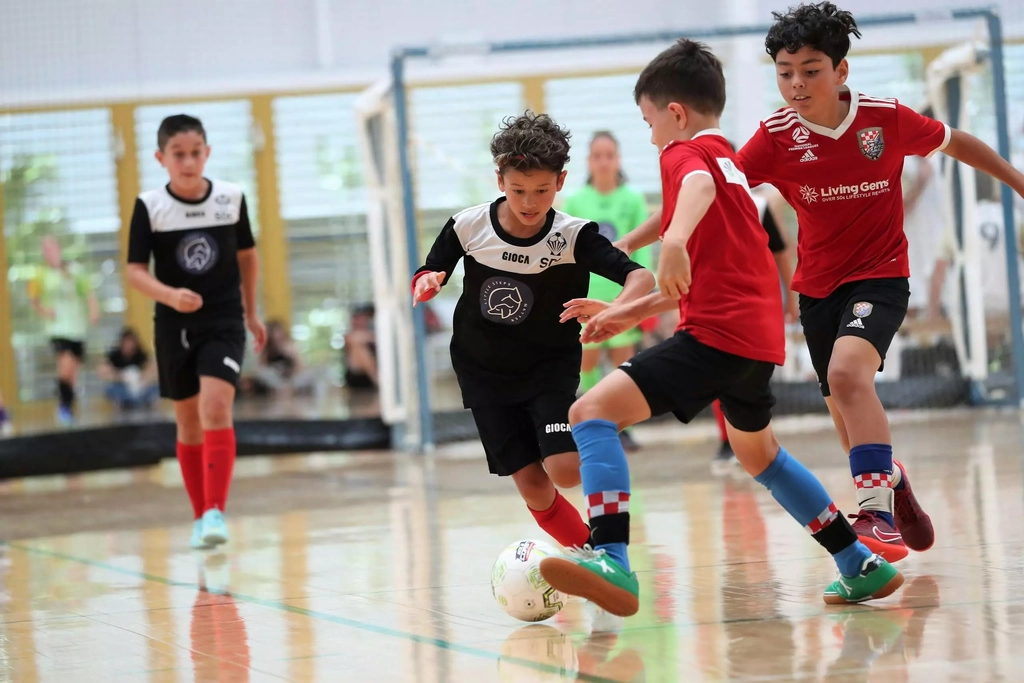
Gold Coast International drives futsal growth as international interest surges

The 2027 Gold Coast International is set to be the biggest year of growth in the tournament’s history. The tournament has become one of Australia’s premier futsal events. Attracting the best teams from not just Australia but around the world. Andrew Parkes is the founder and managing director of the Gold Coast City Futsal Association and an advisory board member at Football Queensland. He says the tournament, and its international reputation, is only strengthening.

“Registrations are actually a step up from what they were last year,” Parkes said.

“We’ve got several teams from New Zealand. At the moment, we’ve got some Pacific Island teams that have expressed interest in coming. We got interest from Japan, and from England as well.

“We’ve got over 140 teams so far, and that’s not including anything from the local areas.”

Over 200 teams attended the 2026 edition, and the Gold Coast International is well set to break that record next year. The figures show the tournament is becoming more than a local competition. It is building a strong national and international presence.

Football Queensland and Football Australia unite behind growth

Parkes believes collaboration has played a major role in the development of futsal in Queensland. The tournament is sanctioned by both Football Queensland and Football Australia. He praised Football Queensland for its work across the sport. He said the organisation has helped create a stronger and more professional futsal system. This relationship between state and national bodies and the event has allowed the Gold Coast to play host to the national competition as well. This ensures shared resources including referees and courts.

“Football Queensland have been a major driving force and a godsend in relation to the development of futsal,” Parkes said.

“We’ve got the nationals the week before the Gold Coast International now. We’re working in harmony and synergy and supporting each other.

“I think the proofs in the pudding, not just with the Gold Coast International, but with the exposure and obviously the diversity of teams that attend. But then the further development in our local leagues, and that’s resulted in.”

E-sports adds another pathway for players and clubs

E-sports has become another major part of the Gold Coast International. Parkes said he had explored the idea for several years and that the tournament allows the community to grow beyond just the physical players on the court. The use of e-sports also allows friends and families to have an interactive experience with simulators and games whilst at the Gold Coast International.

“We launched e-sports about 2 years ago, just with a bit of a light feel. We’ve incorporated the competition into the tournament fees, which is excellent. So it doesn’t cost anybody anymore to be part of it,” Parkes said.

“It actually allows the clubs and academies to extend on their current offerings as it is at the moment and allows gaming players to be part of the club, to be part of the atmosphere and to join and that unity and be part of that sporting community.”

“We had three times the amount of teams that we had from the first year of e-sports. We’re looking to probably even double that again this year, which is really exciting as well.”

New pathways shape the tournament’s future

Parkes wants the Gold Coast International to keep expanding. He is now looking at ways to create pathways beyond the tournament itself. He said the use of its international experiences that can be earned through the tournament is not only about investing in players. But ensuring coaches have a more time-efficient avenue to be involved with futsal. It also gives more coaches the chance to work with players at an international tournament.

“We’ve now created the Gold Coast International All Stars, which is now embraced by many of the coaches and the players,” Parkes said.

“That also provides coaches who don’t have the time or the ability or whatever for the state teams, and the commitment that they need to put in the state teams throughout the year.”

“It allows us to have a lot more outreach to far more coaches that have a lot of passion and enthusiasm, and be part of the Futsal community. They want to build on the players’ abilities but may not have that year-long or eight-month-long exposure that is required by the state Futsal team coaching staff.”

For Parkes, the future is about widening access while continuing to raise standards. The tournament is growing its international reach, strengthening partnerships and creating new opportunities for both physical and e-sports players. The Gold Coast International is no longer just a tournament. It is becoming a broader platform for the development of futsal and its wider community.

For more information on the Gold Coast International and to inquire about competing in the 2027 edition, visit their website.

Active Club Program offers South Australian football clubs a funding boost

South Australian football clubs can tap into another round of government support, with the Active Club Program offering grants of up to $3,000 to help clubs improve participation and strengthen their local communities. The Office for Recreation, Sport and Racing (ORSR) opened its new round of funding on the 28th of August. Clubs have until midday on Wednesday, 14 October 2026 to apply.

The grassroots benefits

The South Australian Government has allocated $1.448 million to the round. Clubs with fewer than 100 members can receive $1,500. Clubs with 100 or more members can receive $3,000. The program targets grassroots sport, including football. It helps clubs purchase equipment and resources that make participation easier and more affordable.

Football clubs can use the funding for sporting equipment, uniforms and protective gear. They can also fund playing venue maintenance equipment, professional development, medical equipment and training. The program also supports projects that improve inclusion. Clubs can use grants for positive health initiatives and hardship subsidies. These measures can help remove barriers that stop people from playing sport.

That focus creates opportunities for football clubs to support more women and girls. It can also help clubs create more welcoming environments for players of different ages and backgrounds. Water and energy efficiency also form part of the program. Clubs can fund eligible initiatives that reduce water use or improve energy efficiency. That could prove particularly valuable for football clubs managing local playing venues and facilities. The program also allows minor club infrastructure upgrades and technology that directly supports participation or club sustainability.

Who is eligible?

To qualify, a club must operate as a not-for-profit sport or active recreation organisation in South Australia. It must have at least 20 members and have operated for at least 12 months.

ORSR will also consider a club’s participation profile when assessing applications. The assessment looks at female and male junior and senior participation, alongside factors such as the club’s affiliation and when it last received Active Club Program funding.

How to apply

The funding can make a direct difference at grassroots level. In the previous round, 558 South Australian clubs shared more than $1.4 million. The government says the investment helped clubs meet essential costs while supporting participation and inclusion.

For football, that support can stretch beyond the playing field. Stronger clubs create more opportunities for players, coaches and volunteers. They also provide places where people can build connections and stay active. Applications for Round 56 will be screened in November, assessed in December, with clubs notified in January 2027.

To learn more about the South Australian Active Club Program, visit their website.

Most Popular Topics

Editor Picks

Send this to a friend