Victoria University the inaugural FIFA Research Institute for Football Technology

Victoria University

Victoria University (VU) has been confirmed as the first university in the world to be an official FIFA Research Institute for Football Technology.

The global governing body for international football will strengthen its support of cutting-edge innovation and technology, where they first collaborated with VU in 2016.

The two organisations worked to develop an innovative international standard for FIFA’s quality program to assess the accuracy of Electronic Performance Tracking Systems (EPTS). FIFA first allowed EPTS in 2015 and clubs have increasingly used them to track player performance and movement. The project drew on VU’s expertise in biomechanics, exercise physiology and data analytics, as well as the University’s work on wearable technologies with the AFL club Western Bulldogs.

VU researchers impressed FIFA during a five-hour meeting in Zurich, with their plans to test a range of EPTS during actual games – comparing them to VICON, an independent gold-standard motion-capture system that provides precise, three-dimensional measurements of people or objects.

Professor Rob Aughey remembers his team completing a 10-page response to FIFA’s questions about their proposal on the plane home “to show them as researchers, we could be quick, agile and responsive.”

Rob Aughey in Zurich

VU is now a FIFA-Accredited test institute and runs annual tests for FIFA on the many models of EPTS. VU’s other previously conducted validation testing will ensure that the semi-automated offside technology FIFA recently approved for offside calls will deliver accurate, quick, and clear decisions in the world’s biggest football contest now in Qatar.

“This development enhances the integrity of the game and is an example of an excellent application of technology to assist and support referee decisions,” Professor Aughey said via press release.

“VU is increasingly strengthening its collaboration with FIFA, including by providing VU data collected over the past six years for other research projects.

“It’s really exciting that we are expanding our collaboration in a much deeper and more meaningful way with one of the biggest brands in the world.”

To become an official FIFA Research Institute, organisations must have a minimum of five years collaboration with FIFA’s Football Technology and Innovation division, among other eligibility criteria.

View a video of VU-FIFA collaboration here.

Previous ArticleNext Article

APL and PFA remain without agreement as bargaining tensions continue

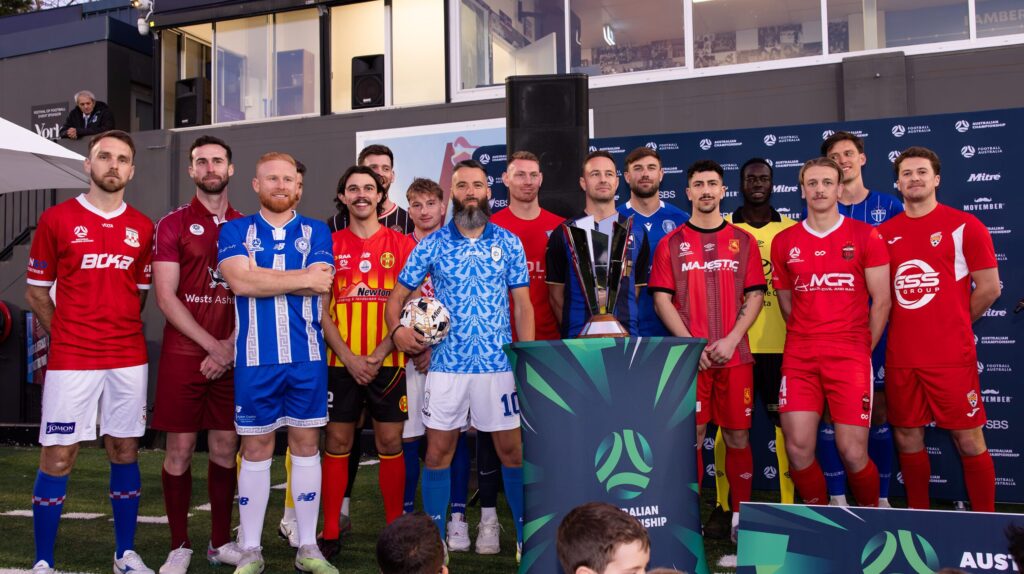
The Australian Professional Leagues (APL) and Professional Footballers Australia (PFA) remain without a new collective bargaining agreement, with negotiations continuing less than three months before the start of the 2026–27 A-Leagues season.

The APL presented the players’ union with a new one-year interim proposal on August 5, which included an increase to the A-League Women salary cap and a commitment to establish a pathway towards full-time professionalism for the women’s competition within 12 months.

The proposed agreement would provide an interim framework while the two parties continue discussions over a longer-term collective bargaining agreement.

APL chief executive Steve Rosich said the proposal reflected the league’s commitment to reaching a sustainable agreement with players following eight months of negotiations.

However, the PFA criticised the APL for publicly announcing the proposal shortly after presenting it to the union, arguing that the approach had further damaged trust between the two parties.

PFA Chief Executive Beau Busch also said players had overwhelmingly rejected the APL’s previous final offer, citing a lack of trust in the league’s ability to ensure its future.

Full-time professionalism for the A-League Women remains a key priority for the PFA, with players seeking improved conditions and greater investment in the competition.

The A-League Men and A-League Women seasons are both scheduled to begin on 16 October 2026.

With the new season approaching, both parties face pressure to resolve the dispute and establish the framework governing player conditions across the A-Leagues.


Jeff Bezos consortium set for $2.7 billion Liverpool investment

Liverpool could soon welcome one of the world’s richest men into its ownership structure.

Amazon founder Jeff Bezos is part of a consortium in advanced talks to buy a 30% stake in the club.

The proposed deal values Liverpool at around $8.6 billion (4.5 billion pounds). Bezos has a personal fortune estimated at $363 billion.

The investment would give Fenway Sports Group (FSG) a major financial return. It would also allow FSG to keep control of the club, which they bought in 2010.

The proposal has attracted attention across football. It has also created concern among sections of the Liverpool fanbase.

FSG set for major return

FSG bought Liverpool for $573 million (300 million pounds) in 2010. The ownership group later provided further funding through loans. In the last 16 years, the club has undergone major growth.

Liverpool ended a 30-year wait for a league title in 2020. The club also won the Champions League in 2019. Another Premier League title followed in 2025.

Stadium redevelopment and a new training centre have also increased the club’s value. FSG could cash in on $2.7 billion (1.4 billion pounds) if the 30% share is sold.

The deal would therefore represent a huge return on its original investment. However, whilst the investment would provide a massive cash out for the owners of Liverpool, due to Financial Fair Play there won’t be increased investment in the transfer market.

Why Bezos wants Liverpool

Bezos has explored sports investments before. He has been linked with major American franchises such as the NFL’s Seattle Seahawks.

Liverpool would give him a stake in one of football’s biggest global brands. The club also has a large following in the United States. The New York Times has also reported Liverpool has 26 million fans in America.

That makes the investment attractive for investors looking to expand their reach in global sport. American businessmen Eduardo Saverin and Amit Bhatia are also reportedly involved in the consortium.

The deal would add to the growing American influence across English football.

Fans remain cautious

Liverpool supporters have not automatically welcomed the proposal.

The club’s previous experience under Tom Hicks and George Gillett still influences the fanbase.

Supporters also want greater clarity over the consortium’s intentions. Questions remain over board representation, control and the long-term purpose of the investment.

For many fans, ownership must involve more than financial ambition. The Bezos proposal could strengthen Liverpool’s commercial position. It could also deliver a huge payday for FSG.

But until the consortium reveals more about its plans, supporters are likely to treat the deal with scepticism.

Most Popular Topics

Editor Picks

Send this to a friend